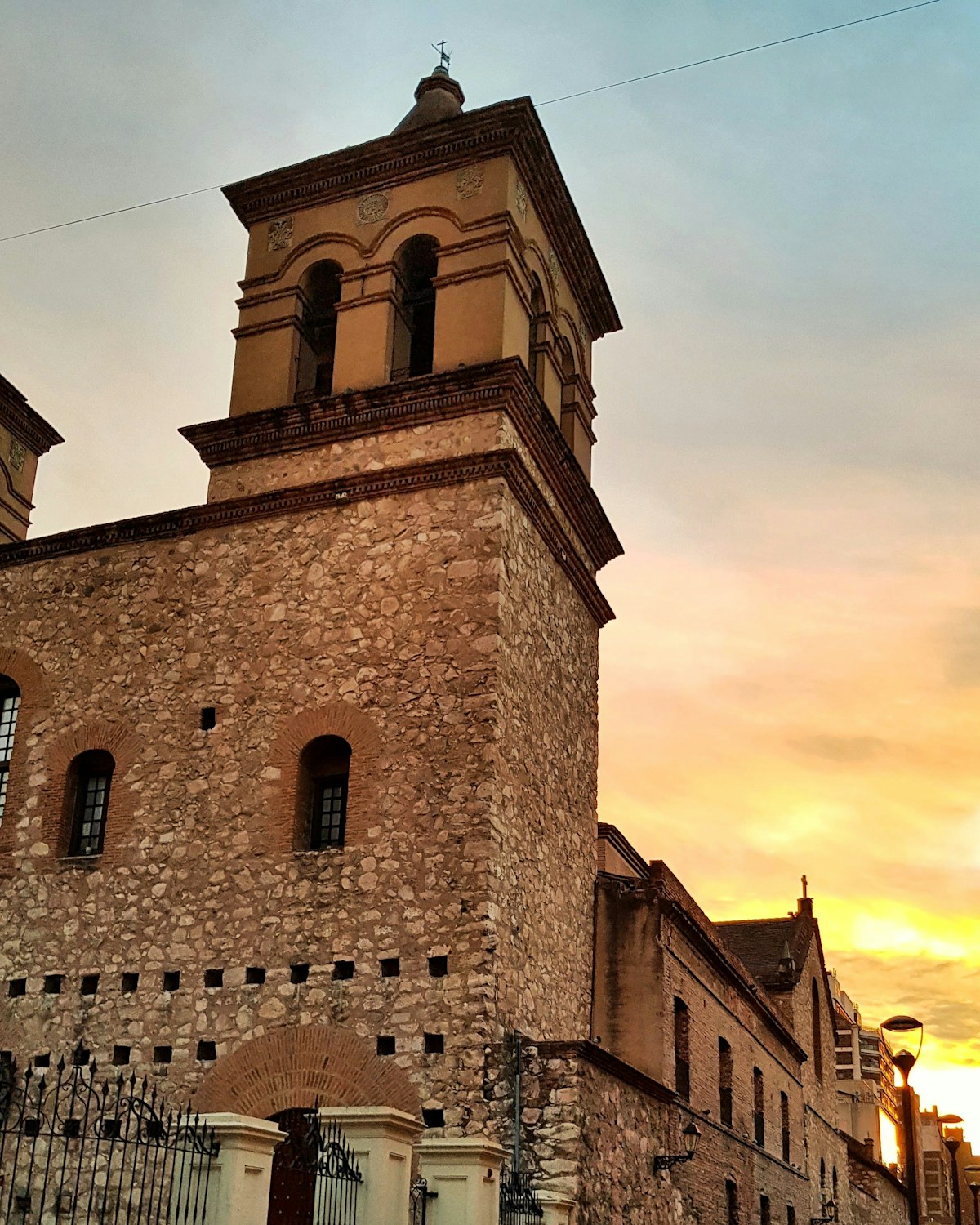
Córdoba is Argentina’s second city and home to the country’s oldest university (founded 1613). It has a young demographic - around 100,000 students attend the national university alone - and a cultural life that reflects that energy. The historic centre around the Manzana Jesuitica is compact and genuinely impressive, while the nearby Sierras offer easy access to mountain landscapes within an hour’s drive.
Manzana Jesuitica - Jesuit Block
The Jesuit Block occupies one full block in Córdoba’s historic centre, bounded by Avenida Vélez Sársfield, Caseros, Obispo Trejo, and Duarte Quirós. It is a UNESCO World Heritage Site (designated 2000, as part of the Jesuit Missions of the Guaraníes) and the most significant historical complex in the city.
The block contains:
Iglesia Compañía de Jesús: Built over more than a century from 1645, it is one of the finest Baroque churches in South America. The cedar-wood ceiling vault is constructed without nails or metal supports - an extraordinary piece of 17th-century carpentry. Entry is free.
Universidad Nacional de Córdoba: The oldest university in Argentina, founded in 1613. Parts of the original building are still in use by the faculties. The university’s historic rooms (Sala de Grados, Sala de las Academias) are open for guided visits; tours depart from the main entrance.
Colegio Nacional de Monserrat: A secondary school founded 1687, still operating. The cloistered inner courtyard is accessible to visitors.
Guided tours of the full block depart from the Museo Histórico de la Universidad inside the complex, at approximately USD 3–5 per person (as of 2026). English-language tours are available but should be booked in advance.
Córdoba Cathedral and Plaza San Martín
The Cathedral of Córdoba, facing Plaza San Martín, was begun in the 17th century and took over 200 years to complete - evident in the mix of styles across the facade and interior. Entry is free. The plaza itself is the city’s main public square and a useful orientation point for the historic centre.
The Cabildo on the western side of the plaza is the colonial civic hall, now housing a cultural centre. The arcade and courtyard are worth a look.
Barrio Güemes and the Antiques Market
Barrio Güemes, south of the centre, is Córdoba’s most characterful neighbourhood - a dense mix of antique shops, secondhand book dealers, vintage clothing stores, and restaurants. The Pasaje Revol, a covered arcade off Calle Belgrano, concentrates many of the best antique stalls. On weekends, an open-air market extends along Calle Belgrano and the surrounding blocks.
The barrio also has a strong restaurant and bar scene, particularly around Calle Achával Rodríguez. It is compact enough to walk through in 90 minutes and rewarding even without a particular goal.
Craft Beer Scene
Córdoba’s craft brewery scene is concentrated in two areas: Barrio General Paz (north of the centre) and Barrio Güemes. Worth visiting:
Berlina Córdoba: One of the most-established craft breweries, with a taproom in General Paz. Their Patagonia Amber Ale and seasonal varieties are reliable choices.
Antares Córdoba: Part of the nationally-known Antares chain (founded Mar del Plata), with a large range of styles in a relaxed taproom setting.
Local spots in Güemes: Several smaller independent breweries without national profiles operate around Barrio Güemes; asking locals or checking current recommendations is worthwhile as the scene shifts.
The Córdoba brewery scene is best explored in the evening - most taprooms open from around 6pm.
Day Trips - Sierras de Córdoba
The mountain ranges around Córdoba offer several worthwhile day trips, all within 1–1.5 hours of the city:
Alta Gracia (35 km south): A town associated with Che Guevara’s childhood (the family home is now a museum with modest entry) and the Jesuits (a well-preserved Jesuit estancia, also UNESCO-listed). A half-day excursion from Córdoba. Guided tours in Córdoba can include Alta Gracia and the broader Calamuchita valley as a single organised day trip.
Villa General Belgrano (85 km south): A town founded by German and Central European immigrants in the 1930s, with an incongruous Alpine character - German-style buildings, beer gardens, and a well-known Oktoberfest (held in October). Visits are enjoyable if slightly surreal.
La Cumbrecita (120 km southwest): A car-free village in the Calamuchita valley at 1,400 metres, with trails through mountain forest and a waterfall walk. Best in the morning before day-trip crowds arrive from Córdoba.
Cosquín and Valle de Punilla: North of the city, the Punilla valley has a chain of towns popular with Argentine summer tourists. Cosquín hosts a major national folklore festival in January.
Mercado Norte
Córdoba’s central market (Mercado Norte) on Calle Rivadavia is a working food market - produce, meat, cheese, spice vendors - with a section of inexpensive food stalls serving Argentine staples for lunch. It is busiest on weekday mornings and gives a more accurate picture of the city than the tourist centre.
Practical Notes
- The historic centre and Barrio Güemes are both walkable; the rest of the city is better served by taxi or the Córdoba bus system (CONETA card required)
- Córdoba is hot and dry in summer (December–February, up to 35°C); spring and autumn are the most comfortable seasons for city walking
- Córdoba Airport (COR) is 13 km north of the centre, with regular direct flights from Buenos Aires (AEP and EZE) taking around 90 minutes
- The city is also reachable by overnight bus from Buenos Aires (around 9–10 hours), which is a practical option for those who prefer not to fly
See also: Córdoba travel guide · Where to stay in Córdoba · Buenos Aires vs Córdoba · Córdoba digital nomad guide · Getting around Argentina