Rosario Travel Guide: Argentina's River City
Birthplace of Che Guevara and Lionel Messi, home to Argentina's Flag Memorial and one of the country's best food and arts scenes on the Paraná.
Guides for Rosario
Rosario is the largest city in Santa Fe Province and the third-largest in Argentina, with around 1.3 million people in the metropolitan area. It sits on the west bank of the Paraná River, 300 km north of Buenos Aires, and functions as one of Argentina’s primary industrial and port cities - it’s the main export point for soybeans from the Pampas, the most productive agricultural region in South America. Unlike Buenos Aires or Córdoba, Rosario was never an official capital; it grew organically as a commercial river port, which gives it a different civic character - less grand formal architecture, more functional industrial scale.
The Paraná Waterfront and Parque Urquiza
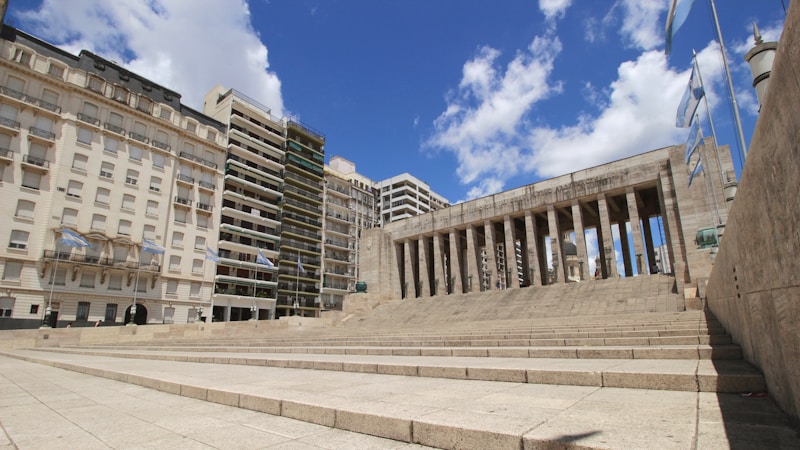
Rosario’s waterfront extends for 15 km along the Paraná, much of it accessible as a continuous riverside park. The main section through the city centre - the Complejo Museológico Isla de los Inventos, the Costa Central beach area, and the Parque de España on a converted grain elevator platform - is one of the longest uninterrupted riverside public spaces in South America. The beaches along the Paraná (not ocean beaches) are heavily used by residents in summer. The Monumento Nacional a la Bandera, completed in 1957, anchors the central waterfront.
The Flag Memorial
The Monumento a la Bandera commemorates Manuel Belgrano’s creation of the Argentine flag on this site in 1812. The complex includes a long processional approach, an eternal flame, a crypt containing Belgrano’s remains, and a 70-metre tower accessible by lift with views over the river to Entre Ríos Province and the delta islands. Entry to the monument and crypt is free; the tower lift has a small fee. The light-and-sound show on weekend evenings covers the flag’s history.
Cultural Institutions
Rosario has a stronger arts infrastructure than most Argentine cities of comparable size. The Museo de Arte Contemporáneo de Rosario (MACRO) occupies a converted grain silo on the waterfront with a collection of Argentine contemporary art — entry is approximately ARS 2,000 as of 2026, and the building’s industrial conversion is itself worth seeing. The Museo Municipal de Bellas Artes J. B. Castagnino in Parque Independencia holds the main figurative art collection; entry is free on some days and approximately ARS 1,500 on others. The Paseo del Siglo (the pedestrianised commercial centre around Florida street) and the Parque Independencia are the main social spaces of the city.
Che Guevara and Lionel Messi
Rosario has two of the most recognised names in 20th-century history attached to it, though neither has a major dedicated museum in the city. Ernesto ‘Che’ Guevara was born at Urquiza 578 on 14 June 1928; the building now has a plaque and a small mural. Visitors who want a full Guevara experience should continue to Alta Gracia in Córdoba Province, 300 km south, where the family lived during his childhood and a dedicated museum operates. Lionel Messi was born in Rosario in 1987 and trained with Newell’s Old Boys — the club’s stadium is in Parque Independencia. A large mural on the Paseo de los Inmigrantes celebrates him, and the neighbourhoods of Las Heras and Aldrey where he grew up are accessible by city bus. Newell’s Old Boys vs. Rosario Central — one of Argentina’s most intense local derbies — is occasionally available to visitors through ticket agencies; check the Superliga schedule before travelling.
Where to Stay
Hotels concentrate in the city centre near the flag memorial and along the main commercial streets. The neighbourhood of Pichincha, south of the centre, has a denser restaurant and bar scene and is a good base for travellers prioritising nightlife and dining.
Search hotels in Rosario on Booking.com
Mid-range: Hotel Solans Riviera on San Lorenzo street offers comfortable rooms from approximately USD 55 per night in a central location near the flag memorial — well-positioned for the waterfront and the cultural institutions. Hotel Majestic on Santa Fe street is a comparable option from approximately USD 50 per night with an included breakfast.
Upper mid-range: Esplendor by Wyndham on San Luis is a more design-forward option from approximately USD 90 per night, favoured by business travellers and those visiting for the arts scene.
Budget: Rosario Hostel on Santa Fe street has dorm beds from approximately USD 12 and private rooms from approximately USD 35, with a central location and a rooftop terrace.
Where to Eat
Rosario has a serious dining scene, stronger than most Argentine cities of its size. Escauriza in the Parque de España building on the waterfront specialises in river fish — surubí and dorado from the Paraná — alongside contemporary Argentine cooking; mains from approximately ARS 7,000–14,000. El Cairo, the legendary café at the corner of Santa Fe and Sarmiento, has operated since 1943 and is credited as one of the original venues that made Fernet-Branca with Coca-Cola a national ritual; it serves sandwiches and light meals throughout the day. Davis on Pichincha street is the anchor of the Pichincha bar district — cocktails, shared plates, and a crowd that gathers from 10pm. La Estancia on Córdoba street is a traditional parrilla serving asado and grilled meats at moderate prices, popular with locals at weekends. Prices listed are approximate as of 2026.
Getting There and Around
Rosario’s Islas Malvinas International Airport (ROS) connects to Buenos Aires (45 minutes) and a few domestic routes. Long-distance buses from the main terminal link to Buenos Aires (4 hours), Córdoba (6 hours), and Santa Fe (3 hours). Within the city, the bus network is comprehensive; taxis and remises are straightforward. The city centre and waterfront are walkable. Guided tours in Rosario cover the Messi circuit, Che Guevara sites, and the Flag Memorial with local guides.
Best Time to Visit
Spring and autumn are the most comfortable seasons - temperatures in the 20–25°C range, low humidity, and the waterfront parks at their most usable. Summer (December–February) is hot and humid; the Paraná beaches are in heavy use by locals. Winter is mild (10–15°C) and the city functions normally; no seasonal weather concerns limit a visit.
Explore more: Things to do in Rosario · Where to stay in Rosario · Food in Rosario
Compare cities: Buenos Aires vs Rosario
Upcoming Events in Rosario
Iguazu National Park Anniversary
Iguazu National Park Anniversary 2026, 9 November. Free park entry, cultural events, and environmental programming in Puerto Iguazú.
Cosquín National Folk Festival
Cosquín Folk Festival 2027 runs 22 to 31 January in Córdoba province - ten nights of chacarera, zamba and folk on the Plaza Próspero Molina open-air stage.
Book an experience
Top experiences in Rosario
Explore the best tours and activities in Rosario , with instant confirmation and free cancellation on most bookings.
Planning to visit? Browse hotels in Rosario, free cancellation on most bookings.