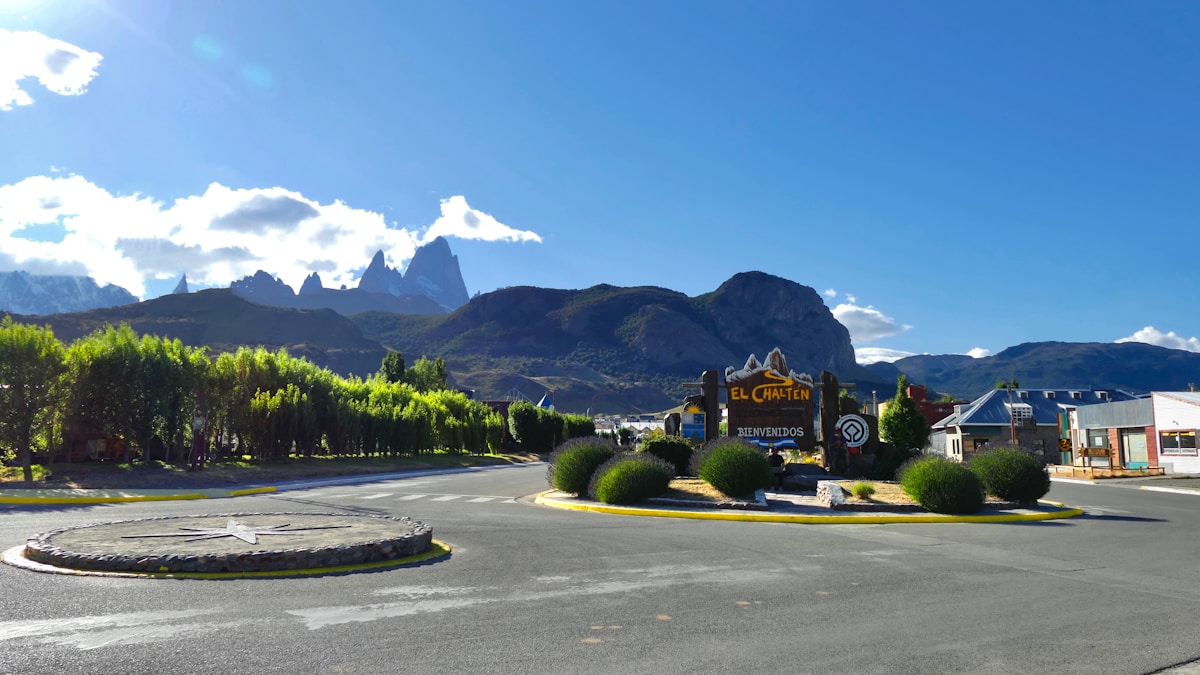
Argentine Patagonia covers a vast area of southern South America, but for trekking purposes it concentrates into two main zones: the El Chaltén area in Santa Cruz province, centred on Los Glaciares National Park, and the Bariloche area in Río Negro and Neuquén provinces, centred on Nahuel Huapi National Park. These two destinations are separated by roughly 1,500 kilometres and offer quite different trekking experiences.
This guide focuses primarily on the southern zone - El Chaltén, El Calafate, and Los Glaciares - where the trekking is most internationally recognised. Bariloche has its own article.
El Chaltén: The Trekking Capital
El Chaltén is the village created specifically as a base for trekking in Los Glaciares National Park. It was established by the Argentine government in 1985 partly to assert territorial sovereignty in a disputed border area with Chile, and partly to develop infrastructure for the growing number of climbers coming to attempt Fitz Roy and Cerro Torre. It now has a permanent population of around 1,500 people and expands significantly during the trekking season.
The park is free to enter. There are no booking requirements for day hikes, and no entry fees are collected at any point. The only requirement is registering at the park information office at the village entrance before heading out - rangers provide a weather briefing and note any trail closures or alerts.
The two flagship hikes are the Laguna de los Tres trail (21km round trip, 6–8 hours, beneath Fitz Roy) and the Laguna Torre trail (20km round trip, 5–6 hours, beneath Cerro Torre). Both are outstanding; most visitors do both over two days. A third option, the Mirador del Cóndor, is shorter and offers views across the Río de las Vueltas valley. See our dedicated Fitz Roy trek guide for trail-specific conditions, permit requirements, and gear advice.
Multi-Day Routes in El Chaltén
For hikers seeking more than day hikes, several multi-day options exist.
The Huemul Circuit (50km, 4 days) is the most demanding route in the area accessible without technical climbing skills. It circumnavigates the Cerro Huemul massif and involves several river crossings (via hand-pulled cable cars called tarambanas), significant elevation changes, and stretches of unmarked terrain. A permit is required, obtainable from the park office. Self-sufficiency with camping gear, food, and navigation is essential. This is not a beginner route.
The Vuelta al Fitz Roy - a multi-day loop around the Fitz Roy massif - is possible for experienced hikers with camping gear and requires careful planning around river crossings and weather windows.
Camping on the Laguna de los Tres route: The Río Blanco campsite (designated and free) is the standard overnight spot for hikers wanting an early start to reach the lagoon at sunrise. Permits are not required for this campsite but space is limited; rangers at the park office advise on availability.
The Weather Challenge
Wind is the defining feature of Patagonian weather. El Chaltén sits in a zone that channels wind from the Pacific across the Andes, and sustained gusts of 60–100km/h are common during the trekking season. The mountains themselves create local conditions that bear little relation to what is happening in the valley. Fitz Roy is cloud-free for an average of roughly one day in three during the peak season - clear views of the summit require patience and ideally multiple days in the area.
Rain is frequent and can arrive with little warning. The lenga beech forest that covers the lower slopes of the valley provides shelter on lower sections of trail, but the upper reaches - the final climb to Laguna de los Tres, the upper Laguna Torre trail - are fully exposed. Waterproofs and wind-resistant layers are not optional items in a Patagonian pack; they are the core of what to carry.
Gear Essentials
Non-negotiable: Waterproof jacket (not just water-resistant), wind-proof trousers or over-trousers, warm mid-layer, gloves, sun protection (UV intensity is high at southern latitudes), trekking poles (particularly useful on steep descents), and adequate footwear with ankle support. Trail runners are acceptable for the main day hikes in dry conditions; waterproof hiking boots provide better security in wet weather.
Useful: A lightweight down or synthetic insulated jacket (for summit areas and cold mornings), gaiters (for scree sections), a small headlamp (for pre-dawn starts or in case of delays), a water filter or tablets, and a portable battery pack (no charging facilities on trail).
For overnight trips: All the above, plus a 3-season sleeping bag rated to -5°C or lower, a free-standing tent capable of withstanding high wind, and enough food for the full duration plus a one-day emergency buffer.
El Calafate: Glacier Base
El Calafate is 220 kilometres from El Chaltén by paved road and serves as the regional transport hub and a base for visiting Perito Moreno Glacier in the southern section of Los Glaciares National Park. It has better accommodation and transport links than El Chaltén (including a domestic airport with daily flights from Buenos Aires) and is the logical arrival and departure point for the area.
The Perito Moreno Glacier is accessible on a day trip from El Calafate. It is the most visited attraction in Argentine Patagonia and worth combining with El Chaltén - the two experiences are complementary: one is active mountain trekking, the other is direct access to one of the most impressive glacier systems in the world. Our Perito Moreno Glacier tour guide and Los Glaciares National Park guide cover the full range of options in the southern park sector.
Getting There
El Calafate has daily flights from Buenos Aires (Ezeiza and Aeroparque) with Aerolíneas Argentinas and LATAM. Flight time is approximately 3 hours and 15 minutes. Buses from El Calafate to El Chaltén depart daily during the season and take approximately 3.5 hours.
El Chaltén has no airport. Road access is the only option - via El Calafate or, for overlanders, via Ruta 40 from the north.
The season for trekking runs November to April. Outside this window, most accommodation in El Chaltén closes, and some trails become dangerous due to ice and snow. November and March are shoulder months with fewer crowds; December and January are the peak with the most daylight but also the most visitors.
Top Patagonia Trekking Tours: Prices at a Glance
Los Glaciares National Park entry is free in the northern (El Chaltén) section. Entry fees apply near Perito Moreno Glacier. Most GYG-listed Patagonia tours include guide and transport; accommodation and meals are noted where included. Free cancellation on most options up to 24 hours before departure.
| Tour | Duration | Includes | Price (approx.) |
|---|---|---|---|
| Guided Day Hike in El Chaltén (Laguna de los Tres or Torre) | Full day | Certified guide, trail briefing | from $40 pp |
| Perito Moreno Glacier Half-Day Tour from El Calafate | 4–5 hrs | Transport from El Calafate, guide, boardwalk entry | from $45 pp |
| El Chaltén + El Calafate 3-Day Patagonia Package | 3 days | Bus transfer, guided treks, hotel both nights | from $350 pp |
| Big Ice Trek — Perito Moreno Glacier | Full day | Boat transfer, crampons, certified glacier guide | from $120 pp |
| Multi-Day Guided Patagonia Itinerary | 5–7 days | El Calafate + El Chaltén, accommodation, all guided treks | from $700 pp |
For trekking in the Lake District, see our Bariloche trekking guide. Browse all options via Argentina Patagonia tours on GetYourGuide.