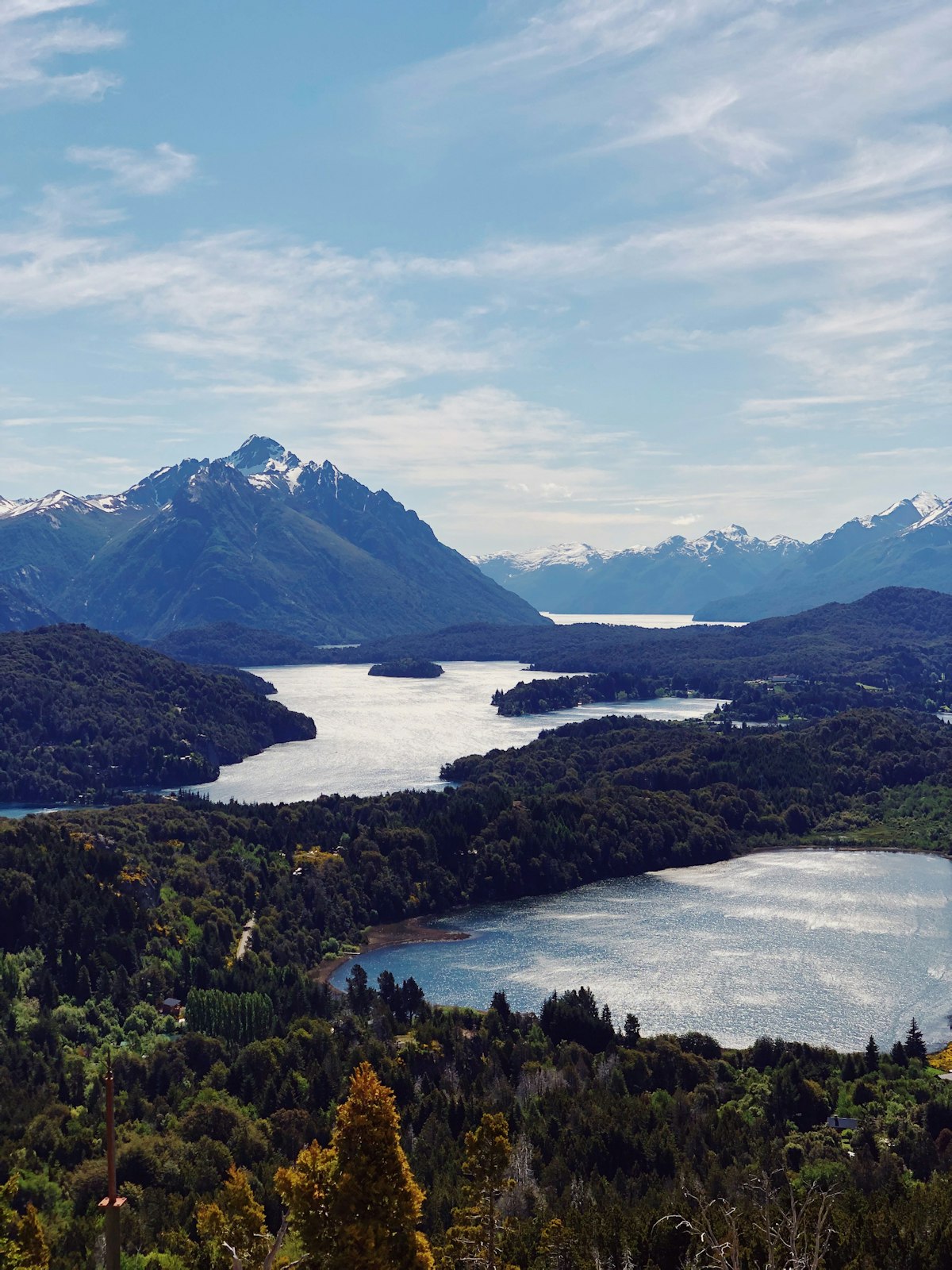
Bariloche occupies a different position in Argentine trekking compared to the southern Patagonian destinations of El Chaltén and El Calafate. Where those centres offer raw, remote wilderness accessible to fit but non-technical hikers, Bariloche sits within Nahuel Huapi National Park - a more established park infrastructure that predates Los Glaciares by several years, with a tradition of mountain hut (refugio) networks, well-marked trails, and a broader range of terrain types.
The result is a trekking destination that suits a wider range of experience levels and provides more route options for multi-day walking without camping gear.
Nahuel Huapi National Park
Nahuel Huapi was established in 1934, making it the first national park in Argentina. It covers around 700,000 hectares in the Río Negro and Neuquén provinces, centred on Lake Nahuel Huapi - a 557km² glacier-carved lake with a complex shoreline of bays, peninsulas, and islands. The park encompasses alpine zones above 2,000 metres, temperate Valdivian rainforest on the Chilean-facing slopes, and drier steppe on the eastern side.
The city of Bariloche (officially San Carlos de Bariloche) sits on the southern shore of the lake at 770 metres above sea level and serves as the park’s main gateway. The Club Andino Bariloche, the mountaineering club that maintains trails and refugios throughout the park, has its office in the city and is the primary source of current trail conditions.
Key Day Hikes
Cerro Campanario - 3.5km round trip, 250m gain, 1.5–2 hours. A short, steep trail ending at a viewpoint frequently cited as one of the most photogenic in the Lake District: a 360-degree panorama over Lago Nahuel Huapi and the peaks beyond. There is also a chairlift to the summit for those who prefer not to hike. Best done early morning before clouds develop.
Cerro Otto - 8km round trip, 800m gain, 4–5 hours from the city edge. A more substantial hike than Campanario, with excellent views north over the lake and south toward Cerro Catedral. The summit has a revolving restaurant (reached also by cable car). The trail passes through forest before opening to rocky upper slopes.
Cerro Catedral Base Trail - variable distance. Cerro Catedral is the main ski resort south of Bariloche and in summer becomes a trekking destination. The base lifts operate in summer as a trekking aid, giving access to the 1,600-metre level from which trails extend to higher zones. The area above the lift access is rocky, exposed alpine terrain.
Laguna Verde and Laguna Los Cántaros - from Cerro Catedral base, accessible via trail. The two small glacial lakes at altitude offer reflections of the surrounding peaks and are less visited than the main Campanario/Otto viewpoints.
Filo de los Contrafuertes - from Pampa Linda, 15km round trip, 6–7 hours. Pampa Linda is a valley in the southern part of the park, accessible by bus from Bariloche (seasonal service). The trail climbs through beech forest to an exposed ridge with views toward Monte Tronador and the Argentine-Chilean border glaciers.
Multi-Day Routes
The Refugio Loop (Paso de las Nubes) - a 2–4 day route connecting the refugios of Neumeyer, Laguna Negra, and others in the circuit south and east of Bariloche. Each night in a refugio (with meals) is paid; advance booking is essential in December and January. This route passes through varied terrain - forest, alpine meadow, scree - and is well-suited to hikers with moderate experience.
Tronador Circuit - based at Pampa Linda, this 3–4 day route accesses the glaciers on the slopes of Monte Tronador (3,470m), the highest peak in Nahuel Huapi. The mountain straddles the Argentine-Chilean border; the Argentine side has accessible glaciers visible from the trail. This route involves some glacier terrain and is best done with a guide or with glacier travel experience.
Traverse routes - longer traverses crossing the park from south to north or east to west are possible with multi-week time and full camping gear; these require serious navigation skills and experience with mountain weather.
Practical Notes
Club Andino Bariloche maintains an office on Calle 20 de Febrero in the city centre. They sell detailed topographic maps of the park, provide weather forecasts, and advise on current trail and refugio conditions. Always check conditions here before a multi-day route.
Weather: Bariloche receives more rainfall than southern Patagonia because it sits closer to the Chilean coast. The lake district microclimate means rain can arrive from the west at any time of year. The wind is less extreme than in El Chaltén, but the rain is more consistent.
Access to trailheads: Many day hike trailheads can be reached by public bus from Bariloche. The No. 10 bus serves Cerro Catedral; other routes serve different zones. A rental car or remise expands options significantly.
Gear: Similar to all Patagonian trekking - waterproof layers are non-negotiable. Hiking poles are helpful on the steeper trails. The terrain is generally better-maintained and less technically demanding than Los Glaciares trails, but the weather requires the same preparation.
Top Bariloche Trekking Tours: Prices at a Glance
Nahuel Huapi National Park entry fees are modest and paid at trailheads. Refugio accommodation on multi-day routes is booked separately through Club Andino Bariloche. Most GYG-listed tours include transport to trailheads and a local guide. Free cancellation available up to 24 hours before departure.
| Tour | Duration | Includes | Price (approx.) |
|---|---|---|---|
| Guided Day Hike: Cerro Campanario or Cerro Otto | 3–5 hrs | Local guide, transport from Bariloche centre | from $35 pp |
| Full-Day Trek to Filo de los Contrafuertes (Pampa Linda) | Full day | Bus to Pampa Linda, certified guide, lunch | from $65 pp |
| Guided Multi-Day Refugio Circuit (Paso de las Nubes) | 2–3 days | Guide, refugio bookings, half-board meals | from $250 pp |
| Tronador Glacier Day Tour | Full day | Transport to Pampa Linda, guide, glacier viewpoint | from $55 pp |
| Lake District Traverse: Multi-Day Private Trek | 4–5 days | Private guide, accommodation, most meals | from $500 pp |
Guided trekking tours in Bariloche are available for those who prefer a local guide for the multi-day refugio circuits or the more technical Tronador approaches.
See also: Bariloche travel guide · Trekking around Bariloche - city-sub guide · Skiing at Cerro Catedral · Patagonia trekking guide · San Martín de los Andes travel guide