Visiting Perito Moreno Glacier: What to Expect
Book an experience
Guided treks & hikes
Book a guided trek — gear, route knowledge, and safety handled by experienced local guides.
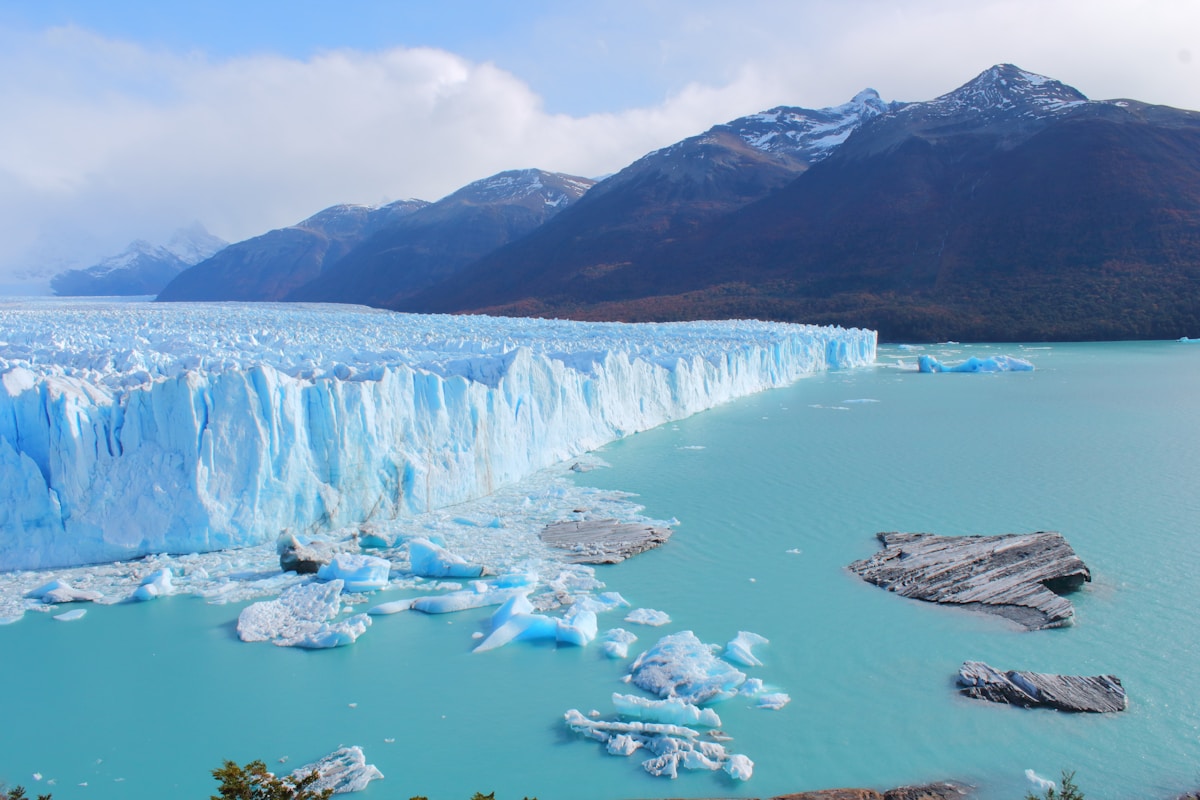
Perito Moreno Glacier is the most visited natural attraction in Argentine Patagonia and one of the most accessible major glaciers in the world. Unlike most glaciers, which require helicopter access, long hikes, or boat approaches to see closely, Perito Moreno is viewed from a system of boardwalks that bring you to within 300 metres of a 5-kilometre-wide, 60-metre-high wall of blue ice.
The glacier is located in the southern section of Los Glaciares National Park, 80 kilometres from El Calafate on a paved road. It forms part of the Southern Patagonian Ice Field and flows from the Campo de Hielo Sur into the Lago Rico arm of Lago Argentino. The name comes from Francisco Moreno, a nineteenth-century Argentine explorer and geographer who surveyed much of Patagonia.
The Boardwalk Experience
The primary access point is a peninsula (Península de Magallanes) that juts into Lago Rico directly opposite the glacier face. A network of walkways and stairways runs along the peninsula’s ridge and descends to several viewing platforms at water level. The total walkable distance is approximately 4 kilometres with multiple viewpoints at different angles and distances.
The ice face is a continuously moving, cracking, and collapsing structure. Calving events — portions of the ice face breaking off and falling into the lake — occur several times per hour during the warmest part of the day. The sound carries across the water several seconds before the visual impact as the fallen ice creates waves that roll toward the boardwalks. Large calving events send 20–30 metre columns of ice into the lake. These are impossible to predict with precision but reliable in aggregate — spend two to three hours at the boardwalk and you will see multiple events.
The colour of the ice varies with depth and compression. Deeply compressed glacier ice appears blue rather than white because the dense structure absorbs red and yellow wavelengths while reflecting blue. Surface ice and recently calved blocks are white or pale blue; older, deeper ice exposed at the face ranges from aquamarine to deep cobalt.
Entry Fees and Logistics
The park collects an entry fee at the barrier approximately 15 kilometres from the glacier. Fee categories differ for Argentine nationals, Mercosur residents, and international visitors. Current fee amounts are posted at the barrier; they have increased annually in recent years and are best confirmed immediately before visiting.
Tour operators in El Calafate run minibus services to the glacier with several departure times in the morning (typically 8am and 9am) and return trips in the afternoon (around 2pm, 3pm, and 5pm). The standard excursion allows 3–4 hours at the glacier. Prices are fixed and similar across operators; booking the day before is sufficient except during peak season (January–February), when some services fill.
Renting a car in El Calafate and self-driving is straightforward on the paved road. Parking is available at the glacier site. This option allows more flexibility with arrival and departure times.
Ice Trek Options
Big Ice: A guided glacier trek across the upper surface of Perito Moreno. Groups cross to the glacier by boat from a dock near the main boardwalk area, then hike through forest to the glacier edge. Crampons are provided and fitted on site. The trek lasts approximately 1.5 to 2 hours on the ice itself, with time at a rest point where guides serve whisky on glacier ice — an optional but popular tradition. Total excursion time from El Calafate is approximately 5–6 hours. Maximum group size is around 16. Pre-booking is required and availability is limited in January–February.
Mini Trek: A shorter glacier walk, approximately 1.5 hours in duration, using the same boat access but covering less of the glacier surface. Better suited to those with limited mobility or less physical experience, or those who prefer a shorter commitment.
Both options require booking through operators in El Calafate. Several companies run them; prices are comparable across providers. The Big Ice option is the more immersive experience and worth the additional cost if you have the physical capacity.
What to Bring
Wind at the glacier face can be significant even on clear days; a windproof jacket is worth having. Sunglasses are essential — the combination of high-latitude UV intensity and ice reflection is intense. Sun protection on face and hands matters for the same reason.
Water and snacks are worth bringing; there is a restaurant/café near the main boardwalk area, but it is consistently crowded during peak hours and prices are high. Binoculars are useful for watching detail on the ice face from the lower platforms.
Camera gear: the glacier is photogenic in almost any light. Overcast days produce a more even, saturated blue in the ice; bright sun creates contrast and sparkle but can blow highlights on the white surfaces. A polarising filter is useful if shooting in direct sun.
Combining with El Chaltén
Most visitors to southern Patagonia combine El Calafate (Perito Moreno) with El Chaltén (Fitz Roy trekking). The bus between the two runs daily in the trekking season and takes approximately 3.5 hours. The standard itinerary is 2 nights in El Calafate (one full day at the glacier) and 3–4 nights in El Chaltén (Laguna de los Tres and Laguna Torre hikes). This combination gives a strong cross-section of what Argentine Patagonia offers without requiring very long distances.
Frequently Asked Questions
- How do you get to Perito Moreno Glacier from El Calafate?
- The glacier is 80 kilometres from El Calafate on a paved road. Tour operators run daily minibuses from El Calafate for a flat fee. Rental cars are available in El Calafate if you prefer to drive yourself. Journey time is approximately 1 hour 15 minutes.
- What is the best time of day to visit Perito Moreno?
- The glacier is most active — and calving events most frequent — in the warmest part of the day, typically 11am to 3pm. Morning visits offer cleaner light for photography. The site opens at 8am; arriving at opening avoids the peak crowd from tour groups.
- Does Perito Moreno Glacier still advance?
- Yes. Perito Moreno is one of a small number of glaciers worldwide that is not in sustained retreat. It advances at approximately 2 metres per day and loses an equivalent amount through calving, maintaining overall equilibrium. Periodically, it advances far enough to touch the Magallanes Peninsula, blocking a section of the lake — an event that occurs roughly once a decade.
Ready to explore?
Browse hundreds of tours and activities. Book securely with free cancellation on most options.
Browse on GetYourGuide →We may earn a small commission — at no extra cost to you.