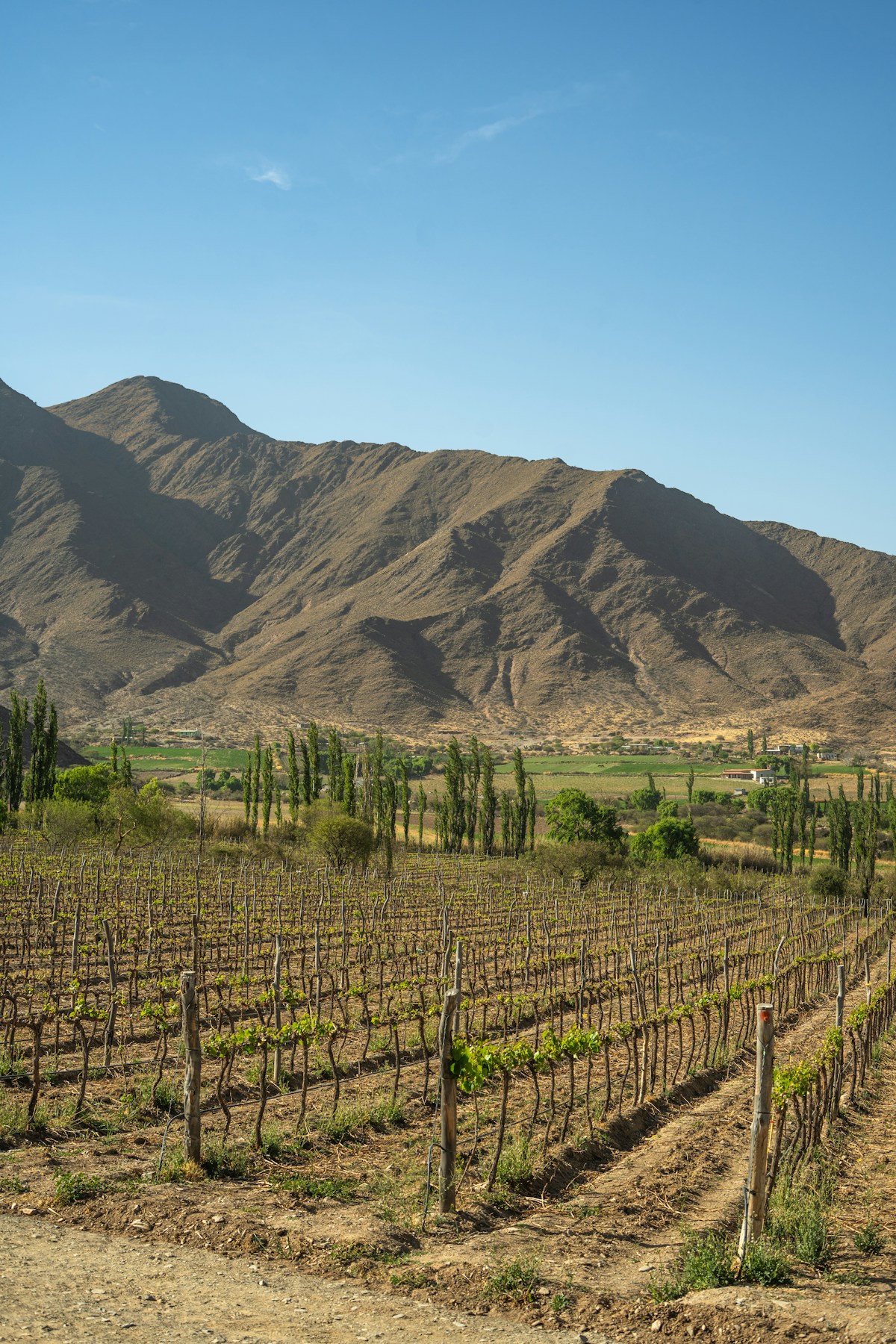
Cafayate is a small wine village of around 15,000 people in the Calchaquí Valley of Salta Province, set at 1,683 metres against red-rock canyon walls. It is Argentina’s most important high-altitude wine region — home to the world’s finest expression of Torrontés, the indigenous Argentine white grape. The village revolves around the main plaza, two wine museums, and roughly a dozen bodegas within walking or cycling distance. The surrounding landscape — terracotta earth, cacti, and vine rows against the Andean foothills — is the defining visual of the Argentine northwest. The drive from Salta on Route 68 through the Quebrada de las Conchas is one of the most spectacular road journeys in the country.
Where to Stay
Cafayate is small enough that location within the village barely matters — everything is walkable from the plaza. The real choice is between:
Town-centre guesthouses — Colonial-style properties in converted houses near the plaza. These are the most practical for exploring the village on foot and cycling to nearby bodegas.
Out-of-town wine lodges — A handful of properties set within or adjacent to working vineyards, typically 2–5 km from the village centre. These offer immersive wine-estate experiences and direct vineyard access, but require a car or taxi for restaurant evenings.
Getting to Cafayate
From Salta (190 km north): Route 68 south from Salta passes through the Quebrada de las Conchas — plan 3–3.5 hours with stops at the geological viewpoints (La Garganta del Diablo, El Anfiteatro, Los Castillos). Bus services from Salta take the same route.
From Tucumán (280 km west): Route 307 over the Abra del Infiernillo mountain pass — spectacular but slow. Allow 5–6 hours.
There is no commercial airport in Cafayate. The nearest is Salta (SLA).
Budget Guesthouses (ARS 45,000–100,000/night)
El Hospedaje El Descanso — Quintana de Niño 180. A small family-run guesthouse a block from the plaza with simple clean rooms and a garden. The hosts are a useful source of local bodega recommendations. From approximately ARS 50,000 as of 2026.
Hostel Ruta 40 — Güemes Norte 178. A backpacker hostel in a colonial building one block from the plaza, with dormitories and private rooms. Well-positioned for the wine circuit. From approximately ARS 22,000 per dorm bed.
Mid-Range Hotels and Lodges (ARS 130,000–250,000/night)
Hotel Patios de Cafayate — Güemes Norte 20. A well-regarded boutique property with rooms arranged around a colonial patio, a small pool, and breakfast. One of the most comfortable mid-range options in the village. Rates approximately ARS 160,000–220,000 as of 2026.
Hotel Killa — Colón 47. A welcoming hotel with a pool, garden, and breakfast included, on a quiet street near the plaza. Rates approximately ARS 140,000–200,000.
La Casa de la Bodega — Camino al Padre, 3 km outside village. A small lodge adjacent to an operating winery with vineyard-view rooms. Basic facilities but excellent atmosphere. Rates approximately ARS 150,000–230,000.
Wine Estate Lodges and Upscale Properties (ARS 350,000–700,000+/night)
Patios de Cafayate Wine Hotel — Ruta 40 s/n, 2 km from village. A full wine-lodge experience set within the Bodega El Esteco vineyard — pool, spa, wine tastings, vineyard tours, and excellent dining. The most complete accommodation experience in the Cafayate area. Rates from approximately ARS 450,000 as of 2026; packages include wine tasting and breakfast.
Grace Cafayate — Finca Las Nubes, 3 km from village. A boutique property in a working finca (farm estate) with individually designed rooms, a cellar, and farm-to-table dining. Rates from approximately ARS 600,000.
Seasonal Notes
- September–November (wine harvest shoulder): The Vendimia harvest festival is celebrated in March–April; bodegas are busiest in autumn. Spring (September–November) is ideal for cycling and hiking.
- July–August (winter peak): Dry and cool; the canyon landscapes are photogenic. Most popular tourist months — book ahead.
- December–February: Hot (up to 35°C), occasional afternoon storms. Fewer visitors; bodega visits quieter.
Practical Tips
- Most bodegas within the village (Bodega Nanni, Bodega Etchart, El Esteco, Vasija Secreta) offer free or low-cost tastings — no advance booking required for most.
- Rent a bicycle from one of the plaza shops for the vineyard circuit — the flat valley roads are ideal for cycling.
- Car hire is strongly recommended for the full Quebrada de las Conchas route and to reach the more remote bodegas.
Book your Cafayate trip: Tours in Cafayate · Travel insurance · Car hire
See also: Cafayate city guide · Hotels in Salta