Cafayate, Argentina: Travel Guide
High-altitude Torrontés tastings, red-rock canyon scenery, and a walkable wine village centre - Cafayate rewards anyone who makes the drive from Salta.
Guides for Cafayate
Cafayate is a town of around 15,000 people in the Calchaquí Valleys of Salta Province, sitting at approximately 1,683 metres in a dry, sunny valley enclosed by red sandstone mountains. It is the centre of Argentina’s high-altitude wine production and home to around 20 wineries ranging from small family operations to larger bodegas with full visitor infrastructure. The town itself is compact - most of what visitors need sits within a few blocks of the main plaza - and the combination of wine, scenery, and outdoor activity makes it one of the more complete small destinations in the northwest.
Winery Visits
The bodegas of Cafayate range from walk-in family properties to larger estates that require advance booking. Bodega El Esteco, one of the most established, occupies a colonial-style property on the edge of town and offers guided tours with tastings of Torrontés and Malbec; the standard tasting of four wines costs approximately ARS 6,000 and includes a winery tour. Bodega Nanni is a smaller, family-owned operation producing certified organic wines that accepts walk-in visits - their Torrontés is typically among the most aromatic in the region. Bodega Domingo Molina, a family estate about 5 km from town, produces small-batch single-vineyard wines and offers tastings with advance notice. Bodega Etchart, one of the valley’s larger producers, has a full visitor centre with a restaurant on site. Several wineries are within cycling distance of the town centre; bike rental from shops near the plaza costs approximately ARS 4,000 for a full day and is one of the standard ways to spend a morning among the vines. The town’s central plaza has a small wine museum (Museo de la Vid y el Vino) that provides context on the region’s viticulture history; entry costs approximately ARS 1,500. Torrontés wine paired with locro (Andean corn stew) or empanadas at a plaza restaurant is the definitive Cafayate lunch.
Quebrada de Cafayate
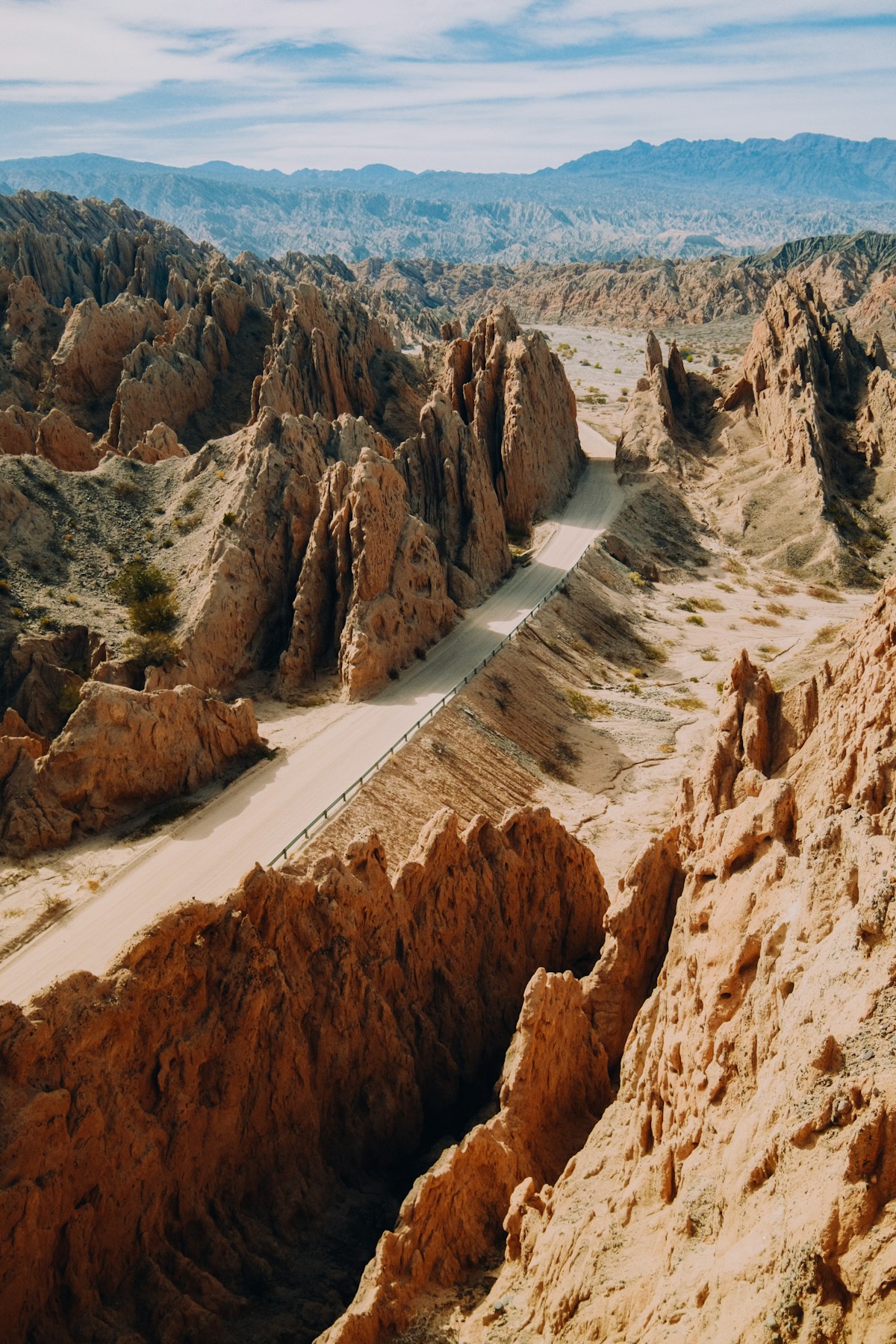
The quebrada stretches for roughly 50 km north of Cafayate toward Salta, carved by the Río de las Conchas through red and ochre sandstone over millions of years. Named formations along the road include El Anfiteatro (a natural amphitheatre with near-perfect acoustics, used for impromptu concerts by travelling musicians), La Garganta del Diablo (Devil’s Throat, a narrow slot where the canyon walls close overhead), Los Castillos (castellated red towers), and La Yesera (a white gypsum outcrop contrasting with the surrounding ochre). Driving or cycling through the quebrada is the most common activity; the road is paved and the named formations are accessible with short walks from the roadside. Cycling the full 50 km from Cafayate to the end of the quebrada takes 4–5 hours one-way; many cyclists take a taxi or bus north and cycle back with a tailwind. The best light is in the afternoon when the low sun illuminates the western-facing canyon walls from an angle that deepens the colours.
Calchaquí Valleys Road (Route 40 North)
The road north from Cafayate on Route 40 toward Cachi passes through 180 km of unpaved track through high Andean scenery, indigenous villages, and pre-Hispanic ruins at Quilmes - a large fortified settlement occupied for over 1,000 years before Spanish conquest. This route takes a full day and requires a vehicle with reasonable clearance; it should not be attempted after rain. Several operators in Cafayate run guided 4WD tours along this route; wine tours near Cafayate can be booked from Salta and include this stretch.
Where to Stay
Cafayate has a good spread of accommodation for its size - boutique hotels, small guesthouses, and a few higher-end wine-country lodges on the outskirts. The blocks around Plaza 20 de Febrero are the most convenient location. Booking ahead is advisable in the April–October peak season. Patios de Cafayate, a converted wine estate, is the top-end option with rooms from approximately USD 180 per night including breakfast. Hotel Asturias on the main plaza offers mid-range rooms from approximately USD 50 per night. Hostal Ruta 40 on Calle Colón is a budget-friendly guesthouse from approximately USD 20 per dorm bed or USD 35 for a private room. For dining, El Rancho on Calle Güemes serves regional dishes including locro (Andean corn stew) and empanadas with local wine pairings (mains from approximately ARS 5,000–10,000). La Carreta de Don Olegario on Avenida General Güemes is a well-regarded regional restaurant known for Andean dishes and grilled meats (mains from approximately ARS 6,000–11,000). Heladería Miranda, on the plaza, is known for wine-flavoured ice cream - Torrontés and Cabernet Sauvignon flavours are the signatures. Bodega El Esteco charges approximately ARS 6,000 for a standard tasting of four wines; Bodega Nanni offers free tastings for walk-in visitors. Prices listed are approximate as of 2026.
Search hotels in Cafayate on Booking.com
See our full hotels in Cafayate guide for named picks across wine-country lodges, plaza guesthouses, and budget options.
Getting There and Around
Cafayate has no airport; the nearest is in Salta, 180 km north. From Buenos Aires, fly to Salta (approximately 2 hours) then take a bus or drive to Cafayate (3.5–4 hours via the quebrada) - the total journey from Buenos Aires is approximately half a day. Buses from Salta city run to Cafayate several times daily. Driving from Salta gives the flexibility to stop at quebrada formations on the way south. There is no train connection. Within Cafayate, walking and cycling cover most of the town and nearby bodegas; Route 40 north toward Cachi requires a vehicle with reasonable ground clearance.
Best Time to Visit
March and April - harvest season - are when the vineyards are most active and the weather is warm and clear. The dry season generally (April to October) is the most reliable for road access and outdoor activities. Cafayate’s dry climate means it receives little rain in any season; the high altitude keeps temperatures moderate even in summer.
Explore more: Things to do in Salta · Salta food guide · Wine regions of Argentina · Mendoza wine tours
Nearby: Salta travel guide · Jujuy travel guide
Upcoming Events in Cafayate
Iguazu National Park Anniversary
Iguazu National Park Anniversary 2026, 9 November. Free park entry, cultural events, and environmental programming in Puerto Iguazú.
Cosquín National Folk Festival
Cosquín Folk Festival 2027 runs 22 to 31 January in Córdoba province - ten nights of chacarera, zamba and folk on the Plaza Próspero Molina open-air stage.
Book an experience
Top experiences in Cafayate
Explore the best tours and activities in Cafayate , with instant confirmation and free cancellation on most bookings.
Planning to visit? Browse hotels in Cafayate, free cancellation on most bookings.