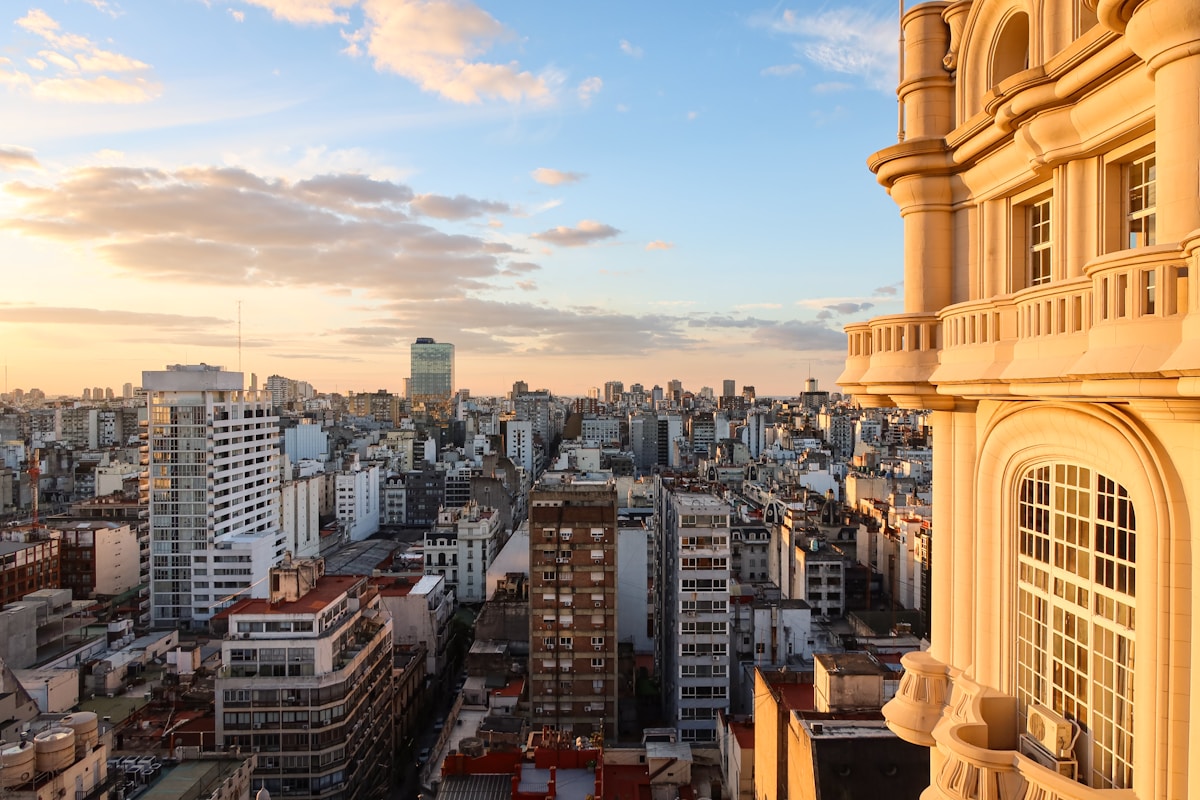
Buenos Aires is one of South America’s great hotel cities - a destination where colonial mansions, 1930s art deco buildings, and modern design hotels sit within a few blocks of each other. Whether you’re arriving for a long weekend or using the city as a base for wider Argentina travel, getting your neighbourhood right matters almost as much as the hotel itself.
Understanding Buenos Aires Neighbourhoods
The city’s 48 barrios each have a distinct character, but most visitors concentrate in a handful of areas. The key decision is usually between Palermo, Recoleta, San Telmo, and the Microcentro - each suits a different travel style.
Palermo is the largest and most diverse barrio, home to the majority of Buenos Aires’ independent hotels, boutique guesthouses, and short-term rentals. Palermo Soho (around Plaza Serrano) has the densest restaurant and nightlife scene. Palermo Hollywood, slightly north, is slightly quieter. Palermo Chico, bordering Recoleta, is residential and calm. The Subte D line connects Palermo to the city centre in under 20 minutes.
Recoleta is Buenos Aires at its most European - wide boulevards, ornate belle époque buildings, and formal café culture. It is the city’s historic upper-class neighbourhood and still has the highest concentration of upscale hotels. The famous Recoleta Cemetery, the Floralis Genérica sculpture, and the MALBA museum of Latin American art are all within walking distance. Slightly quieter at night than Palermo, and the restaurant scene is more traditional.
San Telmo is the oldest barrio, with cobblestone streets and 18th and 19th-century buildings. The Sunday flea market at Plaza Dorrego draws large crowds. Several of the city’s oldest milongas (tango dance halls) operate here nightly. Accommodation is generally cheaper than Palermo and Recoleta, though the neighbourhood borders less safe areas to the south - stick to the main tourist zone.
Puerto Madero is the converted dock district east of the centre. Architecturally modern, extremely safe, and home to the city’s most theatrical hotels including the Faena. The trade-off is that the neighbourhood has limited organic street life and everything requires a taxi or ride-share to reach.
Microcentro suits business travellers who need to be near government buildings, banks, and the Congress area. For leisure travel, the area is noisy, traffic-heavy, and empties quickly after 7pm - not the recommended base for a first visit.
Getting to and from Buenos Aires Airports
Ezeiza International Airport (EZE) handles almost all long-haul international arrivals. It sits 35 km southwest of central Buenos Aires - allow 45–75 minutes by road, longer in peak traffic. Options into the city:
- Remis (radio taxi from airport) - the most reliable option. Fixed price agreed before leaving the terminal, currently around ARS 30,000–40,000 as of 2026. Follow signs to the official taxi desk inside arrivals.
- Manuel Tienda León bus - shuttle bus service to Retiro terminal, from ARS 4,500 per person. Comfortable and reliable but adds time if your hotel is far from Retiro.
- Private transfer - book in advance for door-to-door service, particularly practical for late arrivals or large groups.
Jorge Newbery Airport (AEP) is the domestic terminal, 6 km from Palermo and around 20 minutes by taxi (ARS 4,000–6,000). Very convenient if you’re arriving from Mendoza, Bariloche, or other Argentine cities.
Budget Hotels and Hostels (ARS 18,000–60,000/night)
Buenos Aires has some of South America’s best hostels - buildings with real character, often in historic properties.
Millhouse Youth Hostel - Hipólito Yrigoyen 959, Microcentro. The city’s most famous hostel, housed in a 19th-century mansion with a rooftop terrace bar that’s a social hub for international travellers. Dorm beds from approximately ARS 18,000–28,000 per night as of 2026; private rooms from ARS 65,000. Central location walking distance from Plaza de Mayo and Congreso.
El Hostal de Granados - Chile 374, San Telmo. A restored colonial building in the heart of San Telmo, well-run and popular with travellers who want neighbourhood character rather than a party atmosphere. Dorm beds from around ARS 16,000; doubles from ARS 55,000.
America del Sur Hostel - Chacabuco 718, San Telmo. A converted townhouse with a rooftop terrace and a social common area. Solid budget option for those who want San Telmo’s atmosphere without the higher prices of Palermo. Dorm beds from approximately ARS 15,000.
Estoril Hotel - Av. de Mayo 1234, Microcentro. A classic old-Buenos Aires hotel on the historic Avenida de Mayo boulevard, the architectural heart of the city. Not a hostel - old-fashioned single rooms with shared or private bathrooms start from approximately ARS 45,000. Good for budget travellers who want a private room in a building with real history.
Mid-Range Hotels (ARS 90,000–200,000/night)
Magnolia Hotel - Julián Álvarez 1746, Palermo. Seventeen rooms in a restored 1920s house, individually decorated with antique furniture, and with a small garden. Breakfast included. One of Palermo’s best mid-range picks. Rates approximately ARS 120,000–170,000 per night as of 2026.
Duque Hotel - Guatemala 4364, Palermo. Eighteen rooms in a converted townhouse, lightly designed and with a small pool. The location puts you in the heart of Palermo Soho’s restaurant strip. Rates approximately ARS 90,000–140,000.
Home Hotel Buenos Aires - Honduras 5860, Palermo. A boutique property with a loyal repeat-visit following - pool, garden, and rooms that lean toward a well-travelled residential aesthetic. Rates approximately ARS 130,000–190,000.
Luxury Hotels (ARS 350,000–700,000+/night)
Alvear Palace Hotel - Av. Alvear 1891, Recoleta. Buenos Aires’ most storied hotel, open since 1932 and still the definitive address in Recoleta. The Le Pré Catalan restaurant is one of the city’s finest formal dining rooms. Service is formal and extremely attentive. Rates from approximately ARS 450,000 per night as of 2026.
Faena Hotel Buenos Aires - Martha Salotti 445, Puerto Madero. Philippe Starck designed the interiors; the result is theatrical, opulent, and unlike anything else in the city. On-site Cabaret, the Faena Arts Center, spa, and pool. The neighbourhood lacks street character but the hotel is a self-contained universe. Rates from approximately ARS 500,000.
Park Hyatt Buenos Aires (Palacio Duhau) - Av. Alvear 1661, Recoleta. A 1934 palace connected by underground art passage to a modern tower. One of Recoleta’s best hotel restaurants and a spa with an indoor pool. Rates from approximately ARS 420,000.
Casa Lucía Hotel - Billinghurst 1844, Palermo. Ten rooms in a Belle Époque house, intimate and personal in a way the grand hotels can’t replicate. Each room has a different character. Excellent for couples who want attentive boutique service. Rates approximately ARS 320,000–450,000.
Seasonal Pricing and Availability
Buenos Aires is a year-round destination, but accommodation prices and availability vary meaningfully by season:
- Peak summer (December–February): The city’s own holiday season, plus peak international arrivals. Hotels fill quickly, particularly boutique properties. Book 4–6 weeks ahead and expect rates 15–25% higher than shoulder season.
- Shoulder season (March–May, September–November): Ideal conditions - mild temperatures, good availability, and more negotiable rates. September and October are particularly pleasant. A good time to find mid-range properties below their standard asking rates.
- Winter (June–August): The city stays lively year-round, but winter is cooler and wetter. Accommodation prices soften slightly. August is an exception - Buenos Aires Tango Festival draws large crowds and hotels in Palermo and San Telmo fill up.
- Holiday periods: Semana Santa (Easter week) and the January–February summer break see hotel prices spike and availability tighten across the city.
Practical Tips
- Arriving from Ezeiza International Airport (35 km away)? Booking a private transfer from the airport in advance avoids the taxi queue and makes it straightforward to reach your hotel in any barrio.
- Most mid-range and luxury hotels in Buenos Aires quote prices in USD to hedge against exchange rate fluctuation. Budget hostels typically quote in pesos.
- Air conditioning is standard in mid-range hotels and above - important for December to February when temperatures regularly exceed 30°C.
- WiFi quality varies significantly between properties; if you need reliable connectivity for work, check recent reviews specifically for WiFi.
- Tipping hotel staff is customary - ARS 1,000–2,000 for porters, ARS 2,000–3,000 for housekeeping per stay.
- Hotels in Palermo and San Telmo are convenient for the city’s best restaurant areas. Recoleta has a strong traditional dining scene but less variety in the budget bracket.
Book your Buenos Aires trip: Tours in Buenos Aires · Travel insurance · Car hire
See also: Buenos Aires city guide · Buenos Aires neighbourhoods guide · Things to do in Buenos Aires · Buenos Aires food guide