Buenos Aires is built from distinct barrios - neighbourhoods with their own architecture, social character, and rhythm. Getting the city right means understanding which barrio does what. This guide covers the six you need to know: what each one feels like, what’s worth your time, where to eat, and how to get around.
Palermo
Vibe: The city’s largest and most cosmopolitan barrio, Palermo sprawls across three sub-zones - Palermo Soho (boutiques and restaurants), Palermo Hollywood (bars and media companies), and Las Cañitas (steakhouses and nightlife). During the day it’s all tree-lined streets, independent clothing boutiques, and café terraces. After dark it transitions to the best bar scene in the city.
What to do: The Buenos Aires Botanical Garden and Japanese Garden sit in the northern part of the barrio - both are free or low-cost and genuinely worth the hour. The MALBA (Museo de Arte Latinoamericano de Buenos Aires) on Avenida Figueroa Alcorta holds one of the best Latin American art collections in the world, with a strong focus on 20th-century Argentine painters. Entry is approximately ARS 8,000–12,000 (as of 2026). The weekend markets along Plaza Armenia and Plaza Serrano sell leather goods, jewellery, and artisan work.
Where to eat: Don Julio on Guatemala Street is the most-cited parrilla in Buenos Aires - consistently on regional best-restaurant lists, specialising in grass-fed Argentine beef with a wine list of almost absurd depth. Expect to pay ARS 25,000–40,000 per person with wine, and book at least a week in advance. El Preferido de Palermo on Borges and Jorge Luis Borges is a neighbourhood bodegón (traditional tavern) that’s been operating for decades - empanadas, milanesas, and local wine at ARS 8,000–15,000 per person. For international options, Mishiguene on Lafinur does modern Argentine-Jewish cooking with creative tasting menus from around ARS 30,000.
Safety: Palermo is the safest barrio for walking at night among the options in this guide. Standard urban precautions apply - don’t walk with your phone out in less-lit streets after midnight.
Getting there: Subte (subway) Line D to Palermo or Scalabrini Ortiz stations. Taxis and Uber are both reliable and inexpensive from the centre.
San Telmo
Vibe: The oldest surviving barrio in Buenos Aires, San Telmo has 19th-century architecture, cobblestone streets, and a reputation that straddles bohemian and gritty. It’s the spiritual home of tango culture, and on Sunday afternoons the famous Feria de San Telmo antiques market fills the streets from Plaza Dorrego down to the waterfront.
What to do: The Sunday market is the main draw - antiques, vintage clothing, and street performers, with spontaneous tango happening on Plaza Dorrego throughout the afternoon. The Mercado de San Telmo, a covered 19th-century market hall on Defensa, has been renovated into a food and artisan market but retains its original cast-iron structure. For tango, San Telmo has a concentration of milongas (tango dance halls) - La Catedral and El Viejo Almacén are both well-established, though El Viejo Almacén leans more towards the tourist dinner-show format. See our tango guide for how to navigate the milonga scene.
Where to eat: Bar El Federal on Perú and Carlos Calvo is one of the oldest bars in Buenos Aires - wood-panelled, with an antique espresso machine, good sandwiches and empanadas, ARS 5,000–10,000 per person. Parrilla Las Cabras on Balcarce is a working parrilla popular with both locals and visitors, with full asado cuts at ARS 12,000–20,000 per person. El Baqueano on Chile and Bolívar does creative tasting menus built around Argentine game and unusual proteins - around ARS 40,000+ with drinks.
Safety: Higher petty theft rate than Palermo or Recoleta, particularly on and around Plaza Dorrego during the Sunday market. Keep cameras close, avoid leaving bags unattended, and be alert in side streets away from the market area. Avoid the streets closer to the waterfront south of Parque Lezama after dark.
Getting there: Subte Line C to Independencia, or a 20-minute walk south from Plaza de Mayo.
Recoleta
Vibe: Buenos Aires’ most European-looking barrio - wide boulevards, French-influenced apartment buildings from the early 20th century, pavement cafés, and embassies. The pace is slower than Palermo. The demographic skews older and wealthier, and the restaurant prices reflect that. The Recoleta Cemetery makes it one of the most-visited neighbourhoods in the city.
What to do: Cementerio de la Recoleta is the non-negotiable stop - a city-within-a-city of mausoleums housing Argentina’s elite from the last 200 years, including Evita Perón’s tomb (technically in the Duarte family vault, clearly signposted). Entry is free. Allow 1–2 hours. The Museo Nacional de Bellas Artes on Avenida del Libertador is Argentina’s national art museum - free admission, solid European collection alongside Argentine works. The weekend Feria de Recoleta (artisan market along Avenida Quintana) runs Saturday and Sunday.
Where to do it: La Biela café on Avenida Quintana, opposite the cemetery, has been an intellectual meeting point since the 1950s - overpriced by Buenos Aires standards but a legitimate city institution. Main courses around ARS 15,000–22,000. Roux on Callao does classic French-Argentine cuisine at upscale prices (ARS 25,000–45,000). For something less formal, El Sanjuanino on Posadas is a reliable empanada and locro (stew) spot popular with locals at ARS 6,000–12,000 per person.
Safety: Among the safest barrios in the city for walking, day and night. Standard precautions around the cemetery on peak tourist days.
Getting there: No Subte line runs through central Recoleta - bus lines 17, 60, 67, and 92 cover the barrio. Taxi or Uber from anywhere in the centre takes 10–15 minutes.
La Boca
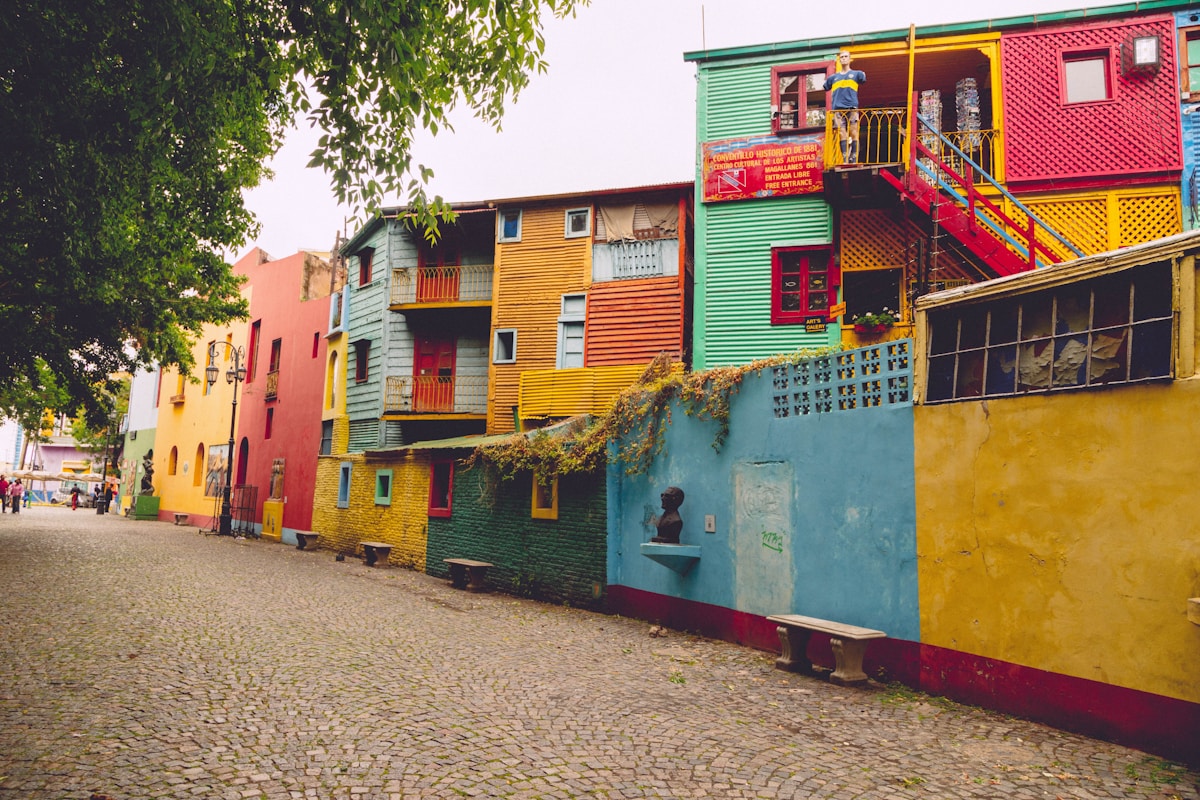
Vibe: La Boca’s reputation rests on two things: Caminito and Boca Juniors. The first is a brightly painted, photogenic street that became an open-air museum in the mid-20th century; the second is one of the most famous football clubs in the world, with La Bombonera stadium 300 metres away. The barrio is a working-class neighbourhood that built most of its character from 19th-century Italian immigrants. Outside the tourist zone, it’s a district of ordinary Buenos Aires life.
What to do: Caminito is the tourist anchor - a 150-metre street of corrugated iron houses painted in primary colours, with tango performers posing for photos and souvenir stalls. It’s worth seeing, takes about 30 minutes, and is genuinely distinctive. The Museo Quinquela Martín above the street is dedicated to the La Boca painter Benito Quinquela Martín and contains his large-format port paintings - admission approximately ARS 3,000. La Bombonera stadium tours run most days - book through the official Boca Juniors website for approximately USD 25–35 (as of 2026). See also our guide to watching a Boca Juniors match.
Where to eat: El Obrero on Agustín R. Caffarena is the definitive La Boca parrilla - old school, no tourist gimmicks, with Italian football team scarves on the walls and a menu of grilled meats and pastas at ARS 10,000–18,000 per person. It’s one block from Caminito and regularly listed among the best casual restaurants in the city.
Safety: Caminito is patrolled and safe during daylight hours (roughly 10am–6pm). Do not walk beyond Caminito into the surrounding streets - the risk of robbery increases sharply one block off the tourist zone. Take a taxi or Uber directly to Caminito and directly back. Don’t linger after dark.
Getting there: No Subte access. Taxi or Uber is the recommended option - approximately 15–20 minutes from the centre. Bus 64 runs from the centre to La Boca.
Puerto Madero
Vibe: Buenos Aires’ newest barrio - a reclaimed dock area converted in the 1990s into a pedestrianised waterfront district. Glass towers, converted brick warehouses, wide promenades along the Río de la Plata, and some of the most expensive restaurants in the city. No traditional Buenos Aires street life; instead, a clean, modern district that the rest of the city tends to regard as the place for expense-account dinners.
What to do: The Reserva Ecológica Costanera Sur on the eastern edge is a genuine nature reserve with walking trails and birdwatching on the river edge - free entry, worth 1–2 hours for the contrast with the urban landscape. The Puente de la Mujer (Woman’s Bridge), designed by Santiago Calatrava, is an architectural set piece on the northern part of the dock. The Faena Arts Center runs exhibitions and cultural programming in the converted grain silo complex.
Where to eat: Cabaña Las Lilas on Av. Alicia Moreau de Justo is the most famous parrilla in Puerto Madero - prime Argentine beef, professional service, extensive wine list, and prices to match (ARS 35,000–60,000 per person). For something more accessible, El Mirasol on the dock does solid Argentine classics at ARS 20,000–35,000. Puerto Madero’s restaurant strip is strong on seafood - Amici Miei and Pier Ristorante both cover Italian-influenced fish and pasta.
Safety: One of the most secure areas in the city, with good lighting and regular security presence on the waterfront.
Getting there: No Subte line. Taxi or Uber from the centre takes 10 minutes. Walking from the Microcentro (financial district) takes 20–25 minutes along the waterfront.
Belgrano
Vibe: A residential barrio north of Recoleta, Belgrano has a strong middle-class character - schools, markets, parks, and a significant Chinese community concentrated around Barrio Chino on Arribeños Street. It doesn’t typically appear on tourist itineraries, but it offers a practical view of how portenos (Buenos Aires residents) actually live, and the food scene around Barrio Chino is worth a separate trip.
What to do: Barrio Chino is a small but well-stocked cluster of Chinese and pan-Asian restaurants and shops, with a weekend market - the Año Nuevo celebrations here are among the most visible in the city. The Museo Histórico Sarmiento and the Museo de Arte Español Enrique Larreta are both in Belgrano, the latter in a well-preserved colonial house with Spanish furniture and art. Barrancas de Belgrano park has weekend flea markets and outdoor tango.
Where to eat: Comedor Nikkai in Belgrano’s Japanese community (the barrio has a significant Nikkei population) is casual and cheap - ARS 5,000–8,000 per person for bento sets and ramen. On Arribeños itself, dim sum and noodle restaurants range from ARS 6,000–15,000 per person. For Argentine cooking, El Refuerzo de Belgrano on Maure is a reliable neighbourhood restaurant.
Safety: Safe by Buenos Aires standards. Standard street awareness applies.
Getting there: Subte Line D to Juramento or Congreso de Tucumán stations. Bus 60 runs through the barrio.
If you prefer a guided introduction before exploring on your own, Buenos Aires city tours typically cover the main barrios - La Boca, San Telmo, Recoleta, and Palermo - in a single day with a local guide.
For the full picture, see also: Things to do in Buenos Aires · Buenos Aires food guide · Buenos Aires nightlife · Tango in Buenos Aires