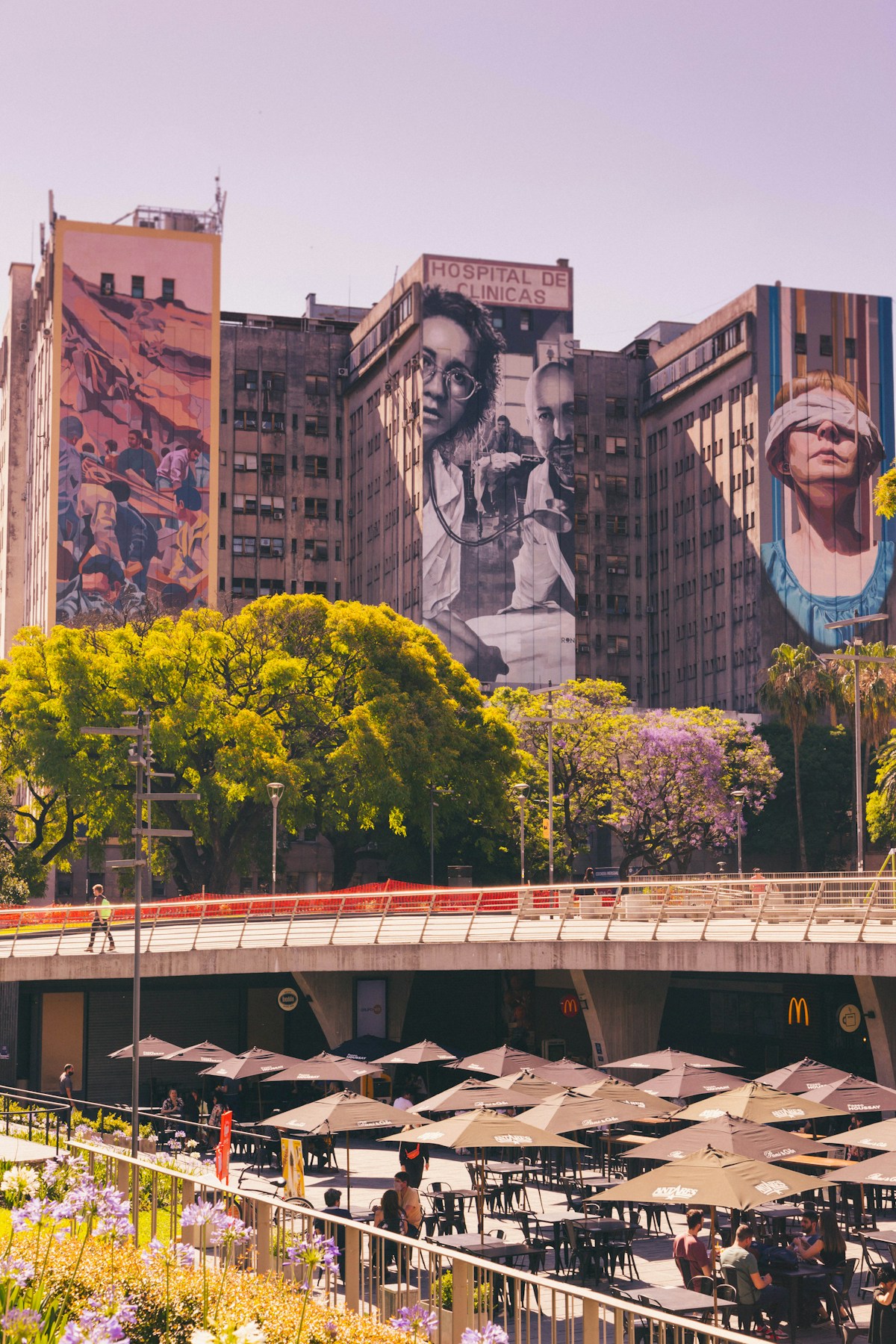
Buenos Aires has one of the most developed street art scenes in the world. Unlike cities where murals are quietly tolerated, Buenos Aires actively funds large-scale public art projects across multiple neighbourhoods. The result is an open-air gallery that changes continuously - pieces added, reworked, or replaced as artists return to contribute new work.
Why Buenos Aires Has Such a Strong Street Art Culture
The scale of Buenos Aires’ street art owes something to the city’s political history. After the 2001 economic crisis, public space became a canvas for protest, grief, and later, celebration. Artists who had painted political messages began taking on larger, purely aesthetic commissions. The city government formalised this in the 2000s by commissioning murals across the metropolitan area.
Today, Buenos Aires has murals covering entire apartment blocks, formal walking circuits with directional signs, and a thriving ecosystem of local studios that collaborate with international artists on visit. The tradition of pinta - collective mural painting - runs deep here.
Palermo Soho: The Core of the Scene
Palermo Soho is the neighbourhood most associated with Buenos Aires street art. The highest concentration of murals runs through the streets between Avenida Santa Fe, Thames, Honduras, and Malabia.
The mural circuit on Calle Thames between Honduras and Nicaragua is a good starting point. This single stretch contains work from multiple Argentine artists ranging from large-scale portraiture to abstract geometric compositions. Most pieces have been commissioned rather than unsanctioned, giving them a permanence that’s unusual in street art globally.
El Ateneo Subsuelo (the basement courtyard at El Ateneo bookshop, though the main action is nearby) connects to Palermo’s mural corridor - walking north from the bookshop on Santa Fe leads you into the denser art streets.
Calle Arévalo and Niceto Vega contain a mix of smaller commissioned pieces and gallery-adjacent murals from artists connected to studios like Doma Collective and Jaz (Franco Fasoli), one of Argentina’s most internationally recognised street artists. Fasoli’s work tends toward figurative painting with a graphic novel aesthetic - look for pieces combining dancers, wrestlers, and hybrid figures.
Street Art Buenos Aires tours run small-group walking tours through Palermo from approximately USD 20–30 per person as of 2026. They employ local artists as guides, which means insight into technique and context you won’t get from self-guided exploration alone. You can also find street art-focused options among the broader guided tours in Buenos Aires if you want to combine the mural scene with other barrios in a single outing. Tours depart from Parque Centenario and last approximately two hours.
Buenos Aires Free Tour offers free street art-focused walks in Palermo on Saturdays, departing from the Palermo SOHO neighbourhood (confirm current meeting point via their website). Tips are expected but not compulsory.
La Boca and Caminito: Colour and History
La Boca is the neighbourhood most visitors associate with Buenos Aires colour - and while Caminito specifically is commercially staged, it remains visually striking.
Caminito (the pedestrian alley in La Boca) was formalised as an outdoor museum in 1959 by artist Benito Quinquela Martín, who painted the facades of surrounding buildings himself. The brightly coloured corrugated iron houses in primary and secondary colours were originally painted with leftover boat paint from the nearby docks. Today, the buildings are maintained in that same tradition.
What you see at Caminito is not spontaneous street art - it’s a curated, maintained outdoor art installation. Still worth visiting for that reason, though better approached as a historical artwork than a contemporary street art destination. Entry to the street is free.
The streets surrounding Caminito - particularly Calle Garibaldi and the nearby La Vuelta de Rocha - carry more authentic murals on residential buildings, some political, some aesthetic.
Diego Maradona murals: La Boca’s connection to football means Maradona’s face appears on multiple surfaces throughout the neighbourhood, with new pieces added after his death in 2020. These range from simple tributes to elaborate compositions integrating his image with Argentine iconography.
Villa Crespo and Colegiales: The Expanding Frontier
Palermo’s spillover neighbourhoods have absorbed much of the scene’s growth over the past decade. Villa Crespo and Colegiales offer murals with fewer tourists and more rawness.
Calle Aguirre in Villa Crespo has become a key street for larger commissioned works. The neighbourhood’s mix of garment workshops, cafés, and residential buildings provides a more varied backdrop than polished Palermo.
Graffitimundo runs the most comprehensive street art tour in Buenos Aires, covering both Palermo and Villa Crespo in a three-hour walk. Prices from approximately USD 25–35 per person as of 2026. They also offer private tours for groups wanting a more in-depth experience, from approximately USD 150–200 per group as of 2026. Graffitimundo has been running since 2009 and maintains a regularly updated map of active murals.
Self-Guided Route: Palermo Soho in Two Hours
This route covers the highest density of Palermo murals without backtracking:
- Start at Parque Centenario (Malabia/Leopoldo Lugones intersection) and walk north on Malabia
- Turn right onto Honduras and walk east to Thames
- Walk north on Thames to Nicaragua - this stretch has the densest concentration
- Turn right onto Nicaragua and walk east to Jorge Luis Borges
- Walk south on Borges to El Salvador
- Continue to Gorriti and walk west back toward Malabia
Allow time to duck into the side streets: Carranza, Fitz Roy, and Uriarte all contain individual pieces worth finding. The entire circuit covers approximately 2.5 km and takes 90–120 minutes at a relaxed pace.
Photographing the Murals
Early morning light (7–9 am) gives the best photographs - direct afternoon sun flattens the colours on south-facing walls. Many pieces face north or east to catch morning light, which is also when streets are emptier.
Bring a wide-angle lens if you’re shooting full-building murals; the streets are narrow and it’s often impossible to back far enough for a standard focal length. Several photographers who specialise in Buenos Aires street art share actively updated location pins on Instagram - searching #streetartbuenosaires by date filters to recently painted work.
What Changes and What Stays
Buenos Aires street art is not static. Pieces get painted over when buildings change ownership or when artists return to refresh their work. The Graffitimundo map (updated monthly) is more reliable than printed guides for tracking current pieces. Allow for some surprises - a wall that appears blank in a photograph from two years ago may now hold a three-storey mural, and vice versa.
The scene’s energy comes precisely from this flux. Walking these streets with a recent map, you’re engaging with the city in real time - which is the best way to experience it.
See also: Buenos Aires travel guide · Things to do in Buenos Aires · Tango culture in Buenos Aires · Day trips from Buenos Aires · Buenos Aires city tours