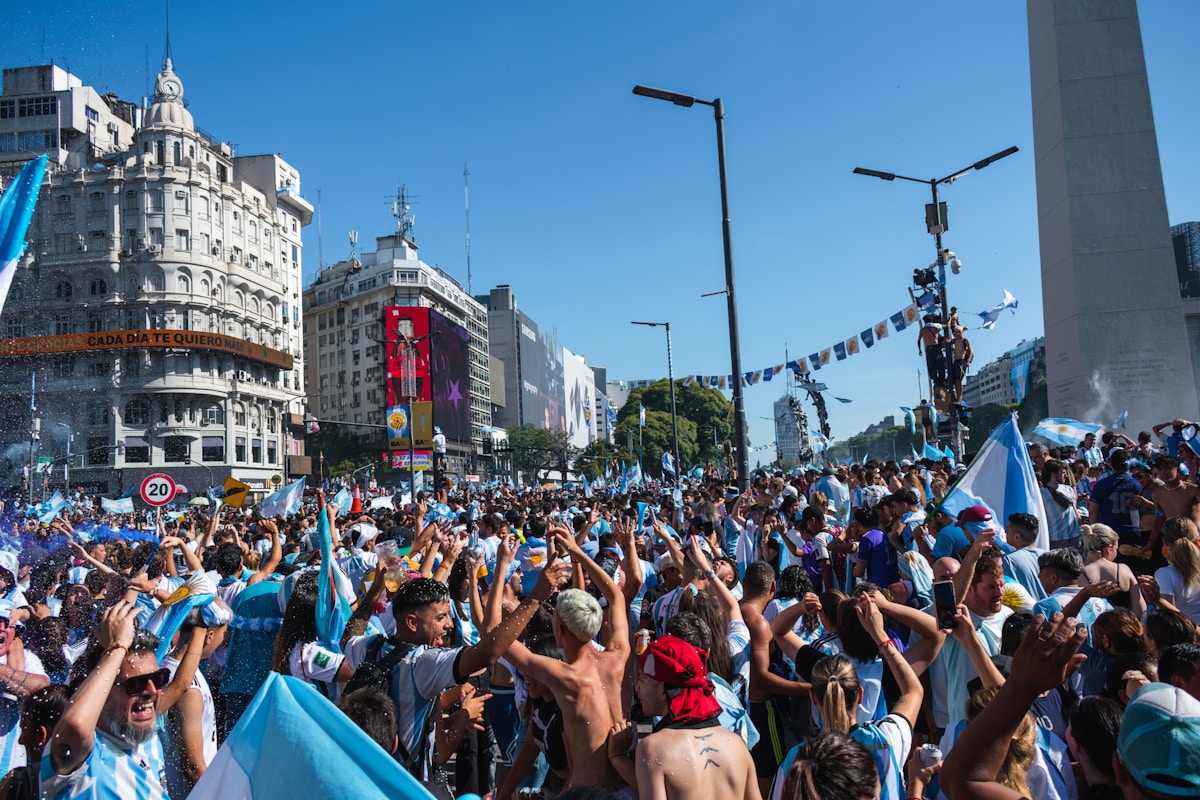
Football in Argentina is not a sport you observe from a polite distance. It is deeply embedded in how the country understands itself, and nowhere is that more apparent than in Buenos Aires, where two of the continent’s most storied clubs - Boca Juniors and River Plate - share the same city and an enduring, occasionally heated rivalry. For visitors, attending a match is one of the most memorable things to do in Buenos Aires, provided you approach it with some preparation.
Boca Juniors and La Bombonera
Club Atlético Boca Juniors was founded in 1905 in La Boca, the working-class port barrio at the southern edge of Buenos Aires. The club’s identity is tied tightly to the neighbourhood: the blue-and-gold colours are said to have been decided by the flag of the first ship to enter the port after a coin toss, and the supporters’ culture remains proudly working-class.
Their ground, the Estadio Alberto J. Armando - universally known as La Bombonera - sits at Brandsen 805 in La Boca and holds approximately 54,000 spectators. The nickname translates roughly as “the chocolate box”, a reference to the building’s unusual shape. Three sides of the stadium have nearly vertical upper tiers that rise steeply above the lower seating; the fourth side is a single shallower stand because the original construction ran into a neighbouring building. The effect is a cauldron rather than a bowl - sound bounces directly back into the pitch rather than escaping upward, and the rhythmic swaying of the terraces during matches, accompanied by uninterrupted percussion and singing, produces an atmosphere unlike any other stadium in the world.
Boca’s honours include six Copa Libertadores titles and 35 Argentine Primera División championships, making them one of the most decorated clubs in South American football. Notable former players include Diego Maradona and Juan Román Riquelme.
The Museo de la Pasión Boquense
For non-match days, the Museo de la Pasión Boquense at Brandsen 805 offers the most structured way to engage with the club’s history. The museum opens daily from 10am to 6pm, except on match days. Admission runs approximately ARS 8,000–15,000 as of 2026, depending on whether you add the stadium tour.
The museum includes a 360-degree cinema that places you inside a Bombonera match-day experience, a trophy room covering the club’s full history, archive footage, and displays about significant players and matches. The stadium tour component takes you onto the pitch and into the changing rooms - seeing the playing surface from pitch level, with the near-vertical stands rising above you, gives a clear sense of why opposing players often describe La Bombonera as one of the most intimidating places to play in the world.
Guided tours in English are available; check availability when booking at the museum entrance or through the club’s website at boca.com.ar.
River Plate and El Monumental
Club Atlético River Plate operates from the opposite end of the city geographically and, traditionally, socially. The club is based in Núñez, a residential neighbourhood in northern Buenos Aires, and their ground - the Estadio Monumental, also called El Monumental - is at Av. Figueroa Alcorta 7597.
Following a major expansion completed in 2022, El Monumental holds approximately 84,000 spectators, making it the largest stadium in South America. River are known as Los Millonarios (the Millionaires) and wear a white shirt with a diagonal red sash - one of the most recognisable kits in Argentine football.
River’s record includes four Copa Libertadores titles and 38 Argentine league championships. Their museum, Museo River, is open Tuesday to Sunday at the same Av. Figueroa Alcorta 7597 address. Stadium tours are available, covering the dressing rooms, press areas, and pitch tunnel. El Monumental’s scale is impressive even before a crowd fills it; the upper tiers have a different atmosphere from La Bombonera - more expansive and airy rather than enclosed - but River’s own fanbase (the Millonarios barra) generates considerable noise of their own.
How to Watch a Match as a Tourist
Since 2013, away fans have been prohibited from attending Argentine Primera División matches - a security measure following crowd violence incidents that has remained in force. As a tourist, you attend every match in the home section, which means buying a ticket in the home allocation regardless of any personal affiliation.
Buying tickets directly
Tickets for Boca matches are sold through boca.com.ar; River tickets through cariverplate.com.ar. The purchasing process on both sites requires a local Argentine phone number and, in some cases, a DNI (Argentine national identity number). This makes direct purchase genuinely difficult for foreign visitors. It is possible with workarounds - using a local SIM card and registering with your passport number - but not straightforward.
Using a tour operator (recommended for first-time visitors)
For most tourists, going through a tour operator is the more practical option and significantly improves the experience. Guided tours in Buenos Aires that include match-day packages - run by companies such as Tangol, Say Hueque, and BA Football - cover transport to and from the stadium, tickets, and a guide who can explain stadium culture, help navigate the approach, and provide context during the match. Cost runs approximately $80–120 USD per person as of 2026, depending on the operator, the match, and how close to the action your seats are.
The guide value is genuine rather than merely convenient: Argentine football has specific conventions around when and how to interact with fellow supporters, and someone who can read the crowd and brief you on what is and is not a good idea at that particular moment is worth the extra cost.
On the day
Wear neutral clothing or home-team colours. Avoid wearing anything that could be associated with the opposing club - even something incidentally similar in colour has occasionally caused problems. Arrive early enough to absorb the build-up outside the ground; the approach to La Bombonera in the hour before kick-off, with the cumbia and the percussion and the smoke and the coloured paper streamers (papelitos), is part of the experience.
Food outside the stadium typically includes choripán - a grilled chorizo sandwich on crusty bread - and empanadas from street vendors. Beer is available inside certain sections; this varies by match and by club management decisions. Cash is useful for vendors outside the ground; card acceptance is inconsistent.
The Superclásico: Boca vs River
The Superclásico is Boca Juniors against River Plate and occupies a position in world football that goes beyond normal rivalry. The historical framing - Boca as the club of the working-class port workers and immigrants, River as the club of the middle and upper classes who had moved to the northern suburbs - has softened considerably over the decades; both clubs now have national and international fan bases that span demographics. But the intensity of feeling at a Superclásico has not softened.
The match takes place twice per season in the regular Primera División calendar (once at La Bombonera, once at El Monumental) and additional meetings are possible in the Copa Argentina or Copa Libertadores. Tickets through official channels are essentially unavailable to anyone outside the existing member and fan club allocations. For tourists, attending means going through a tour operator with an established allocation - the operators listed above handle this, though match-day tours for the Superclásico command a significant premium and sell out months in advance.
If the fixture coincides with your visit and you can secure a place through a reputable operator, it is worth prioritising. If not, any regular Boca or River home match delivers an atmosphere that most football stadiums elsewhere in the world do not approach.
Planning Your Visit
La Bombonera - Brandsen 805, La Boca. Museum open daily 10am–6pm except match days. Admission approx ARS 8,000–15,000 as of 2026 depending on whether stadium tour is included. Closest subte station: Constitución (Line C), then taxi or remis to the stadium - a direct subte connection does not exist. Uber and Cabify operate in Buenos Aires and are generally the easiest option.
El Monumental - Av. Figueroa Alcorta 7597, Núñez. Museo River open Tuesday to Sunday. Accessible by subte Line D to Congreso de Tucumán, then taxi or bus.
The Argentine Primera División season runs in two phases: the Clausura (roughly February to June) and the Apertura (roughly July to December). Neither club plays every weekend, and cup competitions create additional fixtures. Check the official fixture schedules at boca.com.ar and cariverplate.com.ar for confirmed home match dates before booking travel. The league calendar is published in advance but dates and kick-off times shift due to television scheduling, so verify dates close to your visit.
Going to a match at La Bombonera or El Monumental will not tell you anything neutral or detached about Argentine football. It will, instead, give you a fairly direct sense of why the country cares about it the way it does.
See also: Buenos Aires travel guide · Things to do in Buenos Aires · Buenos Aires nightlife guide · Tango culture in Buenos Aires · 3 days in Buenos Aires itinerary