Buenos Aires, Argentina: Travel Guide
Plan your visit to Buenos Aires - Argentina's capital of tango, beef, and European-style architecture spread across diverse barrios.
Guides for Buenos Aires
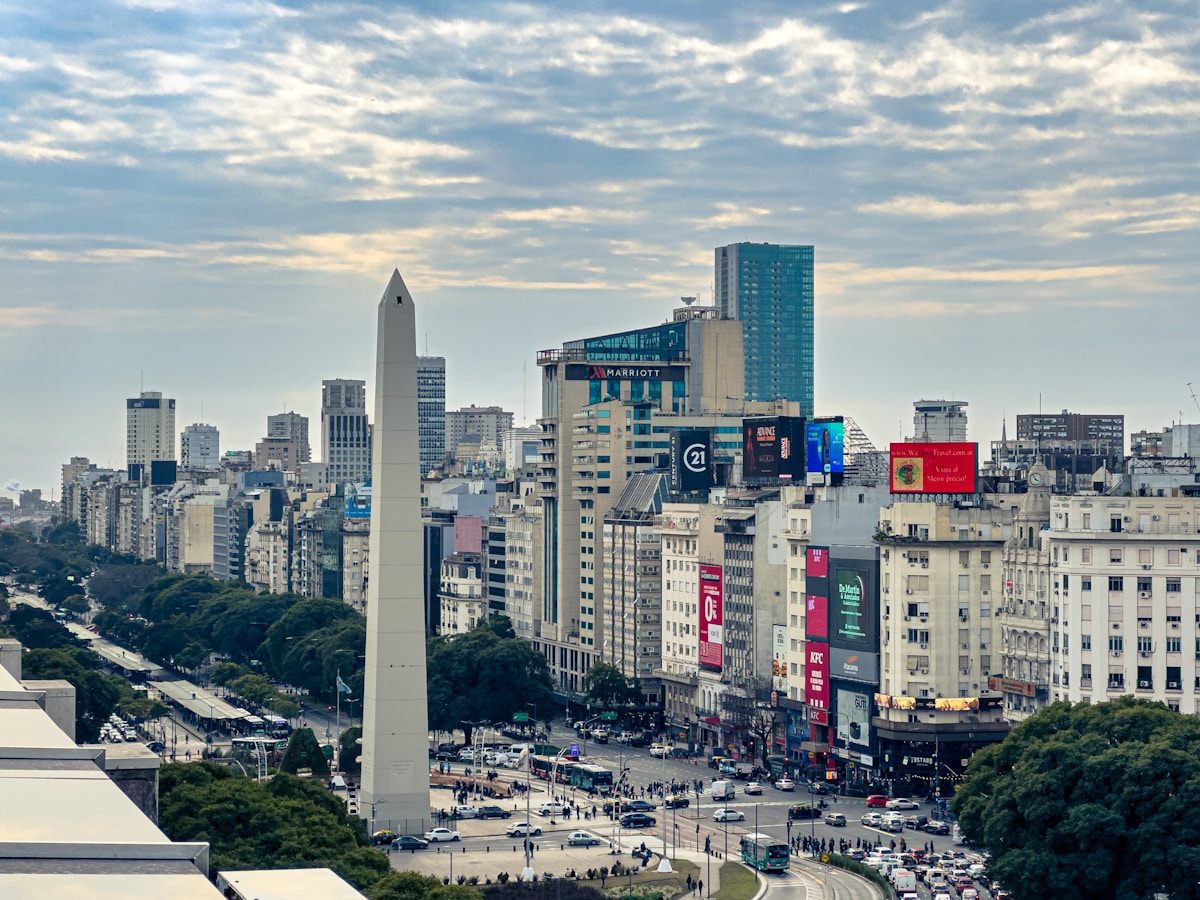
Buenos Aires is Argentina’s capital and its largest city, home to around three million people within the city limits and roughly 15 million across Greater Buenos Aires. It sits on the southern bank of the Río de la Plata estuary, facing Uruguay across the water. The city is shaped by successive waves of European immigration - primarily Italian and Spanish - which left an architecture of grand boulevards, ornate civic buildings, and intimate neighbourhood streets that feel genuinely distinct from the rest of Latin America.
San Telmo and La Boca
San Telmo is the oldest barrio in Buenos Aires, with colonial-era buildings, cobblestone streets, and a Sunday antiques market on Plaza Dorrego that draws vendors and browsers from across the city. Tango was born in working-class neighbourhoods like this one, and several milongas (tango dance halls) operate here nightly - see our full guide to tango in Buenos Aires for the best shows and milongas by barrio. Mansion Dandi Royal on Piedras street is a tango-themed boutique hotel with its own milonga on site, at approximately USD 90–130 per night as of 2026. For a local meal, El Desnivel on Defensa street is a decades-old neighbourhood parrilla — honest cuts, no frills, and around ARS 5,000–7,000 for a full meal including wine. La Boca, a short walk south, is known for the brightly painted corrugated-iron houses along Caminito street and for the Estadio Alberto J. Armando, home ground of Boca Juniors football club. The stadium tours run daily and are worth booking in advance - our Boca Juniors guide covers ticket buying, stadium tours, and match-day logistics.
Recoleta
Recoleta is where Buenos Aires’ European ambitions are most visible - wide avenues lined with French Second Empire mansions, pavement cafes, and the Recoleta Cemetery, where Eva Perón is buried alongside several Argentine presidents and military figures. The cemetery is free to enter and genuinely worth an hour of exploration; the mausoleums range from neoclassical columns to art deco bronze doors. The MALBA (Museo de Arte Latinoamericano de Buenos Aires) nearby holds a strong collection of 20th-century Latin American art, with works by Frida Kahlo, Diego Rivera, and Xul Solar. The Alvear Palace Hotel on Avenida Alvear is Buenos Aires’ classic grande dame luxury address, with rooms from approximately USD 350 per night; a mid-range alternative is Hotel Bel Air, well-located at around USD 90–120. Café Biela, positioned beside the cemetery gates, is the neighbourhood’s traditional confitería — expect ARS 1,500–2,500 for medialunas and coffee at a pavement table.
Palermo
Palermo is the largest barrio and subdivided informally into Palermo Soho, Palermo Hollywood, and Palermo Chico. The area is known for its restaurant and bar scene, independent boutiques, and the Bosques de Palermo parklands with their rose garden and Japanese garden. The MALBA sits on its eastern edge. This is where most visitors under 35 end up spending their evenings, and the restaurant density is high enough that simply walking and choosing is a reasonable strategy. The Fierro Hotel on Thames street is a design-led boutique property with a rooftop pool, at approximately USD 140–175 per night as of 2026. Don Julio on Guatemala street near Plaza Armenia is consistently ranked the city’s best parrilla — book ahead and budget around ARS 7,000–11,000 per person including wine (approximately USD 20–32). For a broader guide to Buenos Aires nightlife, our neighbourhood-by-neighbourhood breakdown covers the bar and club scene across the barrios.
Food Scene
Buenos Aires’ cooking tradition is anchored in the asado — a slow charcoal technique applied to short ribs, flank steak, sweetbreads, and blood sausage. Beyond the parrilla, the city’s Italian immigrant heritage shows in its heladerías (gelato shops), thick-crusted pizza, and the fugazzeta style — a cheese-and-onion variant unique to the city. Empanadas here are typically baked rather than fried; El Sanjuanino on Posadas street in Recoleta is a reliable local benchmark. For breakfast, medialunas (Argentine croissants, slightly sweeter than French) with a cortado at a confitería is the standard morning ritual — Florida Garden on Florida street in the microcentro is a century-old example worth the short walk. Prices at mid-range restaurants typically run ARS 5,000–9,000 per person; a neighbourhood parrilla lunch with wine rarely exceeds ARS 8,000 (approximately USD 23 as of 2026).
Teatro Colón
The Teatro Colón, on Avenida 9 de Julio, is one of the great opera houses of the world. Completed in 1908 after 20 years of construction, it seats 2,500 people and has hosted Caruso, Callas, and Pavarotti over its history. Guided tours run daily and cover the main hall, rehearsal rooms, and the workshops where costumes and sets are still made in-house. Attending a performance - opera, ballet, or classical concert - is the better option if scheduling allows; tickets are available online and reasonably priced by international standards. For the broader city, guided tours in Buenos Aires range from tango neighbourhood walks and Recoleta Cemetery visits to full-day city combinations — a practical way to cover ground on a first visit.
Where to Stay
Palermo and Recoleta are the most practical bases for first-time visitors - both have high concentrations of accommodation at all price points, good transport links, and easy walking access to restaurants and sights. San Telmo suits travellers who want a more local feel and proximity to the Sunday market. Puerto Madero, the converted dock district east of the city centre, has the city’s most upmarket hotels but less neighbourhood character. For a full breakdown of options by price range, see our Buenos Aires where to stay guide.
Search hotels in Buenos Aires on Booking.com
Getting There and Around
Buenos Aires is served by two airports: Ezeiza (EZE), 35 km from the city centre, handles international flights; Aeroparque (AEP), on the river near Palermo, handles domestic routes and a few regional international flights. Remis (radio taxis) and Uber operate from both airports - book a private transfer from the airport in advance for Ezeiza. Within the city, the Subte metro has six lines and covers most tourist areas; single-trip SUBE cards are sold at kiosks. Taxis are metered and reliable during the day. La Plata, Argentina’s planned provincial capital with a Gothic Revival cathedral and one of South America’s finest natural history museums, is 60 km south and reachable in under an hour on the Roca commuter line from Constitución station.
Best Time to Visit
Spring (September to November) and autumn (March to May) offer the most pleasant temperatures - daytime highs between 18°C and 24°C, low humidity, and the city’s parks at their best. December to February is summer: hot, humid, and busy with domestic tourists. July is mid-winter and cooler (around 10°C), but the city is very much open and operating; the tango and cultural calendar doesn’t pause for cold weather.
Explore more: Things to do in Buenos Aires · Guided tours in Buenos Aires · Last-minute tour availability · Buenos Aires street art · Buenos Aires nightlife guide · Day trips from Buenos Aires · Buenos Aires food guide · Buenos Aires city tours · Tango shows and milongas · Vegan Buenos Aires guide · Working remotely from Buenos Aires
Compare cities: Buenos Aires vs Mendoza · Buenos Aires vs Córdoba · Buenos Aires vs Rosario · Iguazú vs Buenos Aires
Upcoming Events in Buenos Aires
Iguazu National Park Anniversary
Iguazu National Park Anniversary 2026, 9 November. Free park entry, cultural events, and environmental programming in Puerto Iguazú.
Cosquín National Folk Festival
Cosquín Folk Festival 2027 runs 22 to 31 January in Córdoba province - ten nights of chacarera, zamba and folk on the Plaza Próspero Molina open-air stage.
Book an experience
Top experiences in Buenos Aires
Explore the best tours and activities in Buenos Aires , with instant confirmation and free cancellation on most bookings.
Planning to visit? Browse hotels in Buenos Aires, free cancellation on most bookings.