Buenos Aires rewards visitors who explore it on foot, by bike, and through its food - but having a guide for the first few days helps you cut through a city of 3 million people and land on what actually matters. The tour scene here is well-developed, competitively priced, and covers everything from tip-based neighbourhood walks to elaborate dinner-and-tango spectacles. This guide runs through the main tour types, what they cost as of 2026, and which operators are worth your time.
Free Walking Tours: The Best Starting Point
The free walking tour circuit in Buenos Aires is one of the strongest in South America. The main operators - BA Free Tour and Free Walking Tour Buenos Aires - run daily departures across four core circuits: San Telmo and La Boca, Recoleta and Palermo, Microcentro and the downtown core, and a dedicated street art tour through Villa Crespo and Palermo.
Tours run 2–3 hours and typically assemble at Plaza de Mayo, which is a natural starting point given the Casa Rosada, the Cabildo, and the cathedral are all within a short walk. The guides are almost always local porteños with strong English, and the group sizes are kept manageable - usually 10–20 people.
These tours are tip-based, not genuinely free. Guides earn their income from what the group contributes at the end. We recommend budgeting ARS 2,000–5,000 per person as of 2026 (roughly USD 2–5 at the unofficial exchange rate), more if the guide was exceptional. Tipping in USD is also accepted and appreciated.
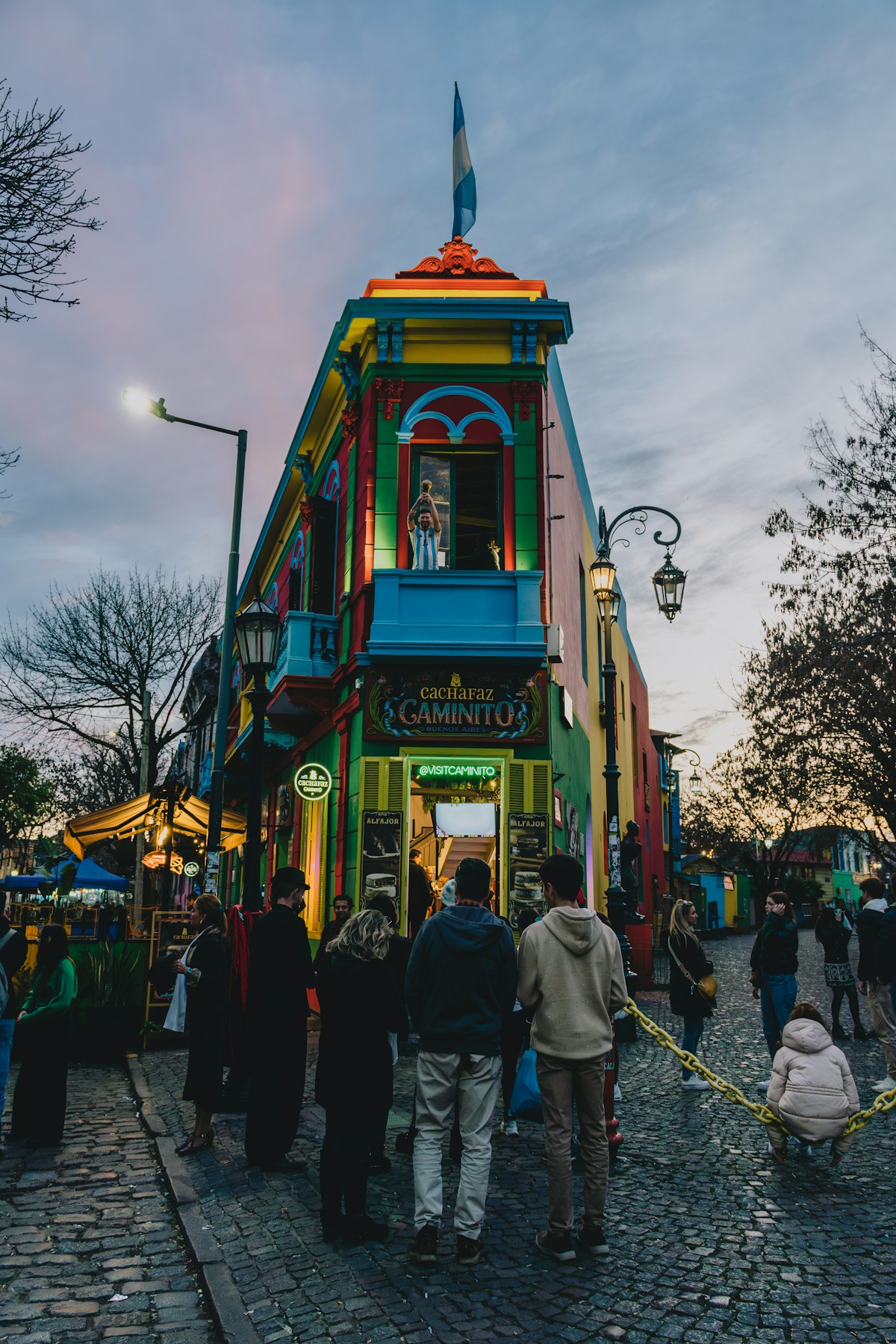
The San Telmo and La Boca circuit is the most popular and covers Caminito, the Boca Juniors stadium approach, the Sunday antiques fair at Plaza Dorrego, and the 19th-century meat-packing warehouses that shaped the neighbourhood. Book online the day before - popular weekend tours fill up.
Tango Shows and Milongas
Buenos Aires has two very different ways to experience tango: the dinner show (a polished theatrical performance aimed squarely at visitors) and the milonga (a live dancing event where the audience participates, or watches locals dance socially). Both are worth doing, but they are entirely different experiences and suit different budgets.
Dinner tango shows are concentrated in San Telmo and Barracas. The three most established venues:
- El Viejo Almacén (Independencia and Balcarce, San Telmo) - housed in a converted 18th-century warehouse, widely considered the most atmospheric setting in the city. Shows include live orchestra, professional dancers, and optional dinner. Dinner and show packages run approximately USD 90–130 per person as of 2026; show-only is cheaper.
- Señor Tango (Vieytes, Barracas) - the largest tango venue in Buenos Aires, with a full stage production and cast of over 80. More of a spectacle than an intimate performance. Dinner packages from approximately USD 100–150 as of 2026.
- Café de los Angelitos (Rivadavia, Balvanera/Almagro) - a landmark tango café dating to 1890. Smaller and slightly more accessible price-wise. Dinner and show from approximately USD 80–110 as of 2026.
Book all dinner shows at least a week ahead during peak season (December–February and July). Walk-ins are possible midweek in low season, but not reliable.
Milongas are the real thing. They are social dances held in clubs and cultural centres across the city, often running from around 10pm well into the early hours. Cover charges run ARS 3,000–8,000 at the door as of 2026. Three consistently recommended venues:
- La Catedral (Sarmiento, Almagro) - a deliberately rough-edged space in an old warehouse. Beginner-friendly and unpretentious.
- La Viruta (Armenia, Palermo) - popular with younger dancers and visitors, with regular beginner nights.
- Salon Canning (Scalabrini Ortiz, Palermo) - older crowd, more traditional milonga style, high standard of dancing to watch.
Many venues offer beginner tango classes before the main milonga starts - typically 1–2 hours, from ARS 4,000–10,000 per person as of 2026. Turning up having taken even one class makes the evening significantly more enjoyable.
Food Tours in Buenos Aires
A guided food tour is one of the most efficient ways to understand what porteño food actually is - beyond steak and empanadas, though those feature heavily. The standard format is a 3–4 hour walk through a single neighbourhood with stops at markets, parillas, bakeries, and street food stalls.
Devour Buenos Aires runs English-language tours and is the most established operator for visitors. Their Palermo food tour covers a local market, empanada stops, asado, alfajores, and dulce de leche in various forms. Duration is approximately 4 hours; prices run USD 65–90 per person as of 2026, with food included.
The San Telmo market and Sunday street food tour is a strong alternative, centred on the Mercado de San Telmo and the outdoor stalls that spill onto the surrounding streets. Sunday is peak day for this - the antiques market runs alongside, and the parillas around Defensa Street are busy. This circuit is also covered by several GYG-listed operators and can be booked directly through the GetYourGuide platform.
Food tours book up quickly on weekends; weekday availability is usually fine with a day’s notice.
Cycling Tours and Bike Hire
Buenos Aires has an extensive Ciclovía network of dedicated bike lanes, and cycling is a practical way to cover the waterfront, Palermo parks, and the neighbourhood gaps between La Boca and Puerto Madero. The flat terrain makes it accessible regardless of fitness level.
The main operators running guided cycling tours are Buenos Aires Cycling Tours and Urban Biking. Half-day guided tours run approximately USD 35–50 per person as of 2026 and typically cover Puerto Madero, La Boca and Caminito, San Telmo, and the Palermo parks in a single loop. Electric bikes are available from most operators for riders who want less effort on longer routes.
For independent cycling, the city’s EcoBici public bike scheme offers free short-term loans from docking stations throughout the centre - useful for Palermo or Recoleta, less practical for getting to La Boca without a guide.
Stadium Tours
Football is part of Buenos Aires identity, and stadium tours run on non-match days at both of the city’s major grounds.
La Bombonera — the Boca Juniors stadium in La Boca — is the most visited. The 75-minute tour covers the changing rooms, press box, presidential suite, and the Boca Juniors Museum, which traces the club’s history from its 1905 founding through its six Copa Libertadores titles. Departures run roughly every 30 minutes on non-match days; entry including the museum costs approximately ARS 7,000–12,000 as of 2026. You can book at the stadium gate or pre-book via GetYourGuide to avoid queuing during peak visitor days.
El Monumental (River Plate, Núñez) runs equivalent tours covering Argentina’s largest stadium and the River plate Museum. Duration approximately 60–90 minutes; entry from approximately ARS 6,500 as of 2026. The two stadiums are across the city from each other — factor in a taxi or Uber of approximately ARS 5,000–8,000 between them if visiting both.
Street Art Tours
Buenos Aires has one of the most developed urban street art scenes in South America, concentrated in Palermo, Villa Crespo, and La Boca. Dedicated tours run 2–3 hours with a local guide who explains the political and artistic context — this matters here more than in most cities, given Argentina’s history of political muralism from the Dirty War period onward.
Graffitimundo is the most established English-language operator, running tours through Palermo and Villa Crespo on Fridays and Saturdays. Tours cost approximately USD 25–35 per person. Walk-ins are accepted when spots are available, but booking ahead ensures a place. Private tours can be arranged for groups. Compare all street art and neighbourhood walking tour options via Buenos Aires city tours.
Boat Trips and River Tours
Buenos Aires sits on the Río de la Plata, and two boat experiences are worth considering.
The Puerto Madero waterfront boat tour runs approximately 1 hour and loops around the dock basins and the Costanera Sur ecological reserve from the water. Prices run from approximately ARS 8,000 per person as of 2026. It is more of an orientation experience than a destination in itself, but worthwhile if you want to see the city’s waterfront architecture from the river.
For a longer day out, the Tigre Delta boat excursion departs from either Puerto Madero or from Tigre itself (about 30km north of the city). The delta is a network of islands, canals, and wetland vegetation entirely unlike central Buenos Aires. See our dedicated Tigre and the Delta article for operators and pricing.
Top Buenos Aires City Tours: Prices at a Glance
The table below covers the main tour types currently available through GetYourGuide from Buenos Aires, with approximate 2026 pricing. All tours offer free cancellation up to 24 hours before departure.
| Tour | Duration | Includes | Price (approx.) |
|---|---|---|---|
| City Highlights Guided Tour with Transfer | 3–4 hrs | Guide, transport, Caminito + downtown circuit | from $25 pp |
| Premium City Tour with Transfers | 5 hrs | 10+ neighbourhoods, dulce de leche tasting, photo stops | from $35 pp |
| Hop-On Hop-Off Bus | 1 day | 20+ stops, audio guide in 8 languages, flexible | from $20 pp |
| Private Half-Day City Tour | 4 hrs | Private guide, flexible route, hotel pickup | from $99 pp |
| Señor Tango Show with Optional Dinner | 2 hrs | Live orchestra, 9 dance couples, optional dinner | from $60 pp |
Browse and book all options via Buenos Aires tours on GetYourGuide.
Planning and Booking Tips
A few practical points before you book:
Use GetYourGuide or book direct. For food tours, cycling tours, and dinner tango shows, GetYourGuide lists most reputable operators with verified reviews. Klook is a strong alternative for day trips, city experiences, and skip-the-line tickets - coverage of Buenos Aires has expanded significantly in 2025–2026. Booking direct with the venue is often marginally cheaper for tango shows.
Sequence your tours. We suggest starting with a free walking tour on your first full day - it gives you bearings and context before you spend money on anything else. Follow with a milonga in the evening (or a dinner show if that suits your budget). Save cycling and food tours for days 2–3 once you know the layout.
Timings matter for milongas. Do not arrive at a milonga at 10pm expecting it to be in full swing - porteños rarely arrive before midnight. The best dancing typically happens between 1am and 3am.
Language. Free walking tours and most GYG-listed operators run in English. Milongas are self-explanatory regardless of language. Dinner show bookings can be made in English at all three venues listed above.
Peak season (December–February, July) means fuller tours, higher prices for dinner shows, and a need to book further in advance. The shoulder months of March–April and September–October offer better availability at the same quality.
You can browse and book Buenos Aires city tours - including walking tours, food tours, and tango experiences - through a curated selection of operators. Booking in the next few days? Our last-minute tours page shows Buenos Aires experiences with confirmed availability right now, refreshed twice daily.
More on Buenos Aires: Buenos Aires city guide · Buenos Aires tango guide · Buenos Aires nightlife