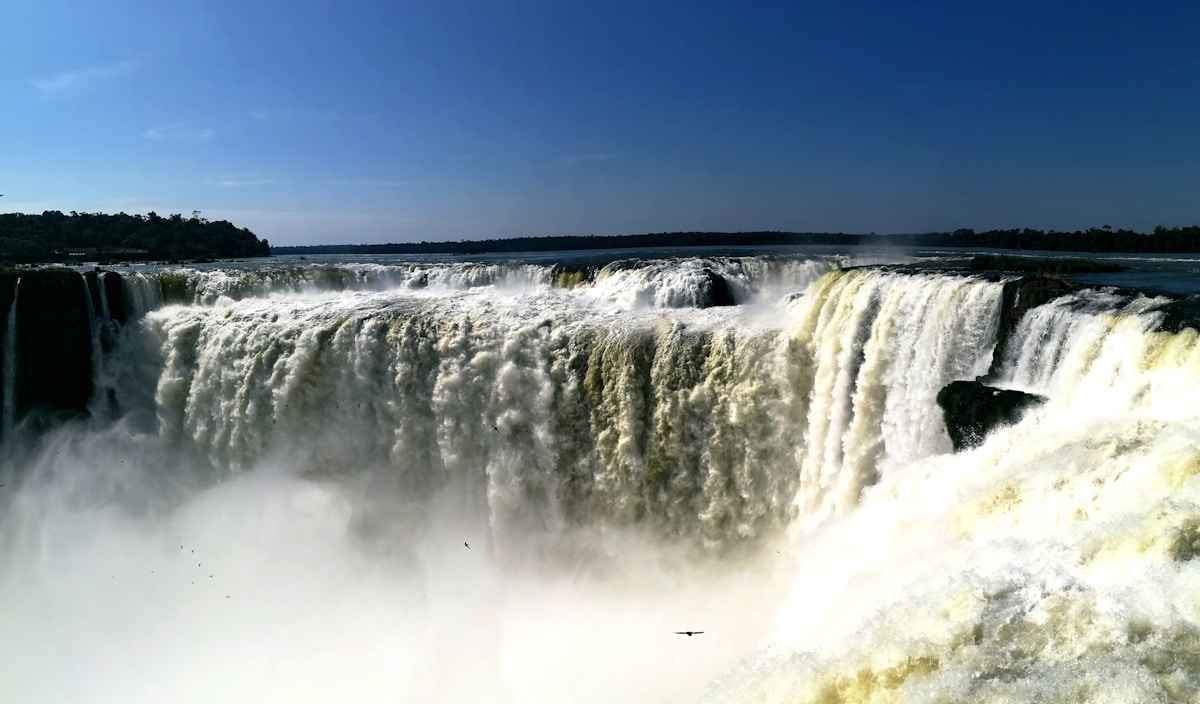
Iguazu Falls has a straightforward self-guided infrastructure — marked trails, a free internal railway, on-site ticket desks — but a well-chosen tour can significantly change the experience. This page covers every tour type available on both sides: the official on-site operators, what each includes, group versus private options, cross-border day trips, and what to book in advance versus on arrival.
For general visitor information (trails, best time to visit, getting there from Buenos Aires), see our Iguazu Falls visitor guide.
Do You Need a Tour?
The Argentine side is designed for independent visitors. The internal train, numbered circuits, and bilingual signage make navigation easy without a guide. If your goal is walking the three trail circuits at your own pace, you do not need a tour.
Tours make sense when:
- You want ecological and natural history interpretation along the circuits
- You want to combine both sides (Argentine and Brazilian) in a single day without managing the border crossing yourself
- You’re travelling in a small group and want a private experience
- You’re booking from Buenos Aires and want flights, transfers, and park entry bundled
Official On-Site Operators (Argentine Side)
Iguazú Jungle — Boat Tours and Jungle Experiences
Iguazú Jungle holds the official park concession for boat tours and jungle experiences on the Argentine side. They operate from a booking booth inside the park near the Estación Central.
Gran Aventura (recommended): The signature experience. A 4WD jungle truck carries groups along a forest track to a riverbank launch point, followed by a rigid inflatable boat ride upstream to the base of the Garganta del Diablo cataracts. The boat runs directly under one of the smaller falls — everyone on board gets soaked. Waterproof bags are provided for cameras and electronics; bring a change of clothes or plan to spend the afternoon damp. Duration: approximately 45 minutes total. Price: approximately ARS 60,000–80,000 per person (USD 25–35) as of 2026.
Jungle Boat only: A shorter version that skips the truck ride and goes straight to the boat. Slightly cheaper but less of an event than the full Gran Aventura package.
Ecological Bike: Guided cycling through the park forest on routes closed to general visitors, with stops at wildlife observation points. Duration approximately 1.5 hours. A quieter alternative to the boat for visitors who have already done the Gran Aventura.
Booking: Same-day walk-up booking is usually possible outside peak season (July–August school holidays; December–February). During peak periods, book via the Iguazú Jungle website a day or two ahead.
Luna Llena — Night Tour
The national park runs a restricted evening visit to the Garganta del Diablo on full-moon nights and a few nights either side of the full moon each month. Visitor numbers are capped. The falls under moonlight — with the spray illuminated by reflected light and the daytime crowds absent — is a genuinely different experience from the daylight visit.
Price: approximately the same as standard park entry as of 2026, with a small additional fee. Book through the Parque Nacional Iguazú website (parquesnacionalesiguazu.gob.ar) or the Puerto Iguazú visitor centre. This is the one Iguazu experience that sells out — book as soon as dates are confirmed on the park website.
Guided Circuits: Private and Small-Group Options
Several independent operators offer guided walks of the Argentine side circuits with a bilingual naturalist, typically available as:
- Private tour (exclusive guide): Approximately USD 80–150 per person depending on group size and circuits included. The guide handles park entry, navigates the train schedule, and provides wildlife identification throughout. Best for couples or families wanting a tailored experience.
- Small-group tour (shared guide, typically 4–12 people): Approximately USD 40–70 per person. More economical; the guide covers the same ground but at a shared pace.
Operators operating from Puerto Iguazú: Iguazú Forest, Jungle Explorer, and several agencies along Avenida Córdoba in the town centre. Confirm current pricing directly — rates fluctuate with Argentina’s exchange rate.
What a guide adds: Coati identification and behaviour, bird spotting along the circuits (over 400 species in the park), geological explanation of why the falls form the horseshoe shape they do, and context on conservation issues including jaguar corridor protection. If natural history interests you, a guide significantly deepens the experience.
Cross-Border Day Tours: Argentina + Brazil in One Day
Combining both sides in a single day is possible and popular, but the logistics require planning. Most visitors find it easier to let a tour operator handle the border crossing and shuttle logistics.
What a cross-border day tour typically includes:
- Hotel pickup in Puerto Iguazú
- Argentine side circuit (half day): Garganta del Diablo + one further circuit
- Transfer to the border, crossing assistance, and shuttle into Brazil
- Brazilian side panoramic walk (2–3 hours)
- Return to Puerto Iguazú
Park entry fees for both sides are usually not included — confirm when booking.
Operators: Explora Iguazú, Set Tour Iguazú, and most hotels in Puerto Iguazú can arrange cross-border packages. Prices from approximately USD 35–60 per person for the logistics (guide + transport), not including park entries.
Is the one-day cross-border tour worth it? Yes, if you have only one full day in Iguazú and want both perspectives. The trade-off is pace — you spend approximately 3–4 hours on each side rather than a full day on the Argentine side. If you have two days, the Argentine side deserves a full day and Brazil a separate half-day at a more relaxed pace.
Kayaking: Iguassu Rafting
Iguassu Rafting offers guided kayak tours in calmer sections of the Iguazú River, well away from the main falls and their currents. Tours operate on the Argentine side and are suitable for moderate paddlers.
Duration: approximately 2–3 hours. Price: approximately USD 50–70 per person as of 2026. The tours include paddling through sections of subtropical forest with wildlife sightings (caimans on river banks, kingfishers, black-collared hawks) that are inaccessible on foot. Booking via their website or Puerto Iguazú tour agencies.
Booking Tours from Buenos Aires
If you want a fully packaged Iguazu experience — flights, hotel, and park visits arranged — several Buenos Aires-based agencies and international booking platforms offer multi-day packages:
- 2-night packages (most popular): Typically include return flights from Buenos Aires, two nights in Puerto Iguazú (usually 3-star), transfers, and either the Gran Aventura boat or a guided Argentine side circuit. Prices from approximately USD 350–600 per person depending on hotel grade and inclusions as of 2026.
- 3-night packages: Add the Brazilian side and occasionally the night tour. Better value if the Luna Llena timing works.
Booking platforms: GetYourGuide, Viator, and local Argentine agencies (Almundo, Despegar). Comparing directly with operators in Puerto Iguazú often saves 15–25% versus international platforms.
Top Iguazu Falls Tours: Prices at a Glance
Note: Argentine side park entry (approximately ARS 45,000–60,000 as of 2026) is not included in most tour prices and is paid separately at the gate. Free cancellation is available on most GYG-listed options up to 24 hours before departure.
| Tour | Duration | Includes | Price (approx.) |
|---|---|---|---|
| Argentine Side Guided Circuit Tour | Full day | Transport from Puerto Iguazú, guide, 3 circuits | from $40 pp |
| Cross-Border Argentina + Brazil Day Tour | Full day | Guide, shuttle, border crossing assistance (not park entry) | from $40 pp |
| Gran Aventura Boat + Argentine Circuits | Full day | On-site Gran Aventura boat, 4WD jungle truck, circuits | from $55 pp |
| 2-Day Iguazu Tour with Airfare from Buenos Aires | 2 days | Return flights BA–Iguazú, hotel, transfers, guided circuits | from $420 pp |
| 3-Day Iguazu Tour with Airfare from Buenos Aires | 3 days | Return flights, 2 nights hotel, both sides + boat | from $550 pp |
Browse all Iguazu options via GetYourGuide.
What to Book in Advance vs On Arrival
| Experience | Book in advance? | Notes |
|---|---|---|
| Park entry (Argentine side) | Recommended | Online tickets skip queues in peak season |
| Gran Aventura boat | Recommended in peak season | Walk-up usually fine off-peak |
| Luna Llena night tour | Essential | Sells out monthly — book as soon as dates publish |
| Private guided circuit | Yes | Requires coordination and advance confirmation |
| Cross-border day tour | 24–48 hours ahead | Last-minute often available |
| Kayak with Iguassu Rafting | 24 hours ahead | Limited daily departures |
Peak season for Iguazu is July (Argentine school holidays) and December–February (summer). During these periods, book everything at least a week ahead.
Iguazu Falls tours — browse current availability for boat excursions, guided circuits, and cross-border day trips. If you’re booking at short notice, last-minute Argentina tours often have slots available with little lead time.
Related: Iguazu Falls visitor guide · Things to do near Iguazu · Where to stay in Puerto Iguazú