Buenos Aires is unusually well-placed for day trips: the Paraná Delta is 28km north, Uruguay is an hour and a half across the river, and the flat open Pampas stretch to the west with gaucho towns largely unchanged since the 19th century. None of the destinations below require a car or a guide, though all four reward a bit of advance planning.
Tigre and the Paraná Delta
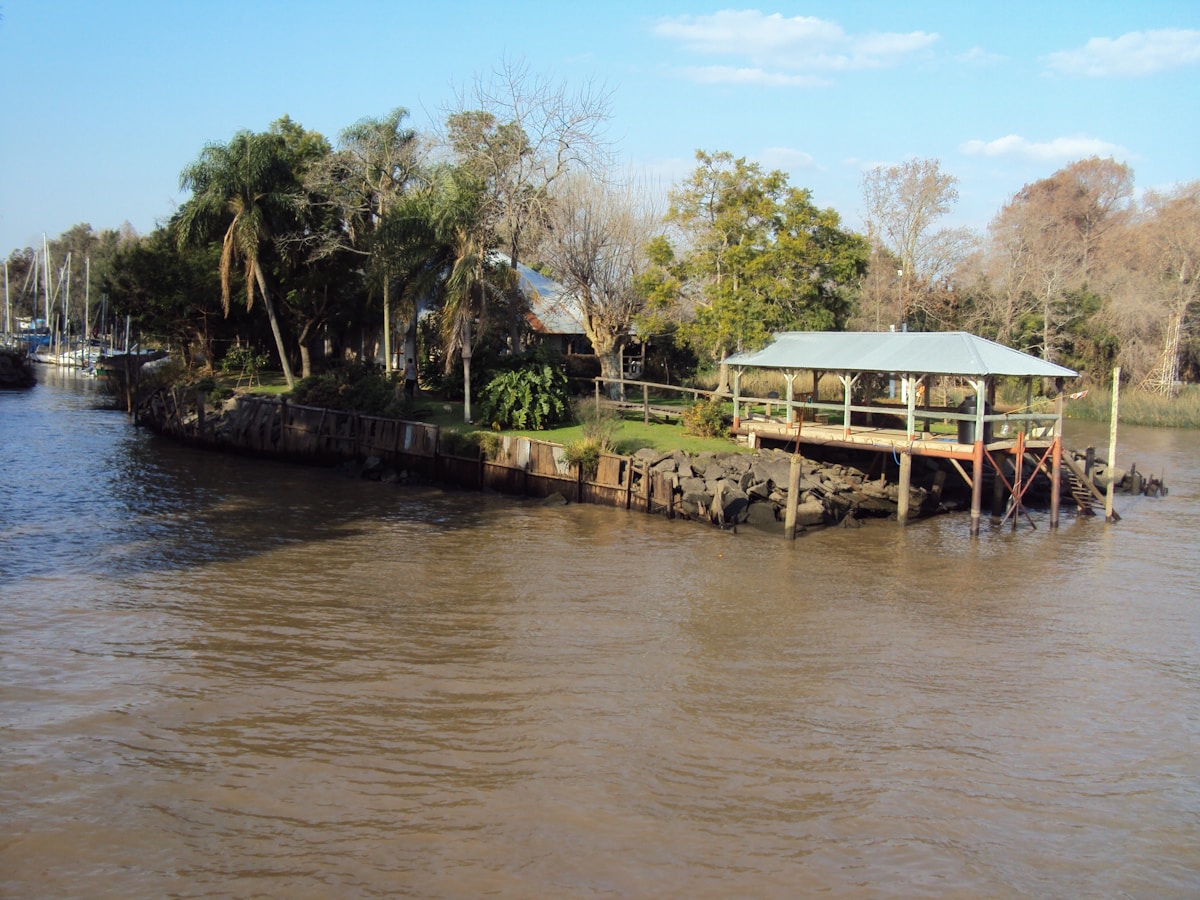
Tigre is the most accessible day trip from Buenos Aires and the easiest introduction to a landscape that is genuinely unlike anything in the city. The town sits 28km north of the capital at the point where the Paraná Delta begins - a vast network of brown-water channels, islands, and wetlands that continues north for hundreds of kilometres.
Getting there: Take the Mitre commuter line from Retiro station or Federico Lacroze station to Tigre - the journey takes approximately 45 minutes and costs around ARS 200–500 as of 2026. A more scenic alternative is the Tren de la Costa, departing from Maipú station after a short connection; it is slower, more expensive, and runs along the riverside, but the views are better.
In Tigre town: The Puerto de Frutos is an artisan and produce market that runs daily but is busiest on weekends - wooden furniture, handicrafts, and local fruit and vegetables. The Museo de Arte de Tigre, housed in the ornate 1912 Tigre Club building near the waterfront, is worth a look for its Argentine figurative painting collection. The rowing clubs along the riverfront reflect Tigre’s early-20th-century identity as a weekend retreat for porteño families.
Into the delta: The real appeal is the delta itself. From the Estación Fluvial, lanchas (shared water taxis) depart regularly for different channels - tickets are sold at the dock and priced by zone. An organised full-day delta excursion, including a guided boat tour and lunch at a delta restaurant or estancia, runs from approximately ARS 8,000–15,000 per person as of 2026. Independent travellers can simply board a shared lancha and ride to the end of the line, then return - the delta houses, willow trees, and near-silence are worth the short journey alone.
Colonia del Sacramento, Uruguay
Colonia del Sacramento is the most striking of the four day trips listed here, primarily because it is not Argentina at all. The town sits on the Uruguayan bank of the Río de la Plata, directly opposite Buenos Aires, and its Historic Quarter is a UNESCO World Heritage Site - the only one reachable as a day trip from the Argentine capital.
Getting there: Buquebus operates fast ferries from the Puerto Madero terminal in Buenos Aires. The crossing takes approximately 1 hour 15 minutes. Return tickets cost approximately USD 40–80 as of 2026, depending on the season and how far in advance you book. Purchase tickets online at buquebus.com - the ferry fills up on weekends and booking a day or two ahead is strongly advisable. Take your passport; you are crossing an international border.
In Colonia: The Barrio Histórico is the reason most visitors make the trip. Portuguese colonists founded Colonia in 1680 and much of the layout has survived: cobblestone streets, low whitewashed buildings, the Portón de Campo city gate, and the Plaza Mayor with its mix of colonial and later buildings. The Faro (lighthouse) is a five-minute climb for a panoramic view over the Río de la Plata - the Buenos Aires skyline is visible on clear days. The Museo Portugués on the Plaza Mayor traces the town’s founding period.
Colonia is compact enough to cover on foot in three to four hours. The town has a distinctly quieter pace than Buenos Aires - this is worth factoring in. Most restaurants and cafés accept cards; Uruguay’s currency is the Uruguayan peso (UYU), though USD are widely accepted in tourist areas.
A half-day is sufficient to see the main sights; a full day allows lunch and a slower exploration of the Barrio Histórico’s backstreets.
San Antonio de Areco: Gaucho Country
San Antonio de Areco is the most authentically Argentine of the four excursions. The town sits 113km west of Buenos Aires on the Pampas and has been the centre of gaucho culture since the 19th century - it is where the tradition is preserved most consciously, from the silversmith workshops to the annual Día de la Tradición festival in November.
Getting there: Chevalier buses depart from Terminal Retiro roughly every hour or two. The journey takes approximately 1 hour 30 minutes to 2 hours, and tickets cost around ARS 4,000–7,000 as of 2026. Book at the terminal or online; seats sell out for the weekend of the Día de la Tradición festival.
In the town: The Museo Gauchesco Ricardo Güiraldes, set inside the Parque Criollo on the bank of the Río Areco, is the main cultural site - it covers the history and material culture of the Pampas gaucho in considerable depth, with a strong collection of silver work, saddles, and period clothing. The Parque Criollo itself has a replica pulpería (general store and bar) from the 19th century.
San Antonio de Areco is known for its silversmith and leatherwork workshops. The town’s artisans produce facón knives, rastrillo belts, and traditional silver horse gear - quality varies between shops, and pieces from established workshop-showrooms tend to be more reliably made. Several workshops allow visitors to watch the craftspeople at work.
For lunch, Almacén de Ramos Generales on the main square is the most traditional option - asado, empanadas, and local wine in a 19th-century almacén interior. La Costa de los Amigos, closer to the river, is another reliable choice for a straightforward asado.
Estancias: Several working estancias sit within a short distance of the town and offer half-day gaucho experiences - horseback riding, traditional asado lunch, and boleadora and lasso demonstrations. Prices run from approximately USD 80–120 per person as of 2026; estancias in the area include Estancia La Porteña and Estancia El Ombú de Areco. Most can be booked directly or through Buenos Aires tour operators.
Luján: Argentina’s Pilgrimage Basilica
Luján is a different kind of excursion. The town, 65km west of Buenos Aires, exists primarily as Argentina’s most important Catholic pilgrimage destination - the Basílica de Nuestra Señora de Luján draws several million visitors per year, making it one of the most-visited religious sites in South America.
Getting there: The Tren Belgrano Norte runs from the Once station (Federico Lacroze) to Luján - the journey takes approximately 1 hour 30 minutes to 2 hours. Buses also run from Terminal Retiro and from Once. The town is easily reached on a half-day.
The Basílica: The Basílica de Nuestra Señora de Luján is a large neo-Gothic structure completed in 1935, with twin towers visible from well outside town. The interior is substantial - capacity is around 14,000 - and it is rarely empty. The venerated image of the Virgin of Luján, a small terracotta figurine from the 17th century, is housed in the main chapel. Pilgrimage groups, some having walked 60km from Buenos Aires, arrive year-round; the largest pilgrimage takes place each October.
On the basilica grounds, the Complejo Museográfico Enrique Udaondo houses the Museo Colonial e Histórico and the Museo del Transporte. The transport museum is genuinely worth an hour - it contains an early 20th-century locomotive, horse-drawn carriages, and a Harley-Davidson that was ridden by the Argentine military. Entry fees are modest; verify current prices locally as of 2026.
Planning Your Day Trips
A few practical points for combining these excursions:
- Tigre is the simplest add-on - half a day is enough for the town and a short boat ride; a full day justifies a longer delta excursion
- Colonia del Sacramento requires passport and advance ferry booking; aim for the early ferry to maximise time there
- San Antonio de Areco is best on a weekend when the town has more life; avoid the Día de la Tradición weekend (mid-November) unless you have booked accommodation well in advance - the town fills completely
- Luján pairs well with San Antonio de Areco if you want to cover two western Pampas destinations in a single day, though the journey times make it a long day
Organised day trips from Buenos Aires are available for all four destinations and remove the logistics of transport connections - particularly useful for estancia visits and the Colonia ferry booking.
See Also: Buenos Aires travel guide · Things to do in Buenos Aires · La Plata travel guide · Tigre travel guide · Getting around Argentina