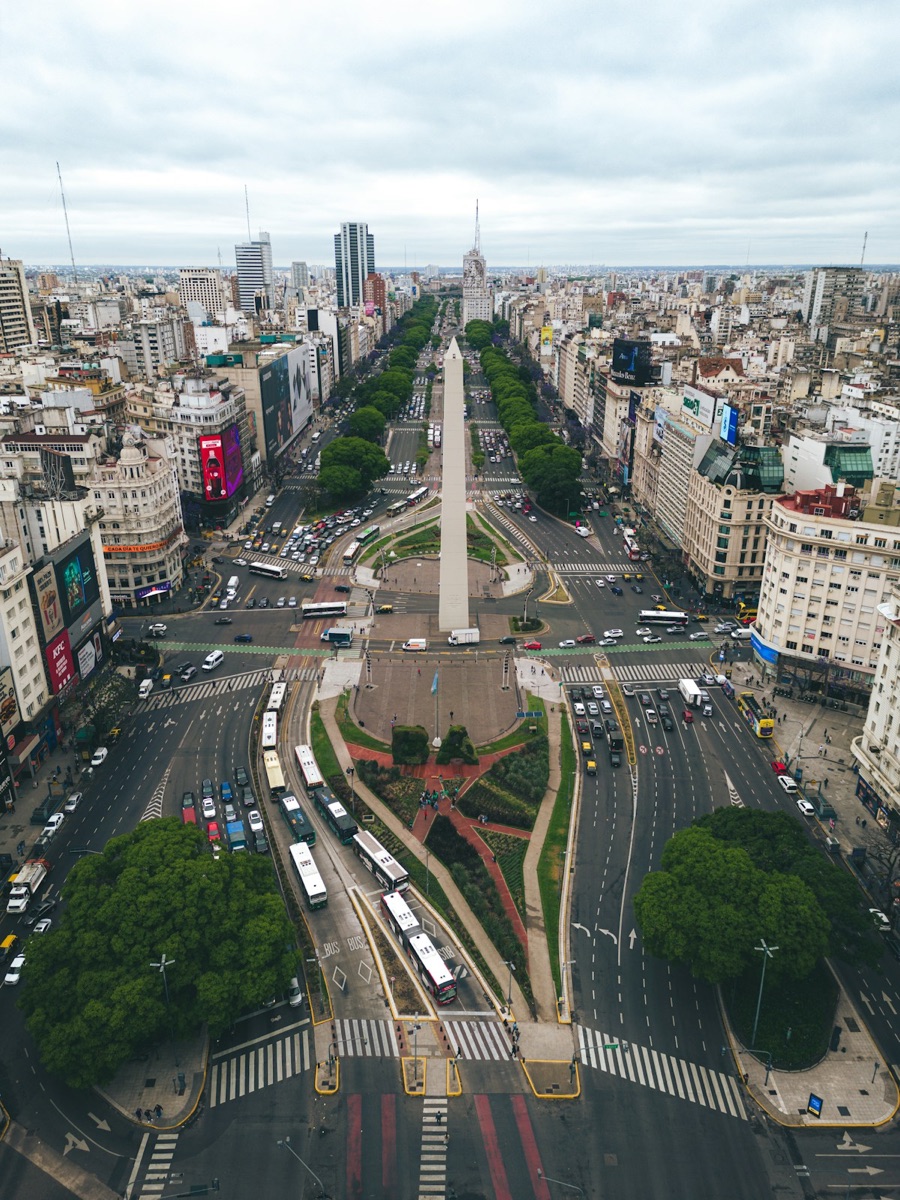
Few Argentina travel decisions are as common - or as genuinely difficult - as Buenos Aires vs Mendoza. One is a sprawling, tango-soaked metropolis with world-class steakhouses and a nightlife scene that runs until dawn. The other is a sun-drenched city ringed by snow-capped Andes peaks and some of the world’s best Malbec vineyards. They serve different purposes, and understanding which one fits your trip is worth a few minutes of thought before you book.
Overview
Buenos Aires is Argentina’s capital and largest city - a place of 3 million people (15 million in greater Buenos Aires) that blends European architecture with Latin energy. Palermo’s leafy streets, San Telmo’s cobblestones, and La Boca’s coloured houses give the city a texture that takes days to absorb. It’s cosmopolitan, dense, and endlessly stimulating.
Mendoza sits at the foot of the Andes in Argentina’s western wine belt, roughly 1,050 km from Buenos Aires. Its population is around 115,000 in the city proper, with about 1 million across the greater province. The pace is slower, the streets are wide and lined with acequia irrigation channels, and the surrounding wine country - Maipú, Luján de Cuyo, Valle de Uco - is the main draw. This is Argentina’s Napa, with altitude.
Getting There
From Buenos Aires, Mendoza is roughly 14–17 hours by overnight bus (several companies run this route including Andesmar and El Rápido; fares from approximately ARS 15,000–25,000 each way as of 2026). A direct flight takes around 1 hour 45 minutes; Aerolíneas Argentinas and Flybondi both serve the route, with fares from approximately USD 60–150 depending on timing and how far in advance you book.
Within each city: Buenos Aires has an extensive subway (Subte) covering central neighbourhoods for around ARS 100 per ride, plus buses and taxis. Mendoza’s layout is compact enough to walk the city centre, but you’ll need a bus, taxi, or rental bike to reach the wineries in Maipú (about 20 minutes) and Luján de Cuyo (30–40 minutes).
Things to Do
Buenos Aires rewards wanderers. A morning in San Telmo’s antique market, an afternoon watching Boca Juniors train near La Bombonera, a tango show at Café de los Angelitos (show + dinner from approximately USD 80–120 per person) - the city throws options at you continuously. Day tours in Buenos Aires are useful for fitting the main barrios into a single day when you’re splitting a two-week itinerary between cities. The MALBA modern art museum charges around ARS 4,000 admission. The weekend Feria de San Telmo runs along Defensa Street and is free. Cemetery tourism at Recoleta (free, open daily) offers one of the city’s most distinctive experiences.
Mendoza centres on the wineries. A full-day bike tour through Maipú - visiting three or four bodegas including Clos de Chacras and Finca La Celia - costs approximately USD 20–35 all-in for bike rental, typically excluding wine purchases. More structured winery tours through operators like Trout & Wine or Ampora Wine Tours run from approximately USD 80–150 per person including transport. The Valle de Uco, 80 km south, is where Argentina’s most ambitious Malbecs come from - tastings at estates like Zuccardi Valle de Uco cost approximately USD 30–60 per person. If you’re there in winter (June–August), Las Leñas ski resort is around 4 hours south.
For outdoor activity beyond wine, the Aconcagua Provincial Park - site of the highest peak in the Americas - is accessible from Mendoza. Day hikes in the lower park are possible without a guide; summit expeditions require permits and experience.
Food and Drink
Buenos Aires competes internationally for restaurant quality. La Cabrera in Palermo (ARS 12,000–20,000 per person for a full parrilla meal with wine) is the standard parrilla benchmark. Don Julio in Palermo has earned a spot on the World’s 50 Best list; expect queues and approximately ARS 18,000–30,000 per person. For something more everyday, a choripán from a parrilla cart costs ARS 1,500–2,500. Porteños eat dinner late - most restaurants don’t fill up until 9:30 or 10pm, and many don’t close until 2am.
Mendoza is wine-first, but the food scene has grown to match. 1884 Restaurante by Francis Mallmann (inside the historic Bodega Escorihuela Gascón) serves Argentine wine-country cuisine in a setting that justifies the price - approximately ARS 20,000–30,000 per person. For something more accessible, the Mercado Central in central Mendoza has fresh produce, empanadas, and local cheeses. The city’s signature dish is the Mendocino humita en chala - a fresh corn tamale that you’ll find at most local eateries for ARS 800–1,200.
Both cities serve good wine. But in Mendoza, you’re drinking the same wine at the bodega where the grapes were grown, often for a fraction of what you’d pay in Buenos Aires.
Where to Stay
Buenos Aires has the widest spread. Palermo Soho is the most popular base for first-timers: hostels from approximately ARS 8,000 per night (dorm), boutique hotels from approximately USD 60–100, and design hotels like Casa Calma Hotel Wellness & Spa from approximately USD 150–200. San Telmo suits travellers who want a grittier, more historic feel - Mansion Dandi Royal is a tango-themed boutique hotel from approximately USD 90–130. For a splurge, Alvear Palace Hotel in Recoleta runs approximately USD 350–500+ per night but represents genuine old-world grandeur.
Mendoza accommodation clusters in the city centre and in Chacras de Coria, a wine-adjacent village about 20 minutes south. In the city, Park Hyatt Mendoza on Plaza Independencia charges approximately USD 180–280 per night. Mid-range options like Mod Hotel or Hotel Bohemia run USD 70–130. For a wine-country stay, Cavas Wine Lodge in Luján de Cuyo - individual casitas set among vines with Andes views - starts at approximately USD 400 per night and is considered one of Argentina’s finest small hotels.
Budget
Buenos Aires costs more day-to-day than Mendoza, but the gap has narrowed since Argentina’s currency has stabilised more recently. A comfortable day in Buenos Aires - hotel (mid-range), two meals, a museum, and local transport - runs approximately USD 80–120 per person. In Mendoza, a day including a winery tour, meals, and mid-range lodging runs approximately USD 70–110. The Mendoza splurge (premium winery visits, upscale restaurants) climbs fast, but the floor is slightly lower.
Both cities have parallel USD exchange rates available at cueva/blue market rates - as of 2026, these can be significantly better than the official rate. Check current conditions before travel.
The Verdict
Go to Buenos Aires if: you want culture, nightlife, theatre, football, and the energy of one of South America’s great cities. A minimum of 3–4 days barely scratches the surface.
Go to Mendoza if: wine is your priority, or you want to combine the Andes with a slower, warmer pace. Three days gives you time for the main wine regions plus a day in the city itself.
Most people visiting Argentina for two weeks visit both - and that’s usually the right call. Buenos Aires makes sense as the first stop (international flights typically arrive there) and Mendoza as a three- or four-day extension, either by overnight bus or a short flight.
For more on each city, see our Buenos Aires city guide and Mendoza city guide. If you’re planning to visit Mendoza, our Mendoza wine tasting guide covers the best bodegas in detail.