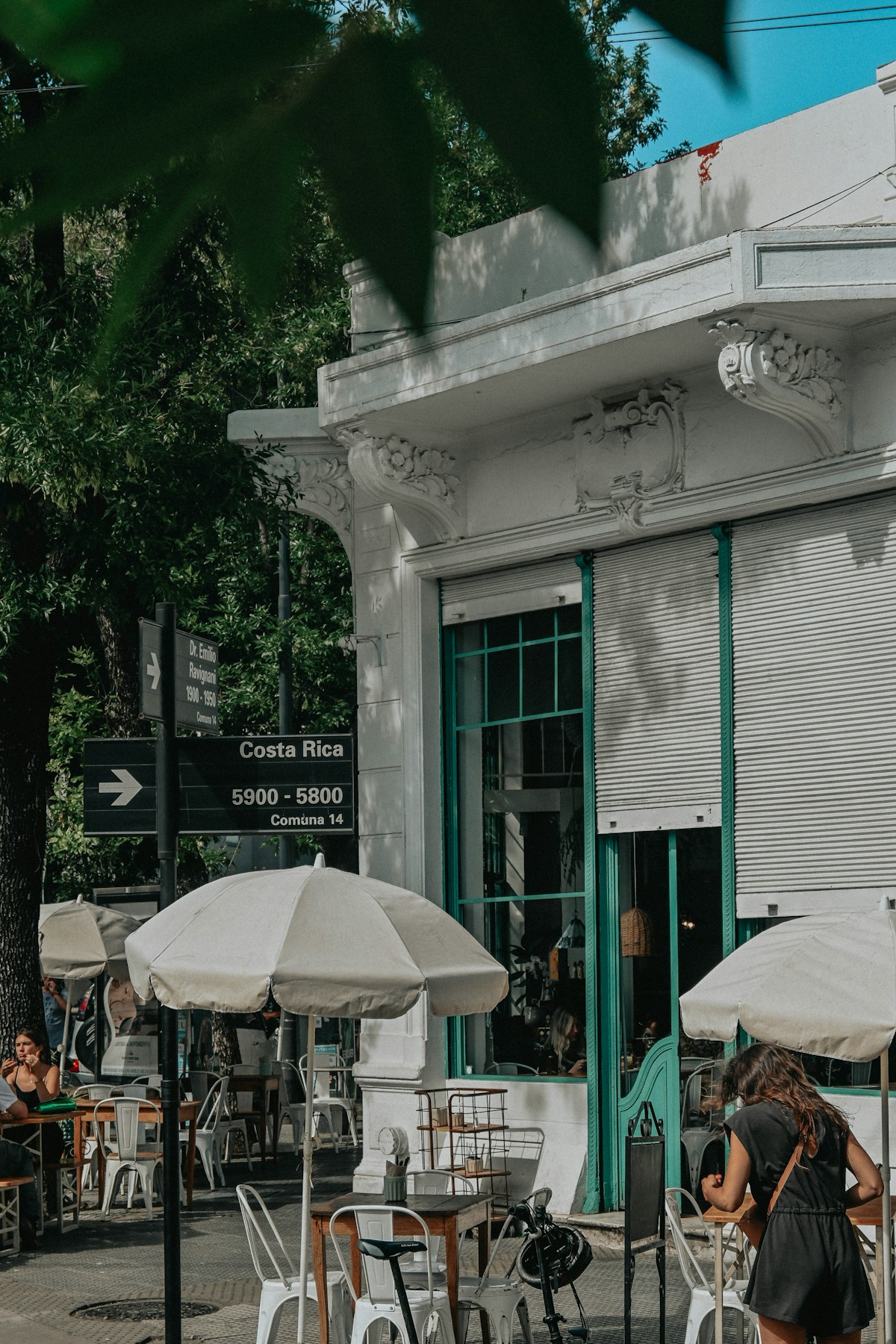
Buenos Aires has one of South America’s most varied and accomplished food scenes, shaped by European immigration (primarily Italian and Spanish), Jewish communities, and the Pampas beef culture that defines Argentine eating. The city is not a single cuisine - it’s several overlapping food traditions that coexist across its barrios.
Asado
Asado is the Argentine beef-grilling tradition and extends beyond a cooking method to a social ritual. The full asado involves different cuts of beef cooked slowly over wood or charcoal, typically preceded by chorizo and morcilla (blood sausage). At a parrilla (grill restaurant), you’ll encounter cuts including:
- Bife de chorizo - sirloin, the most common restaurant cut
- Entraña - skirt steak, flavourful and less expensive
- Vacío - flank steak
- Costillas - ribs
- Mollejas - sweetbreads (thymus gland); a traditional Argentine delicacy
- Morcilla - blood sausage; strongly flavoured
Meat is accompanied by chimichurri (a herb sauce of parsley, garlic, olive oil, and chilli) and sometimes salsa criolla (a chopped tomato and onion condiment). The combination is straightforward and very good when the beef quality is high.
Notable parrillas in Buenos Aires include Don Julio (Palermo, booking essential), La Cabrera (Palermo), and the longer-established El Desnivel (San Telmo). Some guided tours in Buenos Aires include a parrilla lunch stop, which is a useful introduction to the asado experience before you venture out independently.
Empanadas
Empanadas are half-moon pastries filled with various ingredients and baked or fried. Every Argentine province has its own style, and Buenos Aires has them all. Key fillings:
- Carne (cortada a cuchillo) - beef chopped by hand rather than minced; the classic
- Carne picante - spiced beef
- Jamón y queso - ham and cheese
- Humita - creamed corn (often vegetarian or vegan; confirm)
- Pollo - chicken
- Caprese - tomato and mozzarella
Buy from bakeries (panaderías), dedicated empanada shops, and restaurants. Eat them at room temperature or hot from the oven.
Pizza and Fainá
Argentine pizza is its own tradition, distinct from Italian pizza. The bases are thicker, the cheese more abundant, and the style leans toward comfort food rather than elegance. Fugazza (caramelised onion, no tomato) and fugazzeta (with cheese added) are specifically Argentine variations.
Fainá is a chickpea flatbread traditionally eaten alongside pizza - a legacy of Genoese immigration. The classic pairing is a slice of pizza and a slice of fainá, eaten together.
Historic pizza institutions in Buenos Aires include El Cuartito and Las Cuartetas in the city centre, both of which have been operating since the mid-20th century.
Medialunas
The Argentine medialuna is a croissant variant - smaller, sweeter, and glazed with sugar syrup. They are the standard Buenos Aires breakfast, eaten with coffee at any hour from early morning through mid-afternoon. A medialuna con manteca (with butter) or con jamón y queso (with ham and cheese) are common variations.
Facturas
Facturas is the collective term for Argentine pastries. Beyond medialunas, the bakery case typically includes: palmeritas (palmier biscuits), vigilantes (elongated, plain), cañoncitos (cream-filled), and several others. Each has an informal name that varies by bakery.
Dulce de Leche
Dulce de leche is the defining Argentine sweet - a thick, slow-cooked milk caramel that appears on toast, in pastries, in ice cream, as a cake filling, and as a dessert spread. It is distinct from condensed milk (it is cooked longer, producing a deeper flavour) and from Spanish cajeta. The Argentine version is considered its own thing.
Helado (Ice Cream)
Buenos Aires has a dense concentration of heladerías producing Italian-style gelato. The quality is consistently high, a direct legacy of Italian immigration. Freddo and Persicco are the main chains; dozens of independent heladerías operate throughout Palermo and Recoleta. The dulce de leche flavour is the baseline benchmark for any heladería.
Mate
Mate is not a food but will shape your experience of Argentina. The caffeinated infusion of yerba mate leaves, drunk from a gourd through a metal straw (bombilla), is the daily ritual drink across Argentina - shared at home, carried in thermos on the street, and consumed at all hours. It has a strong, bitter taste that takes adjustment. Being offered mate is a social gesture; accepting it is the expected response.
Where to Eat
- Parrillas (meat-focused): Don Julio, La Cabrera, El Desnivel
- Empanadas: El Sanjuanino (Recoleta), any local panadería
- Pizza: El Cuartito, Las Cuartetas (both Centro)
- Creative modern Argentine: Mishiguene, Gran Dabbang, Elena (Four Seasons hotel)
- Pastries and breakfast: Any local panadería or confitería; El Gato Negro (spice shop and café, Centro)
Take a Food Tour in Buenos Aires
Buenos Aires is one of the best cities in South America for a guided food tour, partly because the scene is dense and varied, and partly because the cultural context - which barrio is Italian, which market is Jewish, why the pizza is thick - makes the eating significantly richer with someone to explain it. Food tours typically cover San Telmo market, a parrilla lunch with an asador talking through the cuts, empanada tasting from a northern-style shop, and a stop at a confitería for medialunas. Half-day tours are common and easy to slot into any itinerary. Buenos Aires food tours are available year-round with morning and evening options.
For practical planning: travel insurance for Argentina covers medical costs and cancellations, and an eSIM for Argentina is the easiest way to look up restaurants, navigate between barrios, and translate menus on the go.
See also: Buenos Aires travel guide · Argentine food guide · Asado guide · Empanadas guide · Vegan Buenos Aires guide