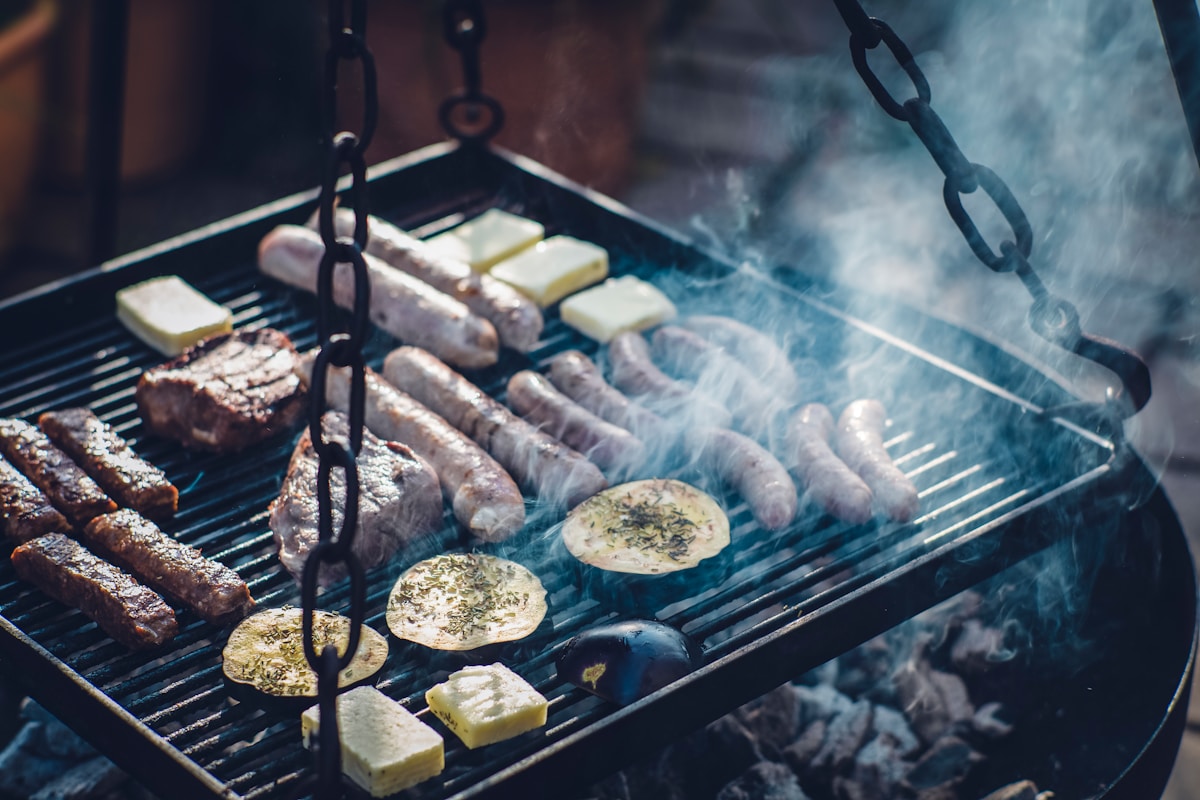
The asado is the central ritual of Argentine food culture. It is simultaneously a cooking technique, a type of dish, and a social event that structures Argentine family and community life in a way that has no direct equivalent in other food cultures. Understanding how asado works - the fire, the cuts, the sequence, the social logic - makes eating in Argentina significantly more rewarding.
The Fire
Argentine asado is cooked over wood coals or charcoal, never gas. The fire is built to one side of the grill (parrilla) - not under it. Once the wood or charcoal has burned down to glowing embers, the asador uses a shovel to move embers beneath the cooking surface. Temperature is managed by adjusting the amount of ember beneath specific sections of the grill and by raising or lowering the grill grate.
This indirect heat method means cooking times are long by comparison with gas grilling. A full asado with achuras (offal), sausages, and main cuts takes two to three hours from lighting the fire to the main course arriving at the table. The slow process is part of the point - the asado is a social event, and the cooking time is time for conversation, wine, and the gradual build of anticipation.
Wood (leña) from quebracho or other hardwoods is considered superior to charcoal because it imparts a smokiness and a longer-burning coal bed. In cities where wood is less practical, quality charcoal is the standard alternative. The fire-starting method matters too - lighter fluid is frowned upon in serious asado culture; paper and small kindling are the accepted approach.
The Role of the Asador
One person - the asador - is responsible for the fire and the cooking. This is not a collaborative role. Others may offer opinions and will be politely ignored. The asador controls the sequence of cooking, the fire management, and the timing of when things arrive at the table. Interfering with the grill is a genuine social transgression.
The asador is typically the host at a home asado or the designated grill person at a gathering. At a parrilla restaurant, the role is professional. The quality of the asador matters enormously - a fire that is too hot burns the exterior before the interior is cooked; too cool and the meat sits in its own fat without developing crust or flavour.
The Sequence of Cooking
A full asado follows a predictable sequence:
First: Provoleta - a thick disc of provolone cheese placed directly on the grill. It forms a crust on the outside while the interior softens. Served with dried oregano and olive oil. This buys time while the main fire develops.
Second: Achuras (offal) and sausages. Chinchulines (small intestines, cleaned and coiled) cook relatively quickly and arrive first, crispy and rich. Morcilla (blood sausage) and chorizo criollo follow. Mollejas (sweetbreads - thymus gland) take longer and are the most prized achura: golden and crisp outside, creamy inside. Some asadors also cook riñones (kidneys) and a grilled provoleta at this stage.
Third: The main cuts. Tira de asado (short ribs cut across the bone, sometimes called asado de tira) are placed bone-side down and cooked slowly until the bone is charred and the meat has pulled back from the rib. Vacío (flank) is cooked whole; it takes 45 minutes to an hour to develop the right exterior crust with a pink interior. Individual steaks - bife de chorizo, entraña (skirt steak), ojo de bife (ribeye) - come to the table last, cooked to order for each diner.
The Cuts
Tira de asado - cross-cut short ribs, 1–2cm thick slices. The bone-to-meat ratio is high but the flavour from the bone is exceptional. This is the cut that gives the asado its name when used as a noun for the food itself.
Vacío - flank steak with the outer fat cap intact. Long-cooked over moderate heat, the fat renders and crisps while the meat stays pink. Considered by many to be the ideal everyday asado cut.
Entraña - skirt steak. Thin, fatty, intensely flavoured. Cooks quickly and is often the first main cut served.
Bife de chorizo - sirloin. The prestige cut at most parrillas. Well-marbled, with a fat cap on one edge that is charred and eaten.
Matambre - a thin cut from the flank, often rolled and stuffed with herbs, hard-boiled eggs, and vegetables (matambre relleno), then slow-cooked or roasted. Also eaten thin and grilled.
Ojo de bife - ribeye. Rich and fatty, favoured by those who want maximum marbling.
Sauces and Accompaniments
Chimichurri - finely chopped parsley, garlic, dried chilli, oregano, red wine vinegar, and olive oil - is the universal condiment. It is served as an accompaniment, not a marinade. Salsa criolla - diced tomato, onion, and green pepper in oil and vinegar - is the other standard sauce, fresher and lighter than chimichurri.
The accompaniments at a home asado are typically simple: bread, salad (often just tomato and lettuce), and sometimes fried potatoes. At a restaurant, the sides are similar: papas fritas (chips), ensalada mixta, and bread.
Wine is the standard drink with asado. Malbec is the obvious pairing for the beef cuts; lighter cuts like entraña and matambre work with Bonarda or a light Malbec. Fernet con Coca - Fernet-Branca mixed with Coca-Cola - is Argentina’s most popular spirits drink and appears at many asados as an aperitif.
Eating Asado as a Visitor
At a parrilla restaurant, order a combination plate (parrillada para dos or para cuatro) if with a group - it will arrive on a small individual grill with a selection of cuts and achuras. Order bread, a salad, and chimichurri separately. The meat will arrive still sizzling from the grill. Eat it immediately; asado does not improve with waiting.
If invited to a home asado, the standard contribution is wine and/or dessert (a cake or ice cream). Arrive with the expectation that eating will not begin for two to three hours after the stated time, and that the afternoon will last four to six hours. This is not disorganisation - it is the structure of the event.
Book an Asado Class or Food Tour in Buenos Aires
The fastest way to understand asado is to watch an asador work from fire-lighting to plating. Buenos Aires asado cooking classes and parrilla food tours put you in a working kitchen or at a live grill with a local expert - covering fire technique, the sequence of cuts, and why the chimichurri only appears at the table, never as a marinade. Most sessions also include a guided tasting of the achuras (offal) that many visitors skip at restaurants but which define a proper asado. For visitors who want to eat asado well rather than just ordering blindly, this kind of structured introduction to the grill is genuinely worthwhile. Asado food tours in Buenos Aires are bookable year-round.
Before travelling, travel insurance for Argentina covers medical costs and cancellations. An eSIM for Argentina is useful for navigating parrilla neighbourhoods and checking opening hours on the go. For accommodation near Buenos Aires’ best parrilla districts, browse hotels in Buenos Aires.
See also: Argentine food guide · Empanadas guide · Buenos Aires food guide · Salta food guide · What to eat in Buenos Aires