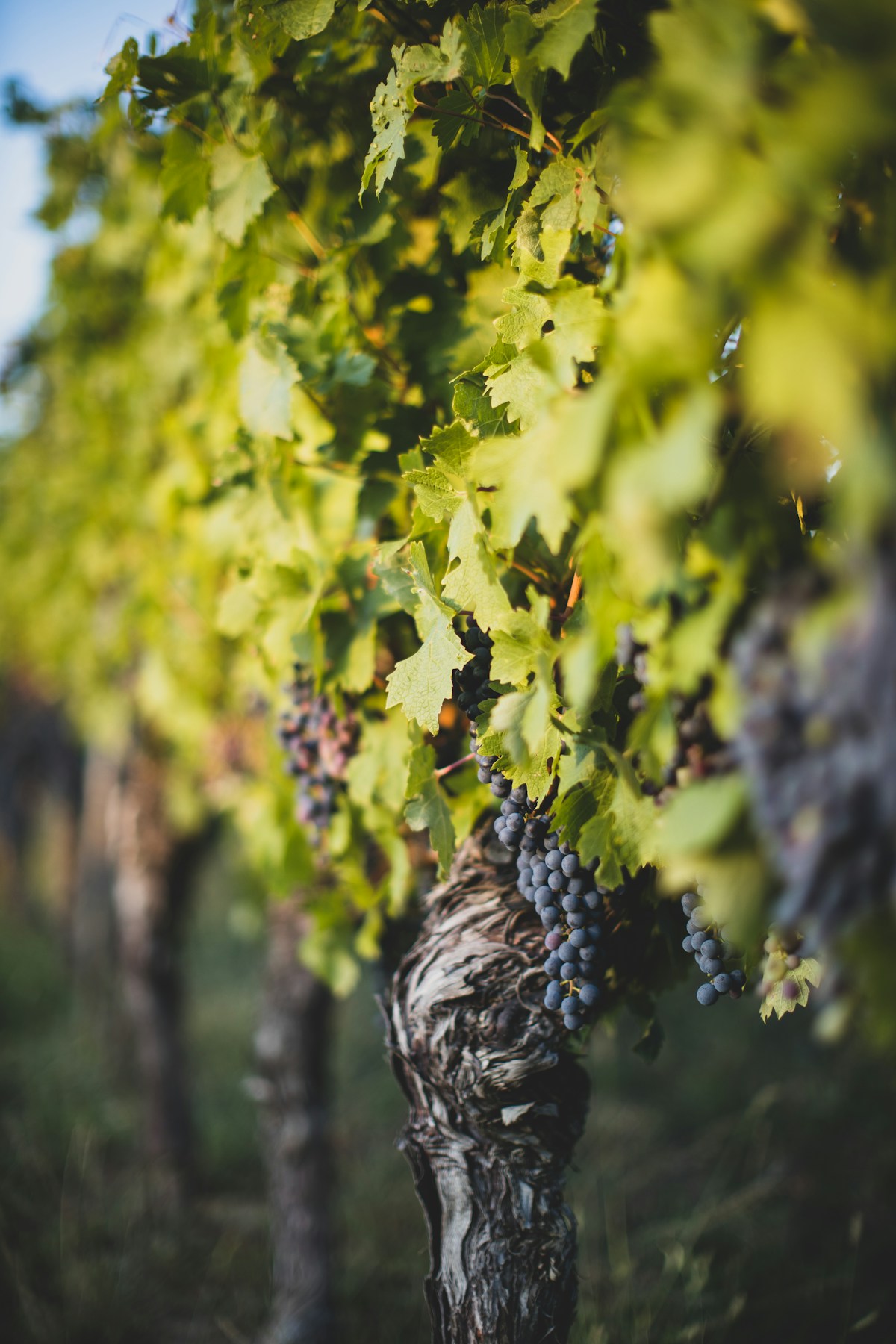
Mendoza is responsible for around 70% of Argentina’s wine production, and understanding what makes Mendoza wine distinctive - not just which varieties to drink or which bodegas to visit, but why the region produces wine the way it does - requires understanding its geography, its water, and its history.
A Desert Made Arable: The Irrigation System
Mendoza is, technically, a desert. Annual rainfall in the city averages around 200mm - less than Cairo. Without human intervention, vineyards could not exist here. The reason Mendoza is one of the world’s great wine regions is an irrigation system that predates European colonisation: a network of acequias (irrigation canals) constructed by the Huarpe people, who inhabited the region for centuries before Spanish arrival, to direct Andean snowmelt from the mountains across the dry plain.
The Spanish colonists who arrived in the 16th century expanded and formalised this network rather than building a new one. Modern Mendoza still runs on derivatives of those original channels. Every garden, vineyard, and plaza in Mendoza city receives its water from acequias - you can see them running alongside the pavements throughout the centre. The plane trees that shade Mendoza’s streets were planted along the acequia lines specifically because their roots can reach the water.
This water infrastructure is why Mendoza exists as an agricultural region at all. Without it, the Malbec grapes, olive trees, stone fruit orchards, and vegetable farms that define the Cuyo economy would be impossible.
The First Vines: Colonial Origins
The first vineyards in Mendoza were planted by the Spanish in the mid-16th century, within a few decades of the Spanish founding of the city in 1561. The motivation was practical: Spanish Catholic settlers needed wine for the Eucharist, and importing wine from Spain across the Atlantic and then over the Andes by mule was expensive and unreliable. Local production was the logical solution.
The grape variety planted by the Spanish was the País (called Criolla Chica in Argentina) - a variety of Spanish origin that produces high yields of ordinary wine. It dominated Mendoza viticulture for three centuries. The wines were functional rather than distinctive: enough for the mass and the table, not enough to attract international attention.
The French Intervention: Michel Aimé Pouget and Malbec
The transformation of Mendoza from a local wine producer into an internationally significant region began in 1853, when French agronomist Michel Aimé Pouget arrived in Mendoza as part of a modernisation programme commissioned by the Governor of Mendoza, Domingo Faustino Sarmiento (who later became President of Argentina). Pouget brought cuttings of French grape varieties from Chile and established a school of agriculture in Mendoza to teach modern viticulture techniques.
Among the varieties Pouget introduced was Malbec - native to the Cahors region in southwest France, where it was a difficult, unreliable grape, often blighted by frost and disease. In Mendoza’s dry, sunny, high-altitude environment, Malbec behaved differently. Without the frost risk and fungal pressure of French conditions, it produced reliably and abundantly. The altitude - Mendoza sits at around 750 metres, with vineyards extending to 1,500 metres in the Uco Valley - meant intense sunlight during the day and cold nights that preserved the acidity and aromatic compounds that define wine quality. Mendoza Malbec developed a distinct identity: darker, fuller, more consistently produced than its French counterpart.
European Immigration and the Wine Industry’s Scale-Up
The late 19th century brought a second wave of transformation. As Argentina opened its immigration policies and European population pressure drove mass emigration, hundreds of thousands of Italians and Spaniards - many of them from winemaking regions - arrived in Mendoza. Italian families from Piedmont, Veneto, and Calabria, who had grown grapes for generations, looked at Mendoza’s vineyards and saw familiar conditions at much larger scale.
These immigrant families established the bodegas that still carry their names today - Zuccardi, Catena (originally from the Marche region of Italy), Weinert, Navarro Correas. They applied European winemaking discipline to Argentine yields and Argentine varieties, and they expanded the acequia network to bring more land under cultivation. By 1900, Mendoza was producing wine for export as well as for national consumption. The construction of the transcontinental railway connecting Mendoza to Buenos Aires in 1885 was the enabling infrastructure: wine could now reach the national market in quantity.
Altitude as Quality Signal: The Modern Era
For most of the 20th century, Mendoza produced wine in industrial quantities at moderate quality - the model was volume rather than distinction. The shift began in the 1990s, when a small number of producers - notably the Catena family, working with UC Davis-trained enologist Laura Catena - started treating altitude systematically as a quality variable.
The insight was straightforward in retrospect: the higher the vineyard elevation, the more intense the UV radiation, the greater the diurnal temperature variation (hot days, cold nights), and the lower the yields - all factors that concentrate flavour and preserve acidity. Vineyards above 1,200 metres in the Uco Valley, which had previously been considered marginal growing sites because of frost risk, turned out to produce some of Argentina’s most complex wines when managed correctly.
This discovery triggered a rush to high-altitude planting that has reshaped the Mendoza map over the past three decades. The Uco Valley - once sparsely cultivated - is now the region where most of the most exciting new Mendoza wines originate, from producers working with varieties (Cabernet Franc, Chardonnay, Pinot Noir) that perform at altitude in ways they cannot manage in the warmer, lower valleys.
The Food Parallel: Olives, Goat, and the Andean Tradition
The same irrigation and altitude logic that defines Mendoza wine applies to its food culture. Mendoza is Argentina’s largest olive oil producer: the climate that produces concentrated Malbec grapes also produces olive trees with the stress conditions that concentrate flavour in the fruit. Olive oil production expanded alongside wine in the immigrant era and has remained closely linked to the bodega economy - many wineries produce their own oil.
The Andean indigenous food tradition persists in Mendoza’s cooking in ways it does not in Buenos Aires. Humita en chala - fresh corn paste wrapped in corn husks, a pre-Columbian preparation found from the Andes to Peru - is a standard starter at traditional Mendoza restaurants. Chivo al asador (slow-roasted kid goat over a wood fire) reflects the pastoral economy of the higher Andean valleys, where goats graze on scrub above the vineyard line.
For bodega visits, wine tasting, and restaurant recommendations in Mendoza, see our Mendoza travel guide and the Mendoza wine tasting guide.
Book a Wine and Food Tour in Mendoza
The Mendoza wine experience lands differently when a guide is explaining why the same Malbec grape that struggles in Cahors thrives at 1,100 metres in the Uco Valley. Guided food and wine tours here combine bodega visits - with a working cellar, a vineyard walk, and a structured tasting of the high-altitude varietals - with a pairing lunch that typically includes the regional olive oil, humita, and chivo (kid goat) that the same irrigation system supports. It’s also the most practical way to visit multiple bodegas in the Luján de Cuyo and Uco Valley sub-regions without a rental car. Mendoza wine and food tours cover all the main sub-regions and pair well with a two-to-three night stay in the city.
Before travelling, travel insurance for Argentina covers medical costs, cancellations, and lost equipment — worth having if your itinerary includes both Mendoza and Patagonia. An eSIM for Argentina keeps you connected across the wine regions, where mobile coverage varies between the main city and the Uco Valley. For where to stay during your Mendoza visit, browse hotels in Mendoza.
Related reading: Mendoza travel guide · Things to do in Mendoza · Argentine food guide · Asado guide