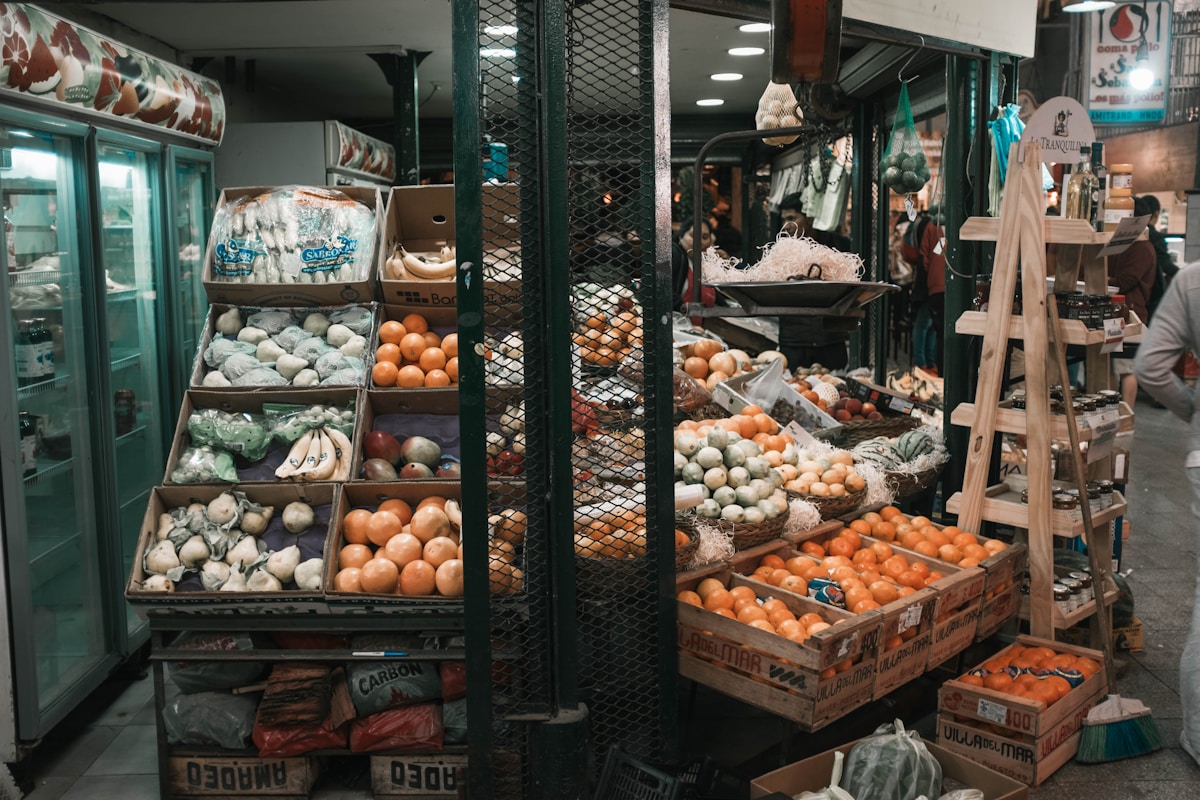
Argentine cuisine is shaped by two dominant forces: cattle ranching culture and mass European immigration. The result is a food identity that feels distinct from the rest of Latin America - more focused on grilled beef and wheat-based products than on corn, chilli, or the Pacific coast ingredients that define food further north.
The Foundation: Beef and the Parrilla
Argentina is one of the world’s largest beef producers and has historically been among the highest per-capita beef consumers. The parrilla - a grill restaurant centred on the wood or charcoal-fired barbecue - is the defining eating establishment. Most have an open grill visible from the dining room, with cuts displayed or listed on a board.
The range of cuts is broader than in most grilling traditions. Bife de chorizo (sirloin), bife de costilla (T-bone), and ojo de bife (ribeye) are the prestige cuts. Vacío (flank), matambre (a thin rolled cut from the flank), tira de asado (short ribs cut across the bone), and entraña (skirt steak) are equally important and often considered more distinctly Argentine in flavour. Achuras - offal - are a standard part of any serious asado: chinchulines (intestines), mollejas (sweetbreads), riñones (kidneys), and morcilla (blood sausage) are cooked first while the main cuts rest over the coals.
Beef is cooked without marinade. Salt - applied during cooking, not before - is the only consistent seasoning. The default doneness is jugoso (medium to medium-rare); asking for it more cooked is acceptable, asking for it bloody (vuelta y vuelta) is also fine. Chimichurri, a herb sauce of parsley, garlic, oil, and vinegar, is served as a condiment rather than a marinade. See our dedicated asado guide for a deeper look at cuts, fire technique, and where to eat in Buenos Aires.
Empanadas
Empanadas are baked or fried pastry parcels filled with meat, cheese, or vegetables. They are eaten as a starter, a snack, or a full meal, and vary significantly by region. Our empanadas guide covers regional styles and the best places to eat them.
Tucumán’s empanadas - widely considered the benchmark - are baked, filled with spiced minced beef (cooked with onion, cumin, and paprika), hard-boiled egg, and green olive. The pastry is sealed with a decorative repulgue crimp that varies by filling, useful in places where multiple varieties arrive together. Salta adds potato to the filling. Mendoza uses a higher proportion of onion, making the filling sweeter and softer. Buenos Aires has both traditional styles and its own baked version with a larger pastry and less spiced filling.
Asado: The Social Ritual
The asado is not simply a barbecue technique - it is a social institution. It is held on Sunday afternoons, at family gatherings, and at any occasion worth celebrating. One person - the asador - takes complete responsibility for the fire and the cooking. The process typically starts two to three hours before eating; good asado cannot be rushed.
The fuel is wood (leña) or charcoal (carbón), never gas - this is a point of cultural pride. The fire is built to one side of the grill; embers are raked under the cooking surface as needed rather than cooking over a direct flame. Temperature control comes from adjusting the height of the grill grate and managing the ember supply.
An asado typically begins with provoleta - a thick disc of provolone cheese placed directly on the grill, forming a crust on the outside while softening inside, served with oregano and olive oil. Achuras follow. The main beef cuts come last, by which time the asador has usually been tending the fire for several hours.
Italian Influence
Argentina received the largest wave of Italian immigration of any country outside Italy itself between roughly 1880 and 1930. The effects on the cuisine are direct and permanent. Pizza in Buenos Aires - thick crust, generously topped, eaten with a fork - is a distinct style with no direct Italian equivalent. Pasta is made fresh at specialist shops (fábricas de pastas) and eaten weekly by many families. Medialunas, the Argentine croissant, are richer and sweeter than their French counterpart, reflecting Austrian and Italian pastry traditions brought by immigrants.
Beyond Beef: Other Key Dishes
Milanesa - a breaded and fried veal or beef cutlet, analogous to the Milanese schnitzel. It is ubiquitous: eaten cold in sandwiches (milanesa al pan), topped with tomato sauce and cheese (milanesa a la napolitana), or with a fried egg. It is Argentina’s most commonly eaten piece of meat that is not from a parrilla.
Locro - a thick, slow-cooked stew of white maize, beans, squash, and various cuts of pork and beef. It is a pre-colonial indigenous Andean preparation that became associated with national identity; it is the traditional dish of 25 May (Independence week) and a staple winter food in the northwest provinces and Buenos Aires.
Choripán - a grilled chorizo sausage in a bread roll, eaten standing up at street stalls, sporting events, and political gatherings. The bread is typically pan francés, a crusty roll split and griddled. Chimichurri and pebre (a fresher, more herb-heavy sauce) are the standard condiments.
Humita - a preparation of fresh corn paste, seasoned and wrapped in corn husks, then boiled or steamed. It comes from the same Andean indigenous tradition as locro and is particularly associated with the northwest.
Wine
Malbec from Mendoza is Argentina’s internationally recognised wine. The altitude of Mendoza’s vineyards - most between 700 and 1,100 metres - produces a Malbec with more structure and darker fruit than the original Cahors variety in France. Luján de Cuyo and the Uco Valley are the two main sub-regions; Uco Valley wines tend to be more elegant and aromatic due to higher elevation and cooler temperatures. For wine pairing and restaurant recommendations in the wine capital, see our Mendoza food and wine guide.
Beyond Malbec: Torrontés, a white grape grown primarily in Salta and La Rioja, produces a distinctive aromatic wine unlike anything from European traditions. Cabernet Sauvignon, Bonarda, and Cabernet Franc are also cultivated in Mendoza. Patagonia’s Río Negro and Neuquén provinces produce increasingly respected cool-climate wines, particularly Pinot Noir and Chardonnay.
Sweets and Pastry
Dulce de leche is the defining Argentine sweet - a slow-reduced milk caramel that appears in virtually every dessert context. Alfajores are two shortbread-like biscuits sandwiched with dulce de leche and covered in chocolate or cornflour (the Córdoba style). Facturas - Argentine pastries - are a bakery staple: medialunas, vigilantes, cañoncitos, and others filled or topped with dulce de leche, custard, or quince paste.
Argentine ice cream (helado) is Italian-style gelato in all but name, a direct legacy of the immigrant community. Buenos Aires has a higher density of artisan ice cream shops than almost any city outside Italy.
For a city-by-city breakdown of where to eat, see our guides to food in Buenos Aires and food in Buenos Aires by neighbourhood.
Book a Guided Food Tour in Argentina
Argentine food culture is easiest to understand when someone is explaining it over the grill. Guided food tours in Buenos Aires combine a working parrilla visit with market stops and an empanada-making session, giving you a compressed introduction to everything from chimichurri ratios to the social logic of Sunday asado. In Mendoza, the format shifts toward wine-and-food pairings at working bodegas, where local cheeses and olive oils made from the same high-altitude conditions as the Malbec are served alongside vineyard tastings. In Salta, market tours through Mercado San Miguel cover locro, humitas, and spiced empanadas salteñas alongside the vendors who make them daily. Food tours across Argentina are bookable in Buenos Aires, Mendoza, and Salta.
Before any multi-stop Argentine trip, travel insurance for Argentina covers medical costs, cancellation, and lost luggage — useful across a country where itineraries span Patagonia, the Andes, and the northwest circuit. An eSIM for Argentina keeps you connected for maps, menus, and last-minute reservations throughout. For accommodation across the country, browse hotels in Argentina.