Buenos Aires has one of the most layered food cultures in Latin America - not because of biodiversity of ingredients, but because the city was built by successive waves of immigration that each deposited their food traditions into an urban landscape shaped by the Pampas cattle economy. Understanding why Buenos Aires tastes the way it does requires understanding who built it.
The Gaucho Foundation: Beef and the Open Fire
Before Buenos Aires was a city of grand boulevards and Italian cafés, Argentina was cattle country. The Pampas - the vast grassland that extends for hundreds of kilometres in every direction from the capital - supported enormous herds of feral cattle from the 16th century onward, descendants of animals brought by the Spanish. The gauchos who worked this landscape, a mixed culture of Spanish settlers, indigenous peoples, and escaped enslaved people, developed asado as their primary food practice: whole carcasses or large cuts cooked slowly over open fires of quebracho hardwood.
This was not cuisine in any European sense. It was survival food and sustenance food, shaped entirely by what the Pampas provided - which was beef, in quantities that would have seemed absurd to anyone in 19th-century Europe. By the time Argentina began to industrialise and urbanise in the late 1800s, this relationship between Argentines and beef was already several generations old. Asado moved from the rural frontier into the urban backyard, from the Pampas estancia into the Buenos Aires conventillo (tenement courtyard), and it has never left. The parrilla - the grill restaurant - is the direct heir of that gaucho tradition.
Italian Immigration: The Second Foundation
The transformation of Buenos Aires from a colonial port city into one of the world’s major metropolises happened between roughly 1880 and 1930, and it happened primarily through Italian immigration. More than two million Italians arrived in Argentina during this period - the majority settling in Buenos Aires - making Italian-Argentines the largest ethnic group in the country. They came from all regions: Calabria, Sicily, Lombardy, Veneto, Campania. Each brought different regional food traditions.
The results are still visible in the city’s DNA. The bodegón - the neighbourhood family restaurant with checked tablecloths, hand-written menus, and house wine in jugs - is a direct descendant of the Italian trattoria adapted to Argentine ingredients. Fresh pasta shops (fábricas de pasta) still operate in the Italian-descended barrios of Flores, Caballito, and Boedo. The Buenos Aires pizza style - thick, doughy, generously cheesed - evolved from the Neapolitan tradition brought by southern Italian immigrants in the early 20th century. The fugazza and fugazzeta (onion and double-cheese pizzas) are creations with no Italian equivalent: Argentine adaptations of Italian techniques applied to the ingredients available on the Río de la Plata.
The Italian influence extended into social culture as well. The Argentine practice of spending hours at a table, the culture of the café as a place to read and talk rather than simply consume coffee, the premium placed on sharing food as a social act - these all bear the imprint of Italian immigration at scale.
Spanish and Sephardic Layers
Spanish immigration ran alongside the Italian wave, though the two communities came from different regions of Spain and settled into different parts of the city. Galicians dominated among the Spanish arrivals; the word “gallego” became Argentine slang for any Spaniard. Spanish immigrants ran many of Buenos Aires’ early cafés and bars. The architecture of Argentine bar culture - the marble counter, the long afternoon coffee, the newspaper-reading solitude - carries Spanish as much as Italian roots.
The Sephardic Jewish community, arriving in large numbers from Morocco and the Ottoman Empire from the 1880s onward, settled primarily in the Once neighbourhood. Once remains the commercial heart of the Jewish community and retains the bakeries, delicatessens, and street food stalls that reflect a food tradition carried across three continents. The kosher butchers of Once and the bakeries producing challah and pastries alongside Argentine medialunas are a small but persistent marker of this immigration wave.
The Mate Tradition and Indigenous Inheritance
Against the European overlay sits a food tradition of older origin. Mate - the caffeinated infusion drunk from a gourd through a metal straw - is not a European import. It derives from the Guaraní people of the Río de la Plata region and the Jesuit missions of what is now northeastern Argentina and Paraguay. The Spanish initially tried to suppress mate drinking as a heathen habit; by the 18th century they had adopted it wholesale. Mate is now a national obsession that cuts across class and ethnicity, consumed on building sites, in offices, at kitchen tables, and in parks. The social ritual of passing the gourd is one of the few cultural practices in Buenos Aires that owes nothing to European immigration.
Locro - a thick stew of corn, beans, and dried meat - and humita (corn paste cooked in husks) also trace directly to pre-Columbian Andean and Guaraní traditions, persisting particularly in the winter months as comfort food in a city that otherwise leans heavily European.
The 20th Century: Cafés, Dulce de Leche, and the National Kitchen
By the early 20th century, Buenos Aires had absorbed its immigration waves and was developing a distinctly Argentine cuisine - neither European nor indigenous but a synthesis of both. Dulce de leche, now the defining sweet of the country, emerged from this period: a reduction of milk and sugar that has no single origin but became the Argentine answer to the European jam or chocolate spread, deployed in alfajores (biscuit sandwiches), facturas (pastries), and medialunas in every panadería in the country.
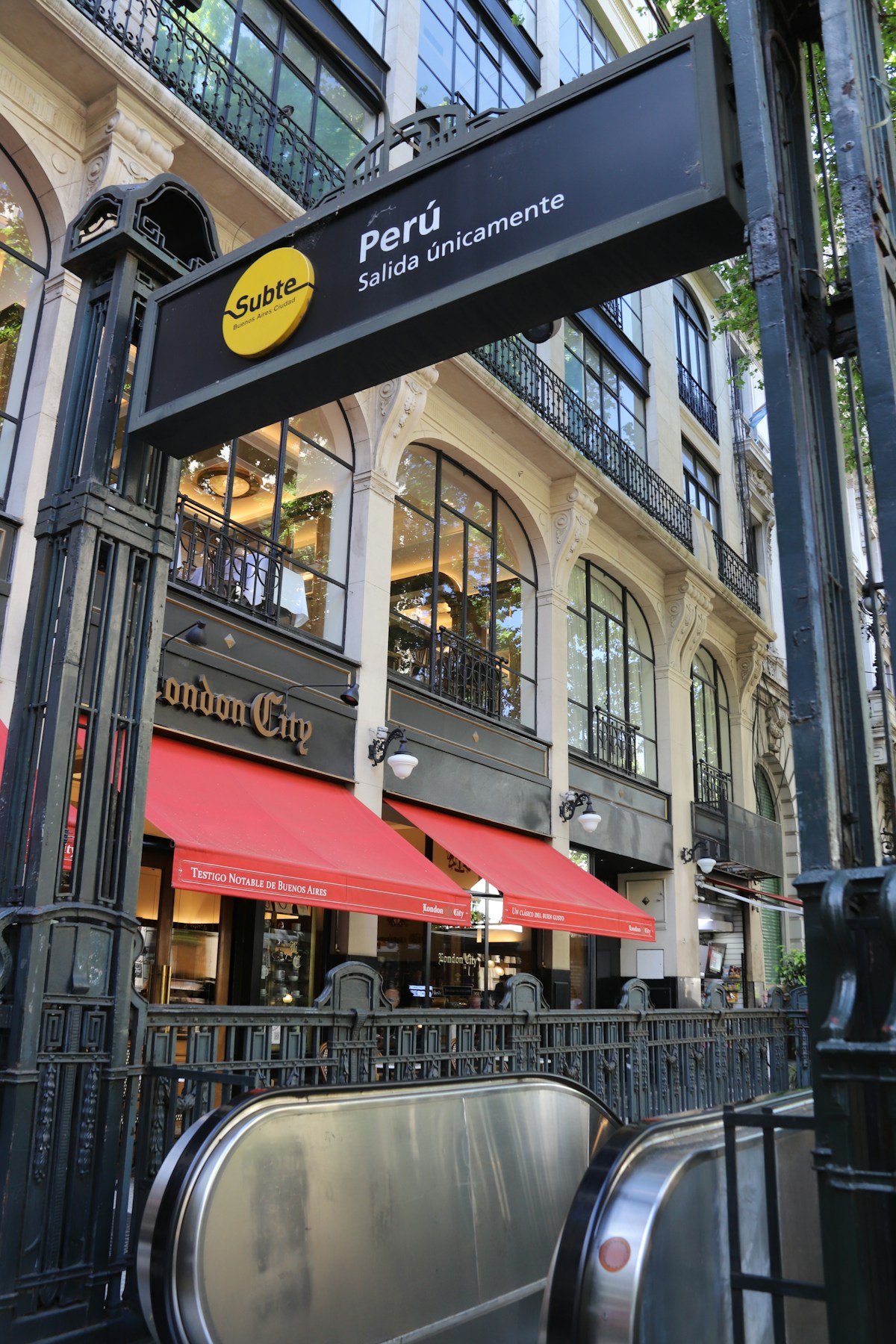
The famous café culture of Buenos Aires - the grand traditional cafés like the Tortoni and the Café de los Angelitos, which have operated since the 19th century - represents the maturation of this hybrid culture: Italian coffee techniques, Spanish social customs, Argentine unhurriedness, served in European-style interiors in a city that considered itself the Paris of the South.
For restaurant recommendations and the best places to eat in Buenos Aires today, see our Buenos Aires travel guide and the Buenos Aires things to do guide.
Take a Food Tour in Buenos Aires
Buenos Aires rewards visitors who eat with context. A guided food tour of the city connects its food culture to the immigration waves that produced it - Italian-descended pizza in the port barrios, Galician seafood in Once, the Porteño bodegón where house wine still comes in unlabelled jugs and the menu hasn’t changed since 1972. The best food tours combine a San Telmo market stop (where the Sunday market reflects the city’s patchwork identities) with a working parrilla, an empanada shop, and a confitería for medialunas and cortado. It’s the kind of morning that organises an entire trip’s worth of restaurant choices. Food and wine tours in Buenos Aires are bookable year-round, with options ranging from half-day market walks to evening parrilla experiences.
For the practicalities: travel insurance for Argentina covers medical costs and trip cancellations, and an eSIM for Argentina lets you look up addresses, translate menus, and navigate between barrios without depending on café wifi. For where to stay while you eat your way around the city, browse hotels in Buenos Aires.
Related reading: Argentine food guide · Asado guide · Buenos Aires travel guide · Empanadas guide