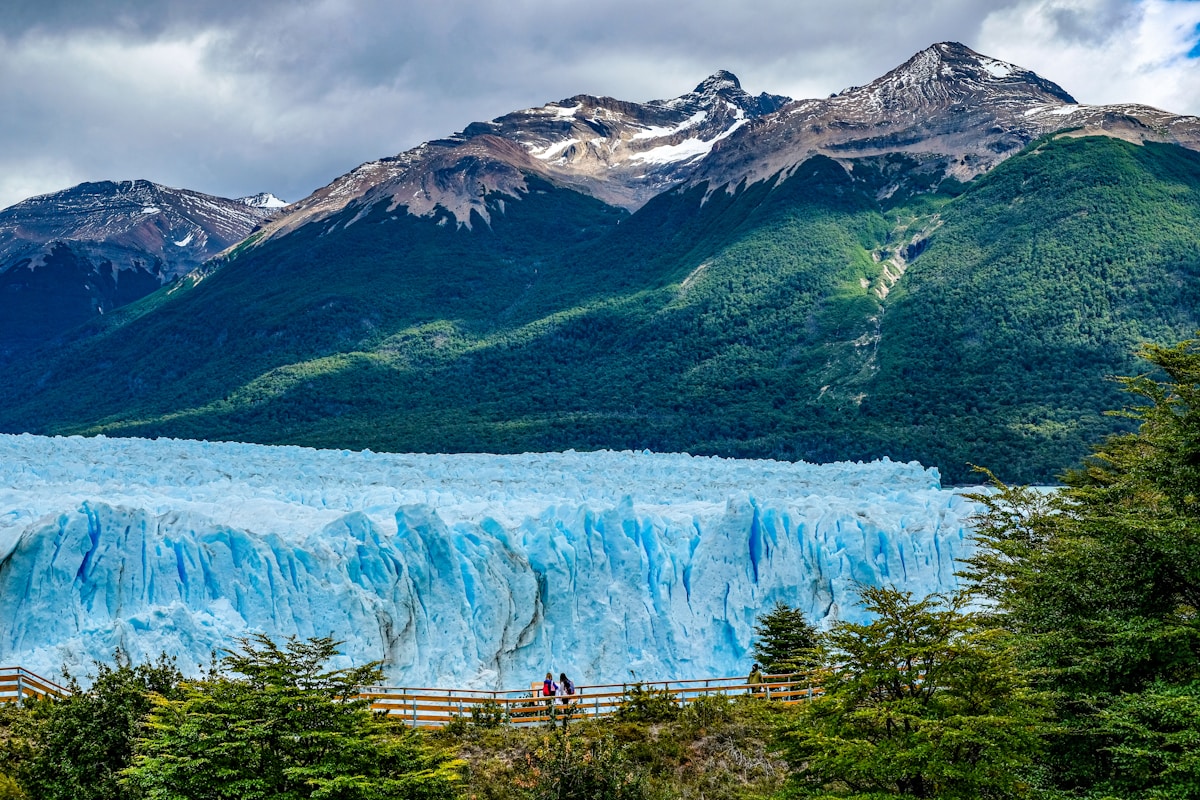
El Calafate, Argentina: Travel Guide
Watch Perito Moreno Glacier calve ice into Lago Argentino and hike Los Glaciares National Park - southern Patagonia's most dramatic natural spectacle.
Guides for El Calafate
El Calafate is a tourist town of around 20,000 permanent residents on the southern shore of Lago Argentino in Santa Cruz Province, southern Patagonia. It exists almost entirely as a gateway to Los Glaciares National Park - a UNESCO World Heritage site covering 726,927 hectares of the Andean ice field, the second-largest freshwater ice mass outside the polar regions. The park contains the Southern Patagonian Ice Field and dozens of glaciers flowing eastward into a chain of lakes. Perito Moreno Glacier, the most accessible, draws the overwhelming majority of visitors.
Perito Moreno Glacier
The glacier is 30 km long and 5 km wide at its terminus, where a 60-metre face of blue-white ice calves into Canal de los Témpanos. The national park infrastructure provides a network of walkways and viewing platforms on the steep forested hillside opposite the glacier face, allowing visitors to watch calving events - pieces of ice breaking free and crashing into the water - at close range. The walkways are well-maintained and the full circuit takes 2–3 hours at a comfortable pace. Boat tours bring visitors to within 200 metres of the ice face; ice trekking (minitrekking or the longer big ice experience) involves walking on the glacier surface with crampons and a guide. Browse tours in El Calafate to compare glacier excursions and multi-day options before you arrive.
Upsala and Spegazzini Glaciers
Full-day boat tours from Puerto Banderas (50 km from El Calafate) navigate the northern arms of Lago Argentino to reach Upsala Glacier - the largest in Argentina at 870 km² - and the towering 135-metre face of Spegazzini Glacier. Upsala has retreated significantly in recent decades and the boat cannot approach as closely as previously, but the scale of the ice field visible from the water remains extraordinary. The journey passes floating icebergs that have calved from the glacier fronts.
El Calafate Town
The town along Avenida del Libertador has restaurants, gear shops, tour agencies, and the Museo Regional (covering Patagonian indigenous history and the arrival of the sheep estancias that shaped southern Santa Cruz Province). The Glaciarium, a private glacier interpretation museum 6 km from town (accessible by free shuttle from Avenida del Libertador), has well-produced interactive exhibits on Patagonian glaciology, the mechanics of glacial advance, and the context of the Southern Patagonian Ice Field in global climate data; the attached ice bar maintains -10°C and serves drinks in ice glasses for approximately ARS 4,000. The Glaciarium charges approximately ARS 8,000 entry as of 2026. Beyond the park, the Reserva Natural Laguna Nimez on the edge of town is a sheltered wetland where flamingos, black-necked swans, upland geese, and grebes can be observed at close range on the 1.5 km walking circuit; entry costs approximately ARS 3,000. The town itself has more restaurants per capita than almost anywhere in Patagonia - competition for the captive tourist market keeps quality reasonably high. For those planning ice activities, base layers, waterproof outerwear, and gloves are essential even in summer; temperatures on the glacier surface can be 10–15°C colder than in town.
Where to Stay
El Calafate’s accommodation is almost entirely oriented toward tourists; hotels and guesthouses cluster along Avenida del Libertador and the surrounding streets. Rates are high by Argentine standards due to the town’s captive market - book well ahead for the November–March peak season. Hotel Posada Los Alamos on Gobernador Moyano is a well-established upper-mid hotel from approximately USD 150 per night. Hotel Kau Yatun on Estancia 25 de Mayo is a solid mid-range option with garden views, from approximately USD 75 per night. América del Sur Hostel is a reliable backpacker option from approximately USD 25 per dorm bed, centrally located on Puerto Deseado street. Los Glaciares National Park entry costs approximately ARS 15,000 for foreign visitors as of 2026 (paid at the gate; cash or card accepted). Minitrekking on Perito Moreno costs approximately USD 200 per person including transport from El Calafate; the longer Big Ice experience costs approximately USD 280. For dining, La Tablita on Coronel Rosales is the most established parrilla in town, serving Patagonian lamb cooked al asador (mains from approximately ARS 10,000–18,000). Mi Rancho on Avenida del Libertador is a mid-range option for lamb and trout (mains from approximately ARS 8,000–14,000). The Glaciarium museum charges approximately ARS 8,000 entry. Prices listed are approximate as of 2026.
Search hotels in El Calafate on Booking.com
Getting There and Around
El Calafate’s Comandante Armando Tola Airport (FTE) has direct flights from Buenos Aires (3.5 hours), Bariloche, and Ushuaia. Long-distance buses connect to Ushuaia (via Chile, 10–12 hours) and to Puerto Natales in Chile (5 hours, gateway to Torres del Paine). To reach the glacier, tour agency buses, rental cars, or remise taxis from town cover the 80 km to the park entrance.
Best Time to Visit
November to March is peak season - long daylight hours, the best conditions for ice trekking, and the highest probability of calving events. October and April are shoulder months with lower prices and manageable crowds. Winter (May–September) is cold and windy; some boat tours reduce frequency but the glacier itself is accessible year-round and the winter blue light on the ice has its own character.
Explore more: Things to do in El Calafate · Where to stay in El Calafate · Perito Moreno Glacier tour guide · El Chaltén trekking hub · Los Glaciares National Park guide · Patagonia itinerary
Compare cities: Bariloche vs El Calafate
Upcoming Events in El Calafate
Iguazu National Park Anniversary
Iguazu National Park Anniversary 2026, 9 November. Free park entry, cultural events, and environmental programming in Puerto Iguazú.
Cosquín National Folk Festival
Cosquín Folk Festival 2027 runs 22 to 31 January in Córdoba province - ten nights of chacarera, zamba and folk on the Plaza Próspero Molina open-air stage.
Book an experience
Top experiences in El Calafate
Explore the best tours and activities in El Calafate , with instant confirmation and free cancellation on most bookings.
Planning to visit? Browse hotels in El Calafate, free cancellation on most bookings.