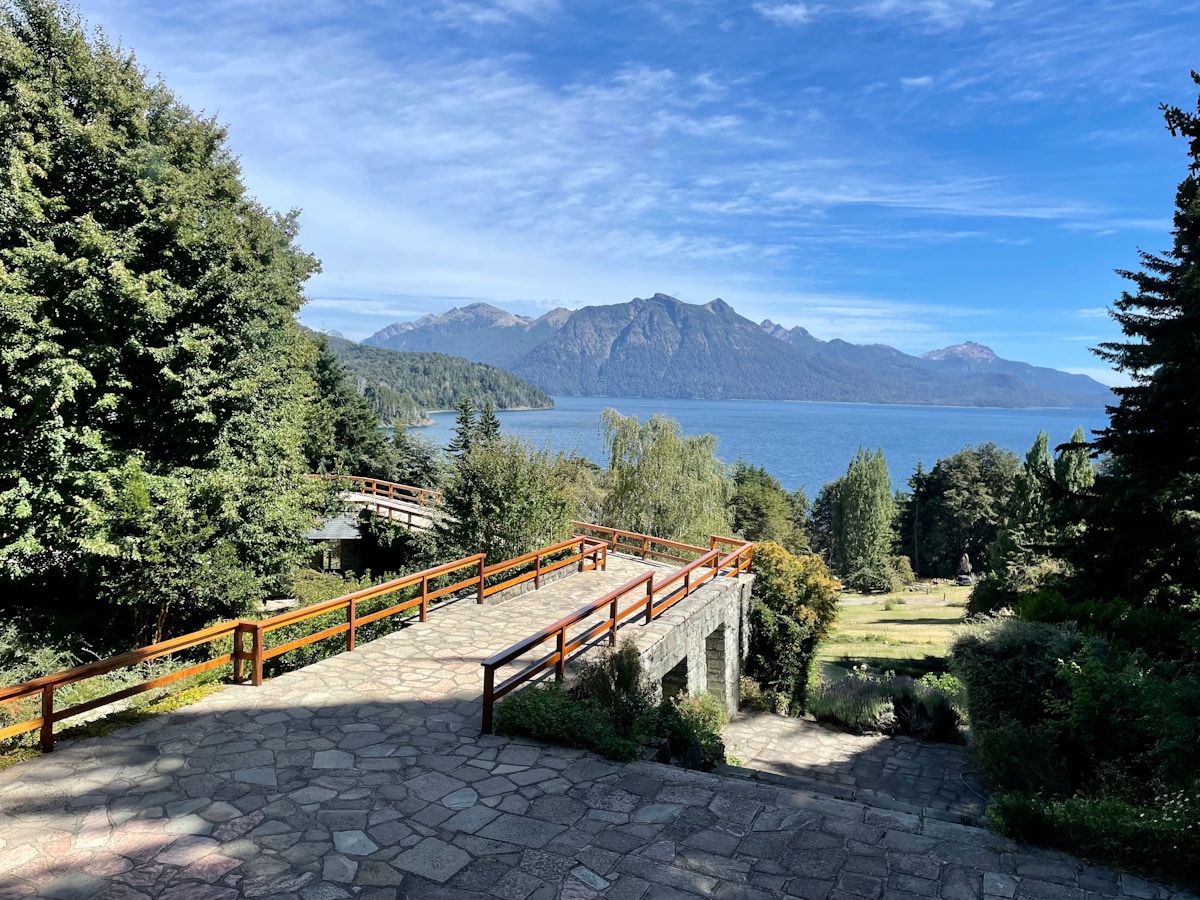
Patagonia is vast, and choosing between Bariloche and El Calafate shapes the entire character of your trip. Bariloche gives you Alpine lakes, chocolate shops, and trails through araucaria forests. El Calafate gives you Perito Moreno - one of the world’s most dramatic glaciers - and a gateway to the deeper wilderness of Los Glaciares National Park. Both are spectacular. They’re also very different experiences.
Overview
Bariloche (San Carlos de Bariloche) sits on the southern shore of Lago Nahuel Huapi in the Lake District of Argentine Patagonia, about 1,650 km from Buenos Aires. The city has a strong Swiss-German architectural influence, a ski industry (Cerro Catedral is one of South America’s largest resorts), and a thriving outdoor scene year-round. Population is around 130,000, making it a genuine mid-sized city with restaurants, bars, and a lively centro.
El Calafate is a purpose-built tourist town of around 25,000 people in Santa Cruz province, Patagonia, roughly 2,500 km south of Buenos Aires and 320 km north of Ushuaia. Its existence is almost entirely justified by Parque Nacional Los Glaciares - specifically Perito Moreno. The town has good hotels and restaurants, but it functions primarily as a base rather than a destination in its own right.
Getting There
Both require flights from Buenos Aires; surface transport is impractical for most visitors.
Bariloche: Aerolíneas Argentinas, Flybondi, and JetSMART fly the Buenos Aires–Bariloche route. Flight time is approximately 2 hours 15 minutes. Fares range from approximately USD 60–180 depending on airline and timing. Bariloche Airport (BRC) is 15 km from the city centre; taxis cost approximately ARS 3,000–5,000 (as of 2026).
El Calafate: Aerolíneas Argentinas and LATAM serve the Buenos Aires–El Calafate route (FTE airport). Flight time is approximately 3 hours 15 minutes. Fares typically start around USD 90–200. The airport is 20 km from town; shuttle services run approximately ARS 2,500–4,000 one way.
If you’re combining both with El Chaltén, note that Bariloche and El Calafate are roughly 1,200 km apart on the famous Ruta 40 - a multi-day overland route some travellers do by bus in summer (November–March), but most fly.
Things to Do
Bariloche centres on its lakes and mountains. The Circuit Chico - a 60 km loop by bike or car past Lago Moreno, Cerro López, and Villa Tacul - costs ARS 2,000–4,000 in park fees and is best done independently. The Llao Llao Peninsula hotel viewpoint is free. Cable car up Cerro Otto runs approximately ARS 6,000 return. In winter (July–September), Cerro Catedral ski passes cost approximately ARS 25,000–40,000 per day depending on season. In summer, hiking trails on Cerro Tronador (a glacier-capped volcano) and around Laguna Negra reward the effort with serious scenery. The city’s famous chocolate shops - Rapa Nui, Mamuschka, Abuela Goye - are worth a slow walk along Calle Mitre. Bariloche day trips with a guide are a practical option for reaching Tronador and the more remote park areas. See our Bariloche trekking guide and things to do in Bariloche for more.
El Calafate is dominated by Perito Moreno. Entry to Parque Nacional Los Glaciares costs approximately USD 35–50 for international visitors (as of 2026; verify current fees at the park office). The boardwalk system gives you face-to-face views of the glacier’s 60-metre ice wall calving into Lago Argentino - it’s one of the few places in the world where a major glacier is still advancing, not retreating. Boat tours to the glacier face from Bajo Las Sombras pier add approximately USD 25–40 on top of park entry. For serious ice-contact: minitrekking on the glacier surface costs approximately USD 130–160 per person including guide, crampons, and equipment; Big Ice trek (longer, more technical) is approximately USD 165–220. See our El Calafate things to do guide for full booking details.
Lago Argentino boat cruises (Upsala glacier + Spegazzini glacier) run from approximately USD 110–180 per person for full-day tours departing from Puerto Bandera.
Food and Drink
Bariloche has a full restaurant scene with options at every price point. Cassis restaurant (on the lake road towards Llao Llao) serves game and trout in a classic setting - approximately ARS 14,000–22,000 per person. Ecos Patagonia in the city centre is a more affordable option for trout and Patagonian lamb. Almacén del Lago on Calle Mitre does a reliable parrilla for approximately ARS 8,000–14,000. Craft beer is excellent: Bariloche has a strong local brewing scene; Manush and Blest brewpubs both have taprooms in town. The chocolate and alfajores are unavoidable and worth leaning into.
El Calafate is tourist-oriented and priced accordingly. Patagonia is always the benchmark: a lamb slow-cooked in a pit (asado al palo) is the local speciality. La Tablita is the most famous steakhouse in town and gets booked out - ARS 15,000–25,000 per person including wine. Pura Vida is a good mid-range option. Budget eating centres on the few empanada and pizza spots on Libertador, the main street. Self-catering is limited by the small supermarkets, though they cover basics.
Where to Stay
Bariloche has the widest spread. Hostels from approximately ARS 8,000–12,000 per night (dorm), mid-range hotels like Design Suites Bariloche from approximately USD 100–160, and the landmark Llao Llao Resort & Golf - a chocolate-box masterpiece on a forested peninsula - starts at approximately USD 450–700 per night for a standard room. For most budgets, the area around Calle Mitre and the Centro Cívico has good value guesthouses and three-star hotels.
El Calafate accommodation is limited and in demand in peak season (October–March). A basic double room in a mid-range guesthouse runs approximately USD 70–130. Xelena Hotel & Suites is the town’s premium option at approximately USD 200–350. Los Sauces is well-regarded in the mid-range at approximately USD 120–180. Book early for the November–February peak, when rooms at every tier sell out weeks ahead.
Budget
El Calafate is noticeably more expensive than Bariloche, primarily because park fees and glacier activities carry mandatory costs. A single day of Perito Moreno + minitrekking can easily cost USD 180–220 per person before food and accommodation. Bariloche’s high costs come from ski season (July–August), when accommodation prices spike significantly; the shoulder seasons are far more affordable.
A mid-range day in Bariloche outside ski season: approximately USD 80–130 per person including accommodation, meals, and one paid activity. A mid-range day in El Calafate during peak season: approximately USD 130–200 per person.
The Verdict
Choose Bariloche if you want a combination of town life, lake scenery, hiking, skiing, and chocolate - a place you can genuinely spend 4–6 days without running out of things to do. It’s also the better choice if you’re doing a Lake District circuit combining Bariloche with Villa La Angostura and the Cruce de Lagos to Chile.
Choose El Calafate if Perito Moreno is on your non-negotiable list - as it should be. Two to three days is the standard: a day for Perito Moreno, a day for a boat tour or El Chaltén day trip, and a buffer day. It pairs naturally with Ushuaia (about 1 hour by flight or an 8-hour bus) for a southern Patagonia loop.
Most travellers visiting Argentina for two or more weeks should plan to see both. They represent genuinely different facets of Patagonia, and neither substitutes for the other.