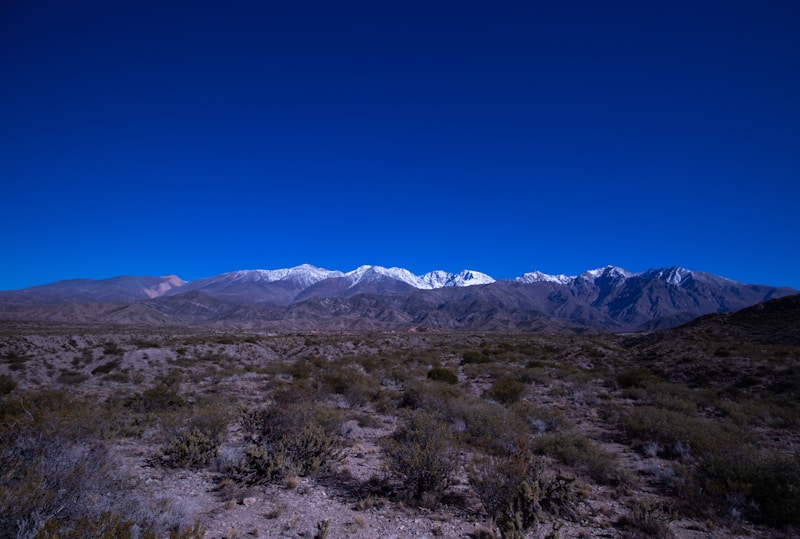
San Juan’s main draw is unambiguous: Ischigualasto Provincial Park, one of the most significant palaeontological sites on Earth, sits 250 km north of the city and rewards an overnight stay in San Juan on any Argentina itinerary. Beyond the parks, the Tulum Valley wine region offers a genuine alternative to Mendoza, the city centre has a handful of good museums, and the surrounding desert landscape makes a dramatic backdrop throughout. Here is what to do in San Juan.
Ischigualasto Provincial Park (Valley of the Moon)
Ischigualasto is the main reason to come to San Juan Province. The park covers 62,000 hectares of a former lake bed where Triassic sedimentary rock — grey volcanic ash compacted over 230 million years — has been exposed and sculpted by erosion into smooth, otherworldly formations. The palaeontology here is exceptional: fossils of Eoraptor lunensis, one of the earliest known dinosaurs, were excavated from these sediments, and the park has yielded a near-complete record of Triassic-period life.
Visitors travel the 40 km circuit inside the park alongside a ranger vehicle — all visits are guided, and the circuit takes 3–4 hours including stops. Key formations include El Hongo (the mushroom, a perfectly balanced rock cap), El Submarino (a whale-shaped grey rock), and La Cancha de Bochas (a plain covered in smooth grey spheres, each naturally rolled by erosion — the effect is deeply strange). The ranger provides explanations in Spanish; English-speaking guides are available on organised tours from San Juan.
Full-moon night tours run monthly between September and March, when the grey formations take on an eerie luminosity. These need to be booked well in advance through the park administration or a San Juan tour operator.
Getting there: 250 km north via Routes 141 and 510 — approximately 3.5 hours by car. Organised tours from San Juan city depart from major hotels and the bus terminal from approximately ARS 80,000–120,000 per person (as of 2026); book through San Juan tour operators. The park entry fee for foreign visitors is approximately ARS 10,000; the ranger-guided circuit is included.
Talampaya National Park
Immediately south of Ischigualasto across the La Rioja provincial border, Talampaya is the geological counterpart to the Valley of the Moon — and every bit as impressive. Where Ischigualasto is grey and horizontal, Talampaya is vertical and red: canyon walls of red sandstone up to 150 metres high, carved by the Talampaya River over millions of years.
Tours enter the canyon on foot and by 4WD vehicle. Highlights include El Chimenea (a narrow slot canyon where the walls tighten to two metres), petroglyphs carved by Ciénaga and Aguada cultures between 500 and 1,200 CE, and condor nesting sites visible in the cliff faces between July and October. The scale is consistently impressive — in the widest sections of the canyon the walls appear impossibly high against the desert sky.
Talampaya entry costs approximately ARS 8,000 for foreign visitors, separate from the Ischigualasto fee. Most organised tours from San Juan combine both parks in a single 12–14 hour day; the parks share UNESCO World Heritage status. Both parks are also accessible from the town of Villa Unión in La Rioja Province if you are approaching from the north.
San Juan Wine Bodegas
San Juan is Argentina’s second wine province, producing around 25% of the country’s total output from the Tulum, Ullum, and Zonda valleys. The signature varieties are Syrah — grown at altitude with large day-to-night temperature swings that produce aromatic, structured wines — and Bonarda, a grape largely overlooked by other Argentine regions that makes dark, approachable reds at very competitive prices.
Bodegas Graffigna (Avenida Libertador General San Martín 250) is the most established winery for visits: founded in 1869, it is one of the oldest in Argentina and offers a well-organised guided tour of the barrel hall and historic production areas, finishing with a tasting of Syrah, Bonarda, and Torrontés. Tours run daily and cost approximately ARS 4,000 per person (as of 2026); no advance booking required.
Bodega Cano in the Tulum Valley produces small-batch Syrah and Malbec from vines irrigated by Andean snowmelt. It accepts visits by appointment; the informal, family-run atmosphere is in contrast to Graffigna’s museum format. Prices are significantly lower than Mendoza equivalents for comparable quality.
Bodega Augusto Pulenta on the Zonda road offers a modern tasting room with wines that have attracted international attention; their premium Syrah block has been compared favourably to northern Rhône by visiting critics.
Most bodegas are within 20–30 minutes of the city centre by taxi or rental car. Unlike Mendoza, booking ahead is rarely necessary for Tulum Valley visits.
Museo de Ciencias Naturales
The Natural Sciences Museum (Avenida España 400 North, in the Parque de Mayo) holds one of the better collections of Triassic-period fossils in South America — including casts of Eoraptor and other specimens excavated from Ischigualasto — making it a worthwhile complement to the park visit. The geology displays contextualise how the park formations developed; spending a morning here before heading north to Ischigualasto makes the field experience considerably richer.
Entry costs approximately ARS 1,500 (as of 2026). Open Tuesday to Sunday, 9am–8pm. The museum also has exhibits on the 1944 San Juan earthquake, which destroyed much of the city and prompted a complete reconstruction — useful background for understanding why central San Juan looks the way it does.
Casa Natal de Sarmiento
The birthplace of Domingo Faustino Sarmiento — president of Argentina from 1868 to 1874 and the architect of the country’s public education system — is preserved on the corner of Sarmiento and Entre Ríos streets in the city centre. The small adobe house, which Sarmiento’s mother built with her own hands, survived the 1944 earthquake and is now a national monument with a museum inside. The exhibits document Sarmiento’s political career and his foundational role in establishing free, secular, public education in Argentina — a legacy still felt daily in Argentine schools.
Entry approximately ARS 1,500; open Tuesday to Sunday 9am–8pm. Short enough to visit in 30–45 minutes; meaningful if you have any interest in Argentine history.
San Juan City Centre
The 1944 earthquake that killed 10,000 people and levelled most of San Juan prompted an extraordinary reconstruction — the rebuilt city was designed by the best engineers of the era with wide, seismically reinforced boulevards and low-rise buildings. The result is a functional, unhurried city centre without the colonial grandeur of Mendoza or Córdoba, but with a relaxed quality suited to an evening of eating and wine-drinking.
Avenida de la Roza is the social spine of the city — a long boulevard lined with restaurants, bars, and parrillas under shade trees, with outdoor seating that fills on warm evenings. The Plaza 25 de Mayo central square is framed by government buildings and provides an easy orientation point; the surrounding pedestrian streets have good bookshops and coffee. In late afternoon, the light over the Andean foothills to the west makes the city look considerably more dramatic than it does in the flat midday sun.
Valle Fértil and Beyond
For those spending multiple days in the province, the town of San Agustín de Valle Fértil (150 km northeast of San Juan city, approximately 2 hours by car) offers a base closer to Ischigualasto. The town sits at 900 metres in a green valley — an anomaly in the otherwise arid landscape — with a small reservoir, walking trails, and basic accommodation. Staying here rather than in San Juan city reduces the pre-park drive to 90 minutes and lets you visit at opening time before day-tour groups arrive.
The road north from Valle Fértil through the Reserva de la Biosfera Ischigualasto passes through spectacular lunar desert before the park entrance; it is worth the drive even if you make it a slow one.
See also: Where to stay in San Juan · San Juan food guide · San Juan travel hub
Nearby: Mendoza wine region · San Rafael adventure hub · Argentina wine regions guide