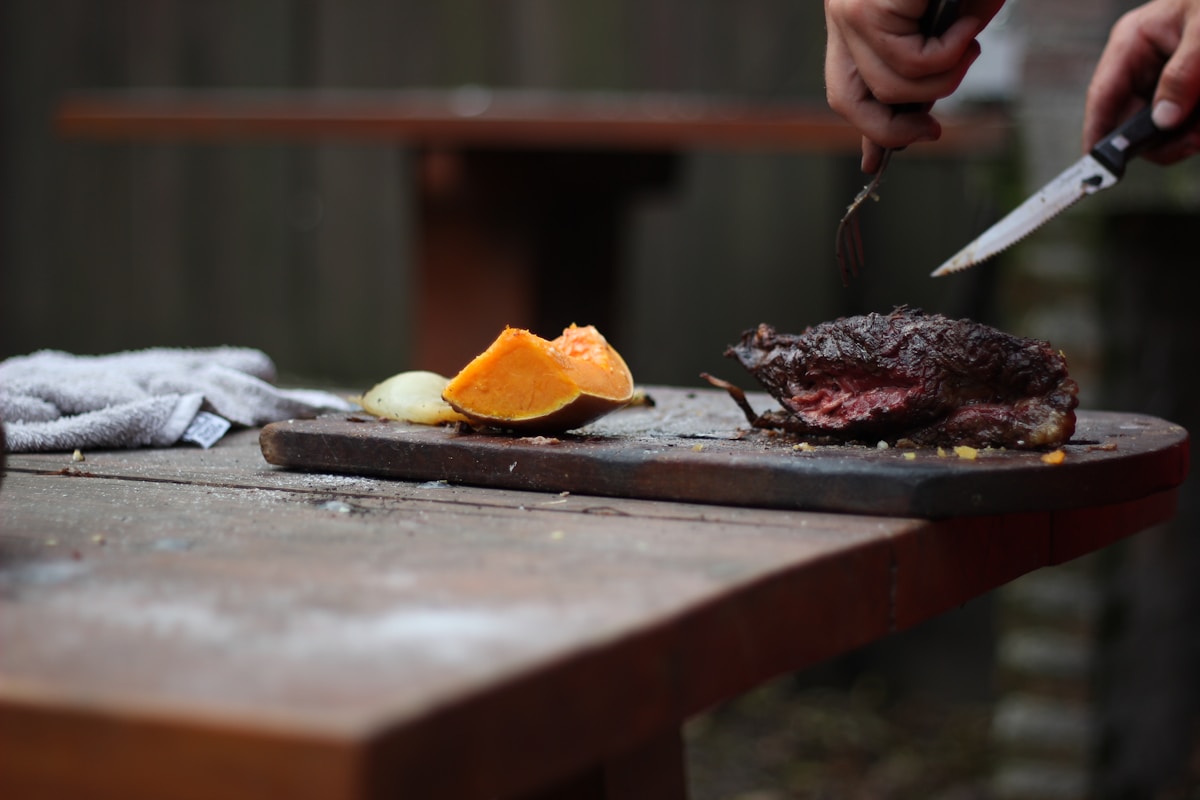
San Martín de los Andes eats well for a town of 40,000 people. The reason is the combination of ingredients: Parque Nacional Lanín’s rivers produce some of the finest trout in South America; the surrounding steppe raises good lamb and game; and the alpine traditions of the lake district - smoked meats, artisan preserves, handmade chocolates - give the food culture a distinct character that you won’t find in the pampas or the north.
The town has also benefited from decades of tourism investment. A clientele willing to pay for quality, and the aspirational alpine identity of San Martín (it has always positioned itself as the more refined alternative to Bariloche), has driven the restaurant scene upward. Eating here is one of the genuine pleasures of visiting the Patagonian lake district.
Patagonian Trout (Trucha Patagónica)
The defining dish of San Martín. Rivers flowing through Parque Nacional Lanín - the Chimehuin, the Malleo, and the Quilquihue - are world-class fly-fishing rivers, and the trout they produce has a flavour and texture that reflects the clean, cold water and natural diet. Restaurants in San Martín source trout locally, and the quality difference from farmed fish is substantial.
Trout is typically served grilled or pan-fried with a simple butter and herb sauce, or with almonds (a la molinera), or in a tomato and cream sauce. The simpler the preparation, generally the better the result. A trout main course costs approximately ARS 20,000–35,000 at a mid-range restaurant as of 2026.
La Reserva (Avenida San Martín) - Consistently one of the best restaurants in San Martín, with trout and game as the main focus. The room is warm and well-designed; the service is professional. Book ahead in season. A full dinner for two with wine approximately ARS 90,000–140,000 as of 2026.
El Muelle del Lago (Near the Lake) - A restaurant near the water with trout and lake views as its dual selling points. Popular with families and visitors wanting a scenic meal. Slightly more casual than La Reserva. A main course approximately ARS 18,000–28,000 as of 2026.
Game Meats: Venison and Wild Boar
Introduced to Patagonia in the early 20th century, both red deer (ciervo) and wild boar (jabalí) now exist in large populations in the surrounding forests and have become a genuine local ingredient. Unlike the invasive species problem they represent ecologically, the culinary result is exceptional - venison has a rich, lean character suited to slow cooking, and wild boar has a deeper, more complex flavour than domestic pork.
Ciervo (venison) appears on restaurant menus as medallions or slow-braised preparations. At its best, the meat is deeply flavoured and very tender. A venison main course at a good restaurant costs approximately ARS 25,000–40,000 as of 2026.
Jabalí (wild boar) is often served as a stew, a ragù, or on a bed of polenta. The flavour suits winter cooking - rich and warming. Approximately ARS 22,000–38,000 for a main as of 2026.
Ku Restaurant - One of the most reliable addresses for game meats in San Martín, with a menu that changes seasonally and centres on local Patagonian ingredients. The jabalí and ciervo preparations are consistently well-executed. Approximately ARS 85,000–130,000 for two with wine as of 2026.
Andean Lamb (Cordero Patagónico)
The same quality Patagonian lamb found in Puerto Madryn is available in San Martín - raised on the Andean steppe, slow-cooked over fire, and substantially better than what you’d find in Buenos Aires. Most good restaurants in town offer a lamb preparation; the classic al asador (whole lamb over open fire) appears on special occasion menus and at some estancias.
Parrilla La Tasca - A solid parrilla that handles lamb and standard Argentine cuts well. More casual than La Reserva or Ku but good for a straightforward asado dinner. A full dinner for two approximately ARS 65,000–100,000 as of 2026.
Artisan Chocolates and Preserves
The Swiss and German immigrant tradition in the lake district produced an artisan chocolate industry that thrives in San Martín. Several chocolaterías on the main street produce handmade chocolate using Patagonian ingredients - infused with calafate berries, rosehip, and native herbs. These make excellent gifts and are a genuine local product.
Abuela Goye - One of the most established chocolaterías in the Argentine lake district, with a San Martín outpost. The calafate and rosehip chocolates are the local specialties. A 200g box costs approximately ARS 8,000–15,000 as of 2026.
Artisan jams and preserves (mermeladas) featuring local wild berries - calafate (wild blueberry), rosehip (rosa mosqueta) - are widely sold at shops and markets.
Craft Beer
San Martín has a growing craft beer scene, with several local producers and a handful of cervecerías (taprooms) where you can drink fresh beer on-site.
Cervecería Patagonia and Berlina are the most visible national craft labels, but several smaller local producers have taprooms in or near San Martín. A pint of local craft beer costs approximately ARS 4,000–7,500 as of 2026.
Breakfast and Cafés
The confitería culture of the lake district means good croissants, facturas (pastries), and café con leche are widely available. Several cafés on Avenida San Martín serve a proper sit-down breakfast with medialunas and good coffee.
El Regional and similar café-bakeries are reliable for breakfast before a day’s hiking or skiing. A breakfast of café and pastries runs approximately ARS 4,500–8,000 as of 2026.
What to Order in San Martín de los Andes
- Must eat: Trucha patagónica (Patagonian trout) - at La Reserva or El Muelle del Lago
- Worth ordering: Ciervo or jabalí - at Ku
- Alpine treat: Artisan chocolates with calafate filling - at Abuela Goye
- After a hike: A pint of local craft beer at a cervecería
- Drink: Neuquén Malbec or Pinot Noir on restaurant wine lists - the nearby Neuquén wine region is underrated
Take a Guided Food Tour in San Martín de los Andes
San Martín’s food identity - wild-caught trout, game meats from the national park forests, alpine-tradition chocolates, and Neuquén wines from vineyards an hour south - is coherent enough to support a full food tour without much padding. Guided food experiences here typically cover the artisan chocolate trail on Avenida San Martín, a trout sourcing visit to a local river guide or fish supplier, and a lunch at a restaurant working with ciervo and jabalí from the Parque Nacional Lanín hunting zones. For visitors who want to understand why the game meats here are outstanding (introduced species, natural-diet conditions, no feedlot farming) rather than just ordering them on faith, local guides make the reasoning explicit. Bariloche and lake district food tours also cover San Martín de los Andes and are a useful option for visitors without transport.
For planning your stay, see our things to do in San Martín de los Andes guide. Guided tours based in Bariloche often extend into San Martín de los Andes, making them a good option for visitors without a rental car. covering the lake activities, skiing, and hiking, and our where to stay in San Martín de los Andes guide for hotel recommendations at all price points. Travel insurance for Argentina covers medical costs and cancellations in the lake district. An eSIM for Argentina is useful for navigating between San Martín, Bariloche, and the national park trailheads.
See also: San Martín de los Andes travel guide · Argentine food guide · Bariloche travel guide · Patagonia trekking guide