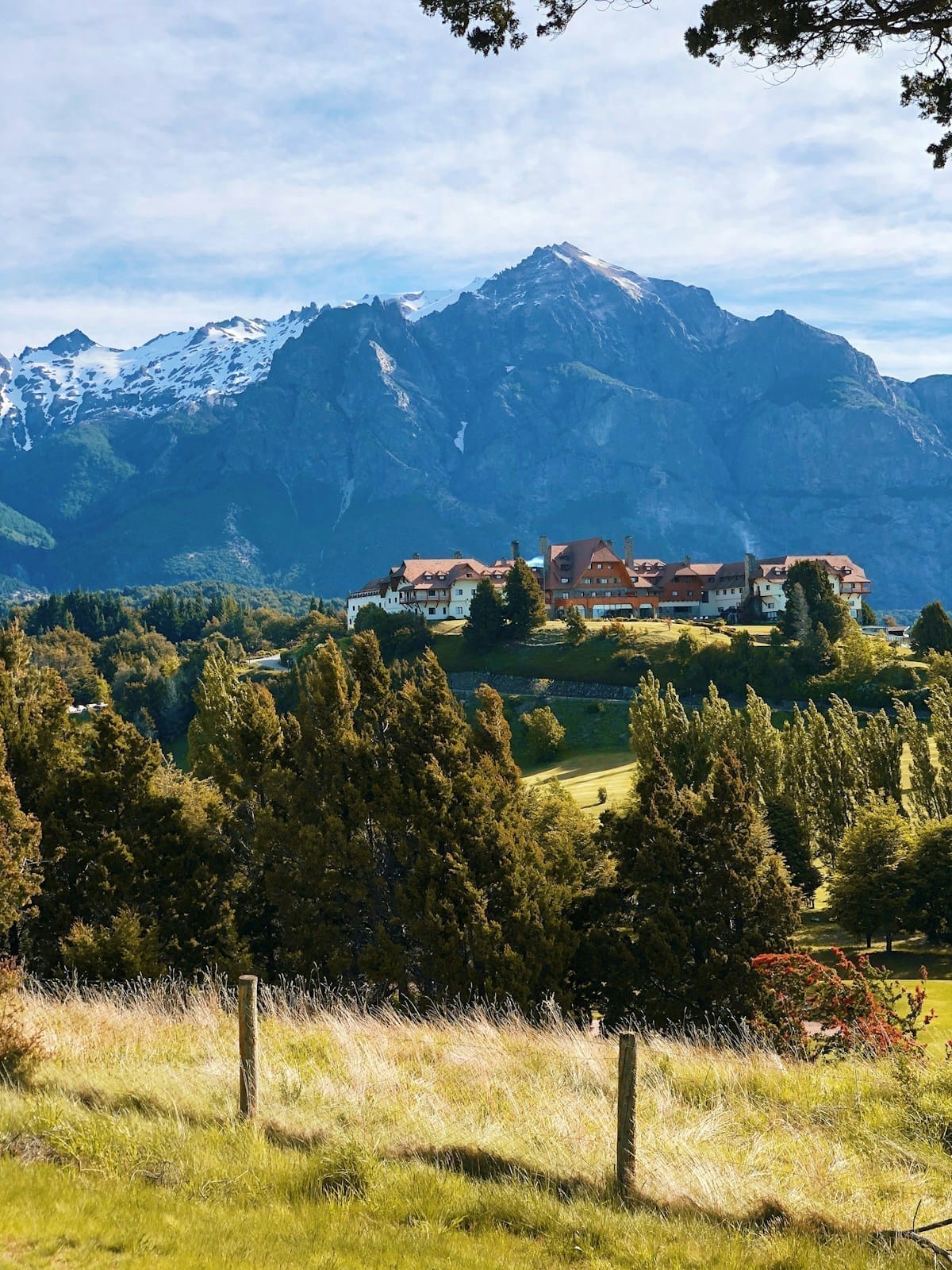
Patagonia is the most challenging region in Argentina for vegan travel. The food culture here is shaped by isolation, harsh conditions, and a pastoral economy built around sheep farming. Cordero patagónico (Patagonian lamb) and lake trout are the defining foods. In the remote towns that serve as trekking gateways, restaurant menus reflect this with minimal variation.
This is not a reason to avoid Patagonia - the landscapes are extraordinary. It is a reason to plan your food strategy before arriving.
El Chaltén
El Chaltén, the gateway to the Fitz Roy range and Los Glaciares National Park, has a permanent population of around 1,500 people that swells to several times that in summer. The restaurant scene is small and seasonal.
Vegan options at restaurants are limited but not zero. Some places have pasta and vegetable dishes; pizza sin queso is achievable at the pizzerias; salads appear on menus. But the default offering in most restaurants is meat-forward, and finding a full vegan meal at a restaurant requires checking menus in advance.
Self-catering is the better strategy. El Chaltén has two supermarkets (Nahuel and a second near the main street) with adequate stocks of:
- Pasta, rice, quinoa
- Canned beans, chickpeas, lentils
- Canned tomatoes, tomato paste
- Fresh vegetables (selection narrows outside peak season)
- Bread and crackers
- Peanut butter, jams
- Oats and cereal
- Olive oil, salt, dried spices
Plant milks: inconsistently available. Bring UHT cartons from Buenos Aires or El Calafate if plant milk is important to you.
Most mid-range and higher accommodation in El Chaltén has kitchen access. Book accordingly.
El Calafate
El Calafate, the gateway to Perito Moreno Glacier, is a larger tourist town with more restaurant options than El Chaltén. The glacier visit itself is the main attraction - a half-day excursion - and the town has more commercial infrastructure.
Restaurants in El Calafate are more varied, and several have vegetarian sections on their menus. Finding a satisfying vegan meal requires targeting the right places, but it is more achievable here than in El Chaltén. The town’s supermarkets are better stocked than El Chaltén’s.
The calafate berry (from which the town takes its name) is a dark, tart berry that grows wild in the area. It appears in jams, chocolates, and liqueurs - most of which are vegan and worth trying as a local product.
Bariloche
Bariloche is the most vegan-accessible Patagonian city. With a population of around 140,000 and a strong tourism industry focused on skiing, trekking, and chocolate tourism, the city has developed more restaurant variety than the smaller trekking towns.
Several restaurants and cafés on and around Mitre Street (the main commercial strip) have vegetarian and vegan options. Health food cafés exist. The chocolate shops Bariloche is famous for are largely dairy-based, but some dark chocolates are vegan - check ingredients.
Bariloche’s supermarkets are the best-stocked of any Patagonian city. Plant milks, tofu, and a reasonable range of vegan products are available in larger branches.
On the Trails: Multi-Day Trekking
Refugios (mountain huts) on major Patagonian treks serve set meals, typically built around meat and pasta or stew. Vegan accommodation at refugios is not standard. If you plan to stay in refugios, contact them in advance to ask about dietary accommodation - some will prepare something with notice; others cannot.
The reliable approach is to carry all your own food for any multi-day trek. This is already standard practice for camping routes. Key vegan backpacking food:
- Instant oats (lightweight, high calorie)
- Nut and seed mixes
- Nut butter in sachets
- Dried fruit
- Instant ramen or rice noodles (check broth - some contain animal products)
- Dehydrated bean or lentil meals
- Protein powder if needed for extended trips
- Energy bars (check ingredients; many contain dairy or honey)
Camping stove fuel canisters (gas cartridges) are sold in trekking shops in El Chaltén and Bariloche. Confirm availability before setting out.
Puerto Madryn and Peninsula Valdés
Puerto Madryn, on the Atlantic coast, is the gateway to Peninsula Valdés wildlife watching. The town is more developed than the mountain towns and has several restaurants with vegetarian options. Seafood dominates (it’s a coastal town), but pasta and salad options are available. The supermarket stocking is reasonable for a town of its size.
Ushuaia
Ushuaia, the world’s southernmost city, has a developed tourism infrastructure and more restaurant variety than you might expect. Several cafés and restaurants have vegetarian and vegan options. Supermarkets are relatively well-stocked by Patagonian standards, though prices are higher than elsewhere in Argentina due to the remote location.
Practical Summary
- Buenos Aires is your last reliably well-stocked city - buy specialty vegan items there before heading south
- Carry more food than you think you need; resupply is limited and expensive in remote areas
- Book accommodation with kitchen access wherever possible
- Learn the key Spanish phrases - vegan awareness is lower in Patagonia than in Buenos Aires
- Research specific restaurants before arriving in each town; the landscape changes seasonally
- Guided day trips in Patagonia - glacier walks, boat tours on Lago Argentino, and El Chaltén viewpoint excursions - handle logistics and often include packed lunch options that can be requested plant-based in advance
See Also: Vegan Argentina guide · El Chaltén travel guide · El Calafate travel guide · Bariloche travel guide · Patagonia trekking guide