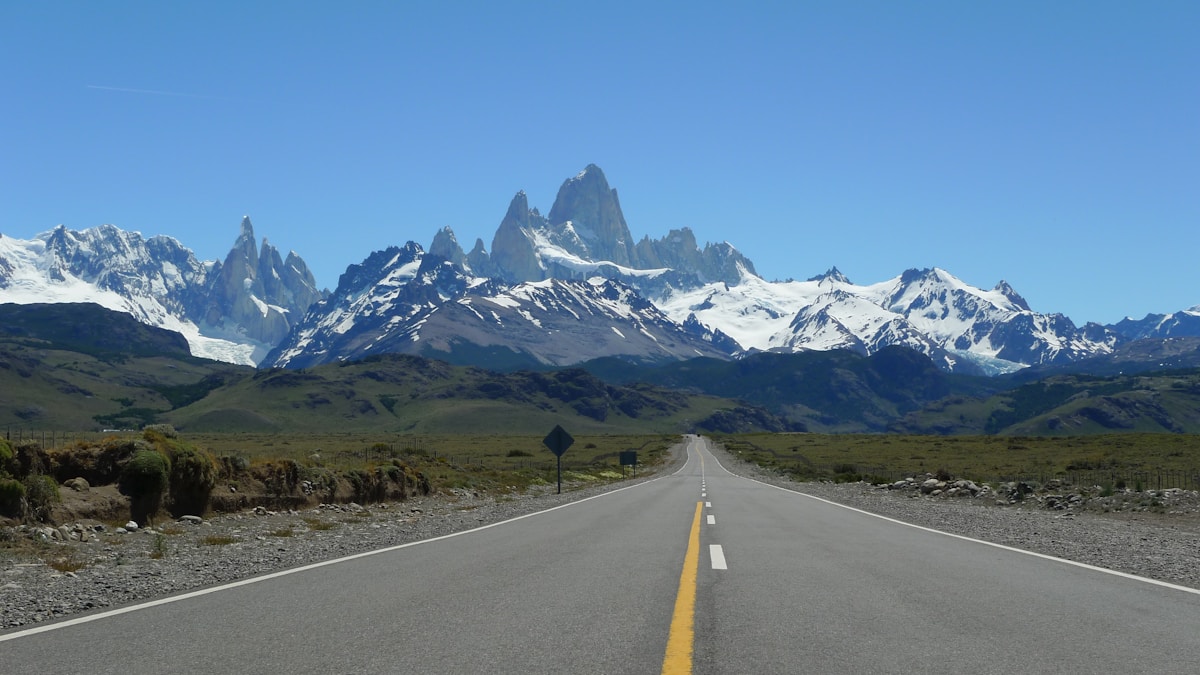
Both El Chaltén and Ushuaia are bucket-list destinations in southern Patagonia - but they attract different travellers and deliver entirely different experiences. El Chaltén is a village built specifically for trekking: if you’re not there to hike to Laguna de los Tres or Laguna Torre, there’s limited reason to visit. Ushuaia is a real city with a cruise port, penguin colonies, a national park, and enough non-hiking activities to fill a full week. The choice between them often comes down to what your body and schedule can handle.
Overview
El Chaltén is a village of around 1,600 permanent residents in Santa Cruz province, sitting at the base of the Fitz Roy massif at the northern end of Parque Nacional Los Glaciares. It was founded only in 1985 - Argentina established it specifically to cement territorial claims in the region - and its entire economy rests on trekking. There are no ATMs that consistently work (bring cash), no shopping beyond outdoor gear stores and grocery basics, and trails start directly from the village edge. This simplicity is either ideal or limiting, depending on your priorities.
Ushuaia is the capital of Tierra del Fuego province at the southern tip of Argentina, around 340 km south of El Calafate by road (or a 1 hour 20 minute flight). It has a population of around 75,000, a functioning city infrastructure, a major cruise ship port (it’s the main embarkation point for Antarctica expeditions), and a national park - Parque Nacional Tierra del Fuego - that offers easier, more varied activities than El Chaltén’s demanding trails. See our Ushuaia things to do guide for the full breakdown.
Getting There
El Chaltén: Fly to El Calafate (FTE airport) then take a 3-hour bus north along Ruta 40 - transfers run several times daily with El Chaltén Travel and Chaltén Travel, costing approximately ARS 6,000–10,000 one way. There’s no airport in El Chaltén itself. The drive is spectacular - guanaco, condors, and the first views of Fitz Roy appearing on the horizon.
Ushuaia: Aerolíneas Argentinas flies direct from Buenos Aires (USH airport); flight time approximately 3 hours 30 minutes. Fares from approximately USD 100–220. Buses from Punta Arenas, Chile (crossing Tierra del Fuego island) take about 11–13 hours, but most travellers fly directly.
If combining both: El Calafate is the natural hub. El Chaltén is 3 hours north; Ushuaia is reachable by flight from El Calafate (approximately 1 hour 15 minutes; fares from approximately USD 80–150). A 7–10 day southern Patagonia loop typically covers El Calafate + El Chaltén (4–5 days) and Ushuaia (3–4 days).
Things to Do
El Chaltén is a single-purpose destination. The two flagship hikes:
- Laguna de los Tres (24 km return, 8–10 hours, 800m elevation gain): The primary viewpoint for Cerro Fitz Roy. The final ascent to the lagoon edge is steep moraine, but the payoff - the granite towers reflected in the turquoise water - justifies every step. Free to hike; no booking required.
- Laguna Torre (18 km return, 5–7 hours, 270m elevation gain): Views of the jagged Cerro Torre, another world-class granite spire. Slightly easier than Laguna de los Tres but equally dramatic.
Both trails start from El Chaltén’s northern edge. Park entry is free for trekking within the day-hike area; camping inside the park requires booking through the Chalten Camp system (approximately ARS 2,000–4,000 per person per night for sites). Multi-day options include the El Chaltén to El Calafate trek (4–6 days) for experienced hikers. See our El Chaltén things to do and day trips from El Chaltén for more. For guided versions of the Viedma Glacier trek or the Huemul Circuit, El Chaltén tours lists the main operators and what each includes.
Ushuaia has broader appeal. Parque Nacional Tierra del Fuego (entry approximately USD 25 for foreign visitors, verify current rates) offers easier lakeside and coastal walks ranging from 2 to 8 hours. The Tren del Fin del Mundo (End of the World Train) runs into the park from Estación del Fin del Mundo; approximately USD 30–50 depending on class. Penguin colonies at Isla Martillo are reachable by boat (October–March only; approximately USD 80–120 for a half-day tour including zodiac landing). The Beagle Channel catamaran tours (sea lions, cormorants, lighthouse) run approximately USD 35–60 per person. For more serious hiking, the Martial Glacier viewpoint above the city is a 2-hour return walk from the ski lift base. The Museo del Fin del Mundo (city history) costs approximately ARS 2,500.
Food and Drink
El Chaltén is functional. Cervecería El Chaltén (La Cervecería) is the village’s main draw beyond the trails - they brew their own Patagonian ales and serve a solid lamb stew in a warming environment after a long day’s walking. Fuegia Bistro serves the best food in the village for approximately ARS 12,000–18,000 per person. Most other restaurants are straightforward pasta, pizza, and parrilla at similar prices. Budget tip: bring extra food from El Calafate as village supermarkets have limited selection and high prices.
Ushuaia has a proper restaurant scene. King crab (centolla) from the Beagle Channel is the local speciality - Chez Manu on Calle Luis Martial is the benchmark experience at approximately ARS 18,000–28,000 per person. La Estancia on Av. San Martín serves excellent lamb and centolla in a more accessible setting for approximately ARS 10,000–16,000. Ramos Generales on Av. Maipú is a historic café for breakfast and medialunas.
Where to Stay
El Chaltén has mostly hostels and small guesthouses. Hostería El Puma (the original upscale option) charges approximately USD 180–250 for a double. Lunajuim is a well-regarded mid-range at approximately USD 100–150. Budget hostels with dorms run approximately ARS 9,000–15,000 per night. The entire village has perhaps 800 beds; book early for November–February.
Ushuaia has a full spread. Los Cauquenes Resort & Spa on the Beagle Channel (6 km from town) is the best-positioned property at approximately USD 250–400. In town, Hotel Albatros runs approximately USD 130–200; Hostel Cruz del Sur (well-run and popular with long-term travellers) charges approximately ARS 9,000–14,000 per dorm night. The wide accommodation base means last-minute bookings are easier than El Chaltén, but peak season (November–January) fills quickly.
Budget
El Chaltén’s costs are driven primarily by accommodation (limited supply, high demand) and food (remote location markup). Expect approximately USD 100–160 per person per day in peak season including budget accommodation, meals, and park activities (which are free). Ushuaia is slightly more expensive on activity costs (boat tours, penguin visits) but cheaper on accommodation relative to supply. Estimate approximately USD 110–180 per person per day including mid-range accommodation and one major paid activity.
The Verdict
Choose El Chaltén if: hiking is your primary goal, you can handle 7–10 hour days on trails, and you want pure Patagonia wilderness without city infrastructure. Two to four days gives you time for both major hikes and a rest day.
Choose Ushuaia if: you want a broader mix of nature, city, wildlife, and comfort; if you’re on an Antarctica expedition (it’s the main embarkation point); or if some members of your group aren’t serious hikers. Three to four days works well.
For a complete southern Patagonia trip, see both - they’re complementary, not interchangeable. El Chaltén is the hiking highlight; Ushuaia is the base for the end-of-the-world experience that makes Argentina’s south so distinctive.