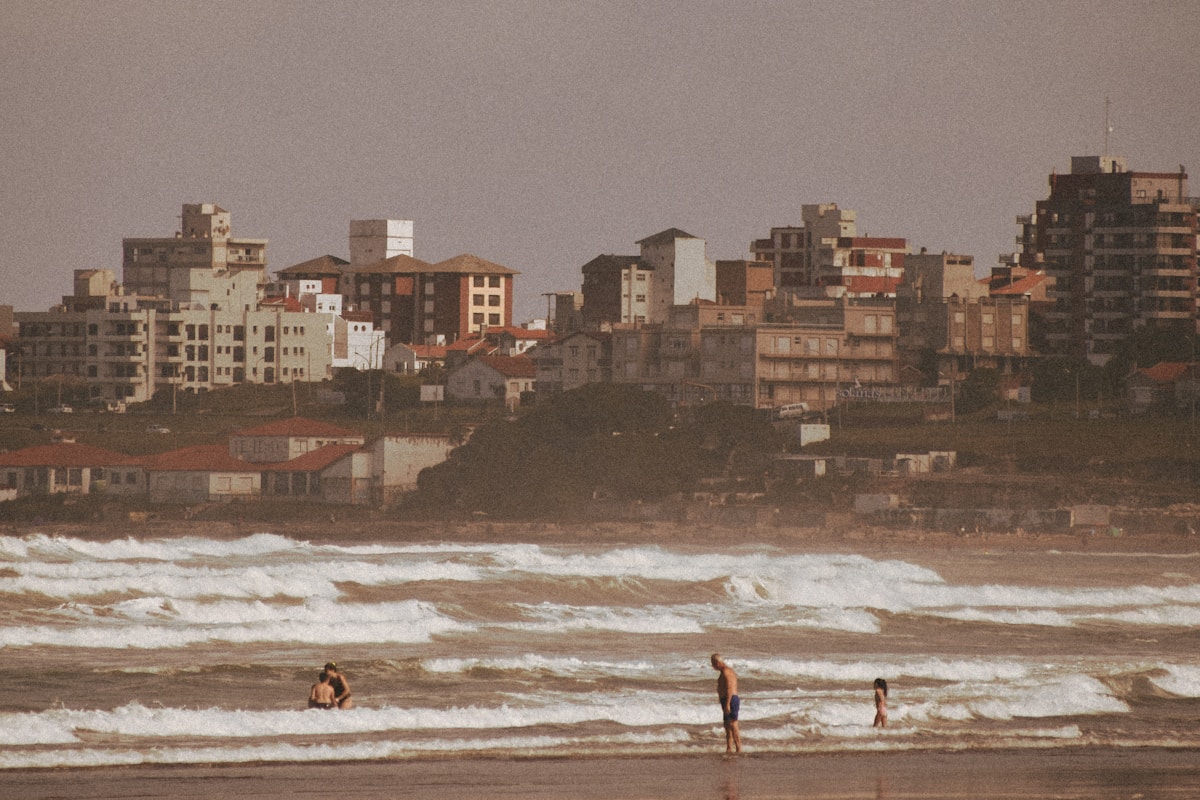
Mar del Plata is Argentina’s big beach. Every summer, millions of domestic tourists descend on this Atlantic coast city 400 km south of Buenos Aires - for its beaches, its seafood, its casino, and the particular energy of an Argentine resort town at full swing. Outside of summer, the city has a population of around 700,000, an active cultural life, a film festival, and beaches that are genuinely beautiful without the crowds.
The city isn’t selling itself on history or architecture. It’s a beach town, built for leisure, with all the infrastructure that implies: a long rambla (seafront promenade), dozens of balnearios (beach clubs), a large casino, seafood restaurants on every block near the port, and a centre that comes alive at night.
Playa Bristol and the Rambla
Playa Bristol is the most famous beach in Argentina. The Casino Central building - a massive art deco structure - dominates the northern end of the beach. The rambla runs along the seafront and is the focal point of summer life, lined with balnearios, food stalls, and chairs.
The beach itself is wide but extremely crowded in January and February. If you want space, come in November or March. The Casino Central is open year-round - the gaming rooms are open to visitors over 18 free of charge (you don’t need to gamble). The building’s architecture, visible from the beach, is worth a look.
Playa Grande and Surfing
South of the centre, Playa Grande is the city’s surf beach. The beach faces more directly into the Atlantic swell and produces more consistent waves than Bristol. Several surf schools and rental shops operate here - lessons for beginners approximately ARS 15,000–25,000, board hire approximately ARS 5,000–8,000 per half-day, as of 2026.
The beach is also more relaxed and less densely built than Bristol in the summer months.
Puerto Mar del Plata and the Sea Lions
The fishing port at Puerto Mar del Plata is one of the largest fishing ports in Argentina, and the sea lion colony that lives on the jetties is one of the most accessible wildlife encounters in the country. Hundreds of South American sea lions haul out on the docks; you can view them from the jetty walkway, within metres of the animals, for free.
The port also has the best concentration of fish restaurants in the city (see our food guide). The combination of the fleet, the sea lions, and fresh seafood makes the port area a better use of time than the town centre for many visitors.
Torreón del Monje
A small castle-like tower on a rocky promontory south of Playa Bristol, built in 1904 as a private home and now open as a café. The building is not remarkable but the elevated position over the water makes it a good spot for afternoon coffee or a beer. Open daily; coffee and snacks approximately ARS 4,000–8,000 as of 2026. Adjacent stairs lead down to the rocks, where people fish and sit on summer evenings.
Villa Victoria Ocampo
Argentina’s leading cultural patroness, Victoria Ocampo (1890–1979), had her summer home in Mar del Plata. The Villa Victoria is now a cultural centre managed by UNESCO, with exhibitions on Ocampo’s life, her magazine Sur, and her relationships with international writers including Jorge Luis Borges, Rabindranath Tagore, and Albert Camus. Open Thursday–Sunday, approximately ARS 3,000 entry as of 2026.
Film Festival
Mar del Plata’s International Film Festival (Festival Internacional de Cine de Mar del Plata) runs each November and is one of the two or three most important film festivals in Latin America. It’s an ‘A-list’ festival (one of 14 internationally accredited in its category). Screenings are held across the city in multiple theatres; many are accessible to the public at reduced ticket prices during the festival week.
Beaches South of the City
Beyond the main city beaches, the Atlantic coast south of Mar del Plata has a series of smaller beach towns worth a half-day or full-day excursion. Miramar is the closest (45 km, approximately 45 minutes by bus), quieter and greener, with a forest park behind the beach. Mar de las Pampas and Mar Azul are popular with younger crowds and boast more naturalistic, dune-backed beaches.
Local bus services cover these routes from the central bus terminal; fares approximately ARS 4,000–8,000 as of 2026.
Getting Around Mar del Plata
The city centre and beaches are walkable. Taxis and remises handle longer trips (most city rides ARS 3,000–7,000 as of 2026). The local bus network covers the whole urban area including the port and outlying beaches. In summer, the seafront is also accessible by cycle - rental shops operate along the rambla.
For planning your whole trip, our first-time Argentina guide covers entry requirements and practical logistics. Day trips and tours in Argentina from Buenos Aires to the Atlantic coast are also worth considering. See also our Mar del Plata food guide for the best places to eat near the port.
See also: Mar del Plata travel guide · Where to stay in Mar del Plata · Whale watching at Península Valdés · Puerto Madryn travel guide