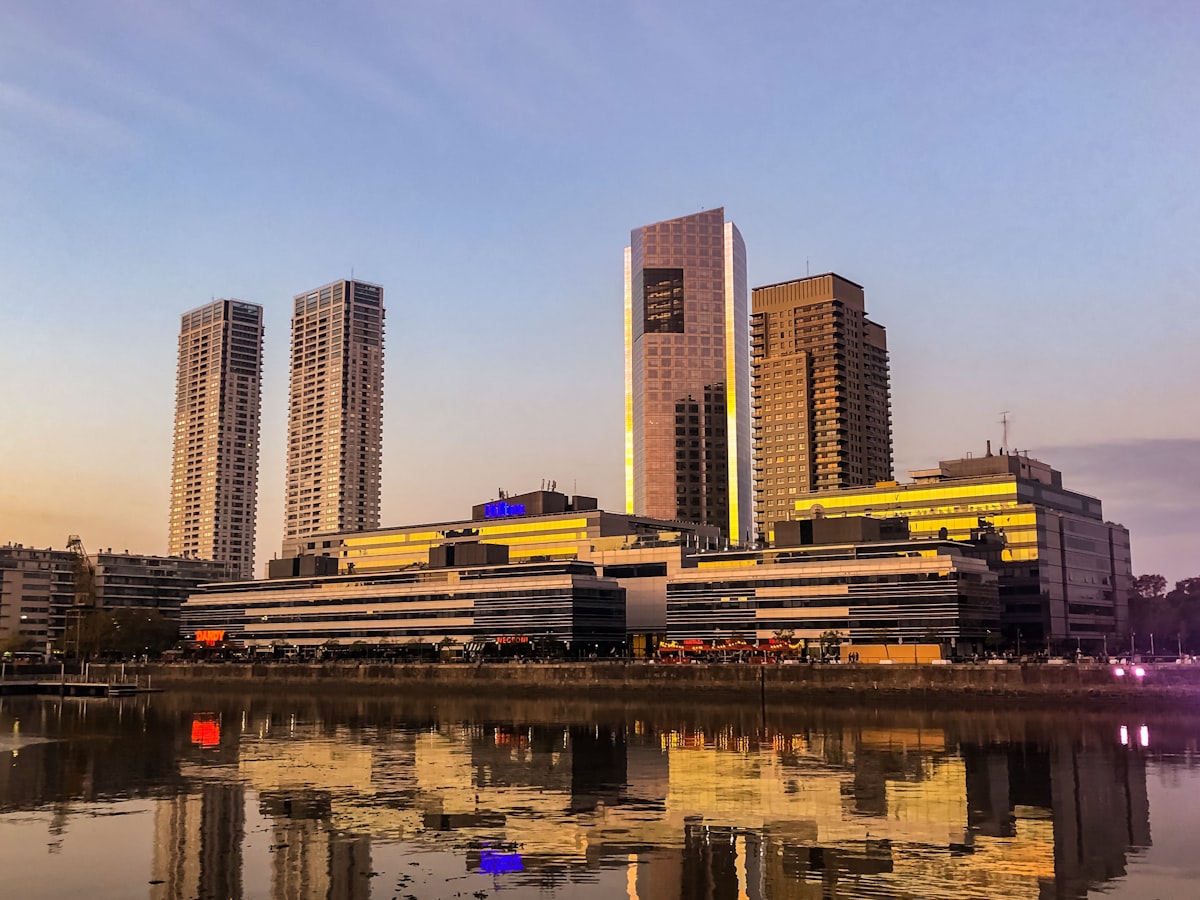
Argentina is a large, complex, and deeply rewarding country to visit - but it requires some preparation that other destinations don’t. These are the practical foundations that make the difference between a frustrating first trip and an excellent one.
Flights and Arrival
The international airport for Buenos Aires is Ministro Pistarini International Airport, universally known as Ezeiza (airport code EZE), located about 35km south of the city centre. The domestic airport - Aeroparque Jorge Newbery (AEP) - is much closer to the city, on the riverfront near Palermo. Virtually all long-haul international flights land at Ezeiza.
From Ezeiza, pre-booked private transfers are the safest option - Welcome Pickups offer fixed-price, door-to-door service with English-speaking drivers and free flight monitoring, which is worth the convenience after a long-haul flight. Official remis (licensed car services) are also available at the arrivals desk. The Tienda León bus service runs a fixed-price route to central Buenos Aires and is reliable. Avoid unlicensed taxis at the airport.
The Currency Situation
This is the aspect of Argentina that confuses first-time visitors most. Argentina has multiple exchange rates operating simultaneously. The official rate is what banks and credit card transactions use. The “blue dollar” or informal rate - accessible at licensed casas de cambio and certain hotels - offers significantly more pesos per USD. The gap between these rates fluctuates and has at times exceeded 50–100%.
Practical implications:
- Bring USD cash in good condition (no tears, no pen marks, no excessive wear - Argentine casas de cambio reject damaged notes).
- ATM withdrawals use the official rate and have low withdrawal limits. They are useful for emergencies but not for primary cash access.
- Credit cards work in most Buenos Aires businesses but also use the official rate unless the business has a specific arrangement.
The easiest approach: research the current exchange rate gap before departure, bring a reasonable amount of USD, and exchange at a reputable casa de cambio in Buenos Aires (the Microcentro district has many). Our full Argentina currency guide explains the exchange rate system in detail.
Language
Spanish is the official language, but the Argentine variety - Rioplatense Spanish - differs from the Castilian Spanish most Europeans learn. Key differences:
- Voseo: “You” is “vos” rather than “tú” - “¿Cómo estás?” becomes “¿Cómo estás vos?” or simply “¿Cómo andás?”
- Pronunciation: “ll” and “y” are pronounced “sh” - “yo” sounds like “sho”, “calle” sounds like “casheh”
- Pace and intonation: Argentine Spanish has a distinctive melodic quality
Basic Spanish will get you far. English is spoken in most tourist-facing businesses in Buenos Aires, Bariloche, and Mendoza, but much less in smaller cities and rural areas.
Getting Around
Internally: Argentina is large - flying between regions is often necessary. Aerolíneas Argentinas and LADE are the main domestic carriers. Buenos Aires to El Calafate is roughly 3 hours by air. Long-distance buses are comfortable and reliable for medium distances (Buenos Aires to Mendoza, Buenos Aires to Bariloche) but take 12–20 hours.
Buenos Aires: The metro (Subte) covers six lines across the city and is cheap and fast. Taxis and Uber (which operates in Buenos Aires despite regulatory tension) are widely available.
Time Zone
Argentina runs on ART (Argentine Republic Time), which is UTC-3. Argentina does not observe daylight saving time - the clocks do not change. This means the time difference with Europe and North America stays fixed year-round, which simplifies planning.
Health Essentials
No vaccinations are required for most of Argentina. Yellow fever vaccination is recommended if visiting the northeastern provinces bordering Brazil, including Iguazú. Chagas disease is present in rural areas of the northwest (Salta, Jujuy, Santiago del Estero) - transmitted by the vinchuca bug in rural mud-brick buildings. Health insurance with medical evacuation coverage is strongly recommended - travel insurance for Argentina that covers medical evacuation is particularly important for Patagonia trekking.
Power and Plugs
Argentina uses Type I plugs - three flat prongs in a diagonal arrangement. The voltage is 220V. Most modern laptops and phone chargers handle this automatically, but older appliances may need a transformer. An adapter is needed for UK, US, and European plugs.
Key Practical Habits
Planning to travel alone? Our Argentina solo travel guide covers everything from BA neighbourhood choices and tango milongas for meeting people to Patagonia logistics for independent travellers.
- Keep a small amount of cash (pesos) on hand at all times - many smaller businesses and markets are cash-only.
- Don’t leave bags on the floor at cafes or restaurants, and keep phones in a pocket rather than on a table.
- Confirm taxi fares or use the meter - agree on payment method before getting in.
- Book long-distance buses from the official terminal websites or Plataforma 10 rather than third-party resellers.
Before you go: Argentina packing list · Argentina budget guide · Argentina travel insurance · Basic Spanish phrases for Argentina
For structured sightseeing, guided tours across Argentina handle the logistics of high-demand experiences like glacier walks and tango shows - worth booking ahead for peak season. Travelling soon? Check last-minute tour availability for confirmed open spots across the country in the next three days.
Planning your trip: One-week Argentina itinerary · Two-week Argentina itinerary · 10-day Argentina itinerary · Digital nomad guide to Argentina · Vegan travel in Argentina
Plan Your Trip
✈️ Book your flights to Argentina 🛡️ Get travel insurance 📱 Stay connected with an eSIM 🚗 Rent a car