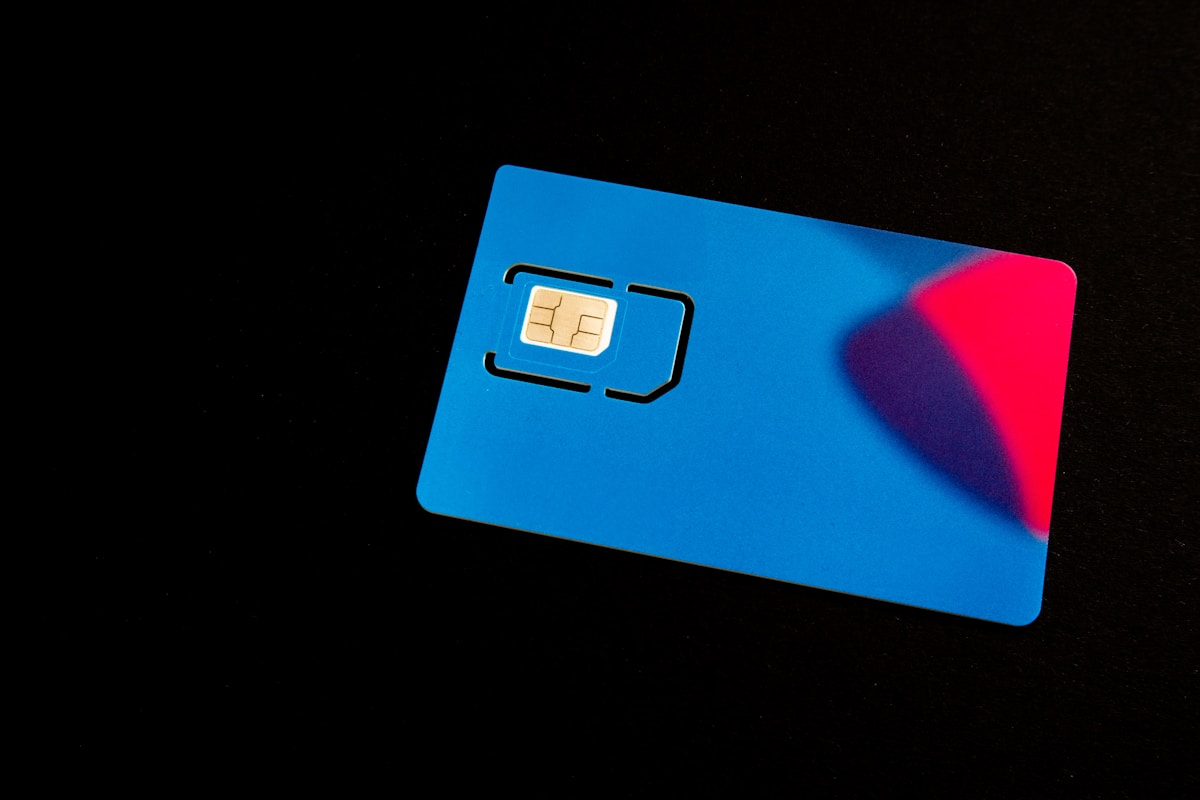
Staying connected in Argentina is straightforward in the cities and reasonably good outside them. The main decisions are whether to use a local physical SIM, an eSIM, or international roaming - and which carrier suits your itinerary.
Local Physical SIM Cards
Argentina’s three main mobile operators are Claro, Personal (owned by Telecom Argentina), and Movistar (owned by Telefónica). All three offer prepaid tourist SIMs with data packages.
Where to buy: Carrier stores in major shopping centres or on main commercial streets in Buenos Aires (Microcentro, Palermo, Recoleta). Also available at locutorios (small phone shops). You will need your passport at point of purchase.
Which carrier: Claro is generally recommended for coverage outside major cities - it has the broadest 4G footprint in regional Argentina. If your trip covers El Calafate, Salta, or Mendoza as well as Buenos Aires, Claro is the safer choice. In Buenos Aires itself, all three are comparable.
Cost: Prepaid SIM prices vary and shift frequently as Argentina’s inflation affects all pricing. In general, data packages in Argentina are reasonably priced in peso terms - but since the official peso exchange rate applies to peso prices paid with foreign cards, the real cost depends on which rate you’re using. Paying for a SIM in cash (pesos bought at the informal rate) is cheaper.
Data limits and top-ups: Standard tourist prepaid packages typically offer 3–10GB depending on the plan and duration. Top-ups are available at carrier stores and convenience kiosks.
eSIM for Argentina
For travellers who don’t want to deal with physical SIM logistics, an eSIM is an increasingly practical option. eSIMs are activated remotely before travel and connect to local networks on arrival. Most modern smartphones (iPhone XS and later, recent Android flagships) support eSIM.
Airalo offers Argentina data-only eSIM packages with several duration and data options. The main advantages over a physical SIM:
- No need to visit a carrier store or navigate a Spanish-language activation process
- Can be set up before departing
- Your home SIM remains active (useful for receiving calls or 2FA texts)
The main limitation: eSIM plans are typically data-only - no local Argentine phone number for calls or SMS. For most tourists this is fine; WhatsApp, Signal, and standard apps work on data alone. If you need a local Argentine number, a physical SIM is necessary.
We recommend getting an eSIM sorted before you fly - Airalo covers Argentina data plans with packages starting from a few days up to 30 days.
eSIM Provider Comparison
The three most popular eSIM services for Argentina are Airalo, Holafly, and Nomad. Here’s how they stack up:
Airalo is the most widely used eSIM marketplace. Argentina packages start from around $5 for 1GB/7 days and go up to $25–30 for 10GB/30 days. Airalo resells access across multiple local networks. Coverage tends to be solid in cities; rural Patagonia is variable. The app is straightforward and setup takes a few minutes.
Holafly offers unlimited data plans for Argentina, typically priced around $19–27 for 5–10 days and $40–55 for 20–30 days. These are data-only (no local number). Holafly’s unlimited model suits heavy data users - video calls, uploading content, using maps constantly. Note that “unlimited” may include fair-use throttling after heavy usage.
Nomad sits between the two. Plans are priced per GB, generally $5–8/GB, with regional Latin America bundles available if Argentina is one stop on a longer South America trip. The regional bundle approach is particularly useful if you’re combining Argentina with Chile, Brazil, or Peru. Nomad’s interface is clean and activation is reliable.
Which to choose:
- Short trip, light data use (maps + WhatsApp): Airalo is cheapest.
- Heavy user or remote worker: Holafly unlimited saves mental bandwidth.
- Multi-country South America trip: Nomad’s regional plan offers better value.
All three require a compatible device (eSIM-capable iPhone or Android). Check your specific model before purchasing.
Coverage Across Argentina
Buenos Aires: Excellent coverage from all three carriers. 4G/LTE throughout the city and suburbs.
Mendoza, Salta, Bariloche, Córdoba: Good 4G coverage in city centres. Coverage drops in mountain areas and rural zones.
El Calafate: Reasonably covered for a remote Patagonian town. Claro tends to have the best signal here.
El Chaltén: Coverage is patchy and unreliable. Don’t plan your El Chaltén trip around constant connectivity - it won’t be there. Some accommodation has Wi-Fi; the town itself has weak mobile coverage.
Iguazú: Good coverage in Puerto Iguazú town and the national park entry points. Deep park trails may have gaps.
High-altitude northwest: Coverage drops significantly on the Puna plateau and above 3,000m. The Quebrada de Humahuaca towns have some coverage; the road to Salinas Grandes has long stretches with nothing.
Wi-Fi in Argentina
Buenos Aires has widespread cafe and restaurant Wi-Fi - most cafes offer free Wi-Fi and it’s generally reliable. Accommodation throughout Argentina provides Wi-Fi, though speeds in rural Patagonia can be very slow. Downloading offline maps (Google Maps or Maps.me), offline translation, and offline guidebook content before heading into remote areas is strongly recommended.
Practical Tips
- Activate your eSIM or local SIM before leaving Buenos Aires if doing a multi-region trip - it’s easier to troubleshoot in the city than in El Chaltén.
- Top up prepaid credit before heading to remote areas where carrier kiosks don’t exist.
- WhatsApp is universally used in Argentina - Argentine contacts, tour guides, and accommodation almost all use it.
See Also: Argentina budget guide · Getting around Argentina · Buenos Aires remote work guide · First time in Argentina
Plan Your Trip
✈️ Book your flights to Argentina 🛡️ Get travel insurance 📱 Stay connected with an eSIM 🚗 Rent a car