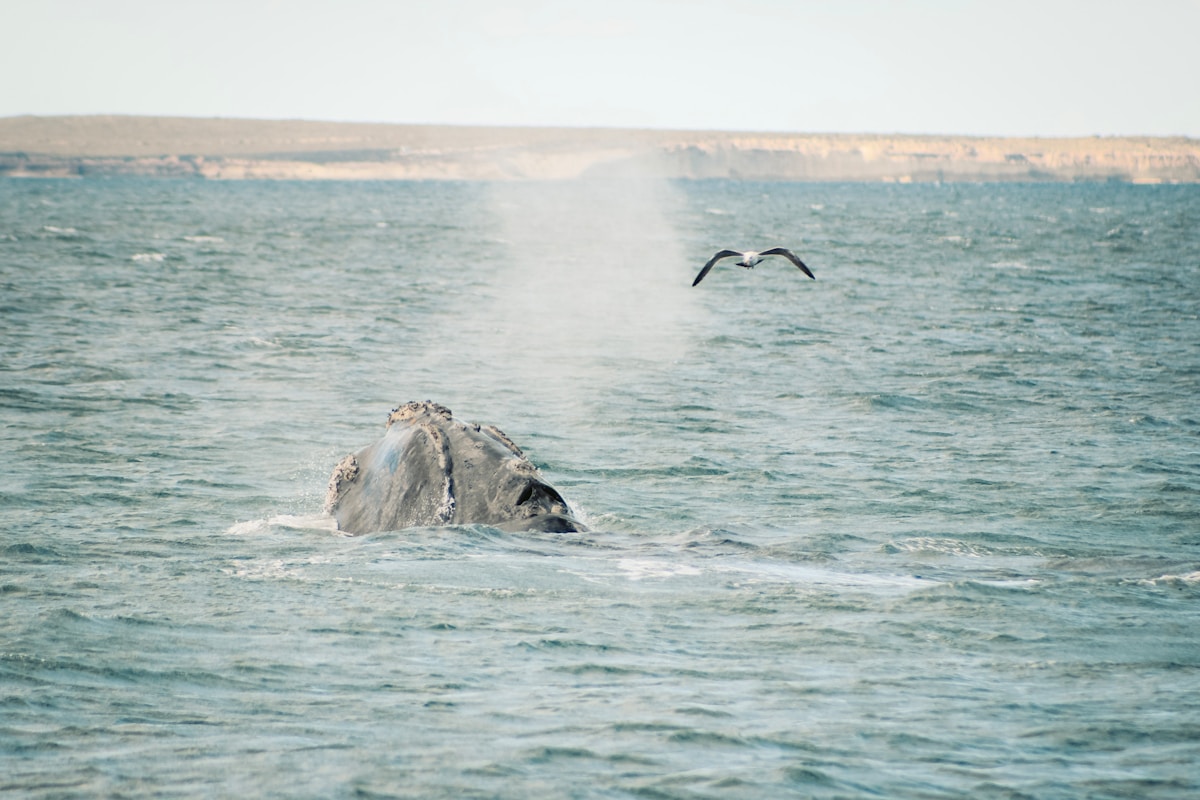
Península Valdés is a UNESCO World Heritage Site on the Atlantic coast of Patagonia, protecting one of the most important breeding grounds for southern right whales (Eubalaena australis) in the world. Between June and December, several hundred whales gather in the protected bays of Golfo San José and Golfo Nuevo to mate, give birth, and nurse their calves before returning to sub-Antarctic feeding waters.
The town of Puerto Madryn, on the coast of Golfo Nuevo, is the standard base for visits. The peninsula itself is 70 kilometres by road from Puerto Madryn and has a small number of estancias (farms) and visitor facilities but no public transport - independent access requires a rental car, and most visitors use organised tours from Puerto Madryn.
The Whales
Southern right whales are large - adult females average 14–15 metres and up to 80 tonnes - and characteristically calm near boats and swimmers. The species was hunted to near-extinction by the early twentieth century; commercial whaling was prohibited in the 1930s by Argentina and the population has recovered substantially, with the Valdés population now one of the healthiest in the world.
Their behaviour in the bays makes them exceptionally observable. Females nurse their calves in very shallow water close to shore - it is common to see mothers and calves from the road along Playa El Doradillo, east of Puerto Madryn, particularly in September and October. Calves are playful and active; breaching, flipper-slapping, and slow rolling at the surface are typical behaviours.
Peak season: September to November. The bays are at their most populated and whale-watching boats operate their most frequent departures. October is widely considered the optimal month.
June–August: Whales arrive and birth begins. Water is colder, weather can be rough, but fewer visitors and the first arrivals of the season.
December: Whales begin to depart. Activity decreases through the month. After mid-December, most whales have left the area.
Whale Watching Tours
Whale watching boat tours depart from Puerto Pirámides, a small village on the western shore of the peninsula approximately 110 kilometres from Puerto Madryn. Most visitors reach Puerto Pirámides via an organised day tour from Puerto Madryn that combines the bus transfer, the boat tour, and optional overland wildlife stops.
The boat tours are 1.5–2 hours on the water. Multiple departures run daily in peak season; morning and afternoon slots are available. Boats approach the whales to within 10–15 metres under national park regulations. Snorkelling with whales is offered by a small number of operators in the calmer months - this is unusual globally and requires calm sea conditions.
Independent travellers who rent a car can drive directly to Puerto Pirámides and book boat tours on-site or through Puerto Madryn operators in advance. Pre-booking is advisable in September–October when capacity is frequently reached.
Other Wildlife at Península Valdés
The peninsula’s UNESCO designation is based on the overall ecosystem, not the whales alone. Year-round wildlife includes:
South American sea lions - colony at Punta Norte (northeastern tip of the peninsula), present year-round with breeding season in December–January. Punta Norte is also where the famous orca hunting behaviour occurs in late summer - orcas (killer whales) charge up the beach slope at speed to catch sea lion pups at the water’s edge, then reverse back into the sea. This behaviour is specific to Valdés and has been documented extensively since the 1970s. Observation requires being at Punta Norte at the right tide and time; guides know the conditions.
Southern elephant seals - colony at Caleta Valdés on the eastern coast of the peninsula. Breeding season September–November; males are enormous - up to 2,200 kg. Present year-round at reduced numbers outside the breeding season.
Magellanic penguins - large colony at Punta Tombo, approximately 100 kilometres south of Puerto Madryn (not on the peninsula itself but typically combined into a two-day itinerary). The colony is one of the largest on the South American continent. Visiting season October–April when the penguins are ashore for breeding.
Guanacos and Patagonian cavy (mara) are common throughout the peninsula steppe - visible from vehicles and on foot near estancias.
Whale Watching Tours: Prices at a Glance
Tours depart from Puerto Madryn with transport to Puerto Pirámides included. The whale watching boat excursion itself (1.5–2 hrs) operates from Puerto Pirámides. All GYG-listed options offer free cancellation up to 24 hours before departure. Prices are approximate as of 2026.
| Tour | Duration | Includes | Price (approx.) |
|---|---|---|---|
| Valdes Peninsula Full Day with Whale Watching | Full day | Transport from Puerto Madryn, boat tour, wildlife circuit | from $75 pp |
| Whale Watching Boat Tour (Puerto Pirámides) | 1.5–2 hrs | Boat on Golfo Nuevo, approach to within 10–15 m of whales | from $60 pp |
| Full-Day Wildlife Safari — Sea Lions + Whales | Full day | Peninsula circuit, sea lion colony, whale watching boat | from $85 pp |
| Punta Tombo Penguins + Whale Watching | Full day | Two-site wildlife day: penguin colony + whale boat | from $95 pp |
Book via Peninsula Valdés whale watching tours on GetYourGuide. Pre-booking is strongly advised in September–October when capacity on the whale watching boats is frequently reached.
Puerto Madryn as a Base
Puerto Madryn is a functional city of approximately 100,000 people, built around its harbour and whale tourism economy. The waterfront promenade (costanera) along Golfo Nuevo is walkable; whale sightings from shore are possible here in peak season. The city has a range of accommodation from budget hostels to comfortable hotels.
Getting there: Aerolíneas Argentinas flies Buenos Aires to Puerto Madryn’s Ástor Piazzolla Airport (PMY) several times weekly - approximately 1.5 hours flight time. Alternatively, long-distance buses from Buenos Aires take approximately 18 hours.
From El Calafate: Some Patagonian circuits include Valdés on the same trip as El Calafate and El Chaltén. The most practical connection is flying Buenos Aires–Puerto Madryn–Buenos Aires as a separate component before or after the southern Patagonia leg.
Two days is the minimum for a worthwhile Valdés visit: one day for the whale watching boat and the Golfo Nuevo shore, and one day for Punta Tombo penguins and/or the Caleta Valdés elephant seals.
Whale watching tours at Península Valdés include boat excursions from Puerto Pirámides and full-day guided wildlife circuits covering the sea lion colony and elephant seal beaches.
See also: Puerto Madryn travel guide · Things to do in Puerto Madryn · Where to stay in Puerto Madryn · Patagonia trekking guide · Argentina Patagonia itinerary