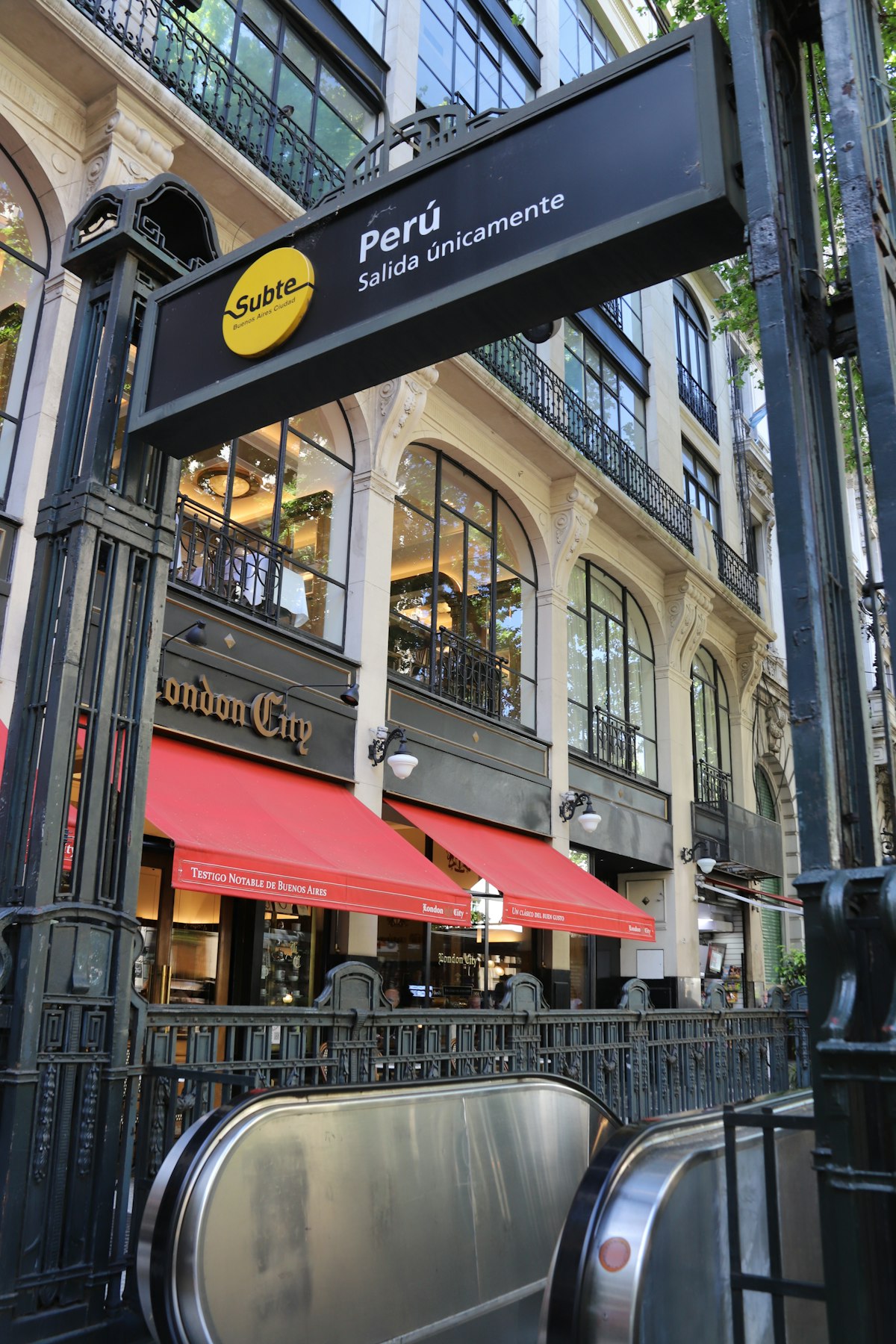
Buenos Aires is a large, sprawling city — roughly 200 km² with 15 million people in the greater metro area — but its public transport network is genuinely good. The Subte (underground railway) covers the central zones efficiently; an extensive bus network fills the gaps; and taxis and remises are inexpensive by international standards. Here is everything you need to get around.
The SUBE Card: Your First Priority
Before anything else, get a SUBE card. It is the single payment method for all Buenos Aires public transport: Subte, all city buses (colectivos), Metrobus, and suburban rail.
Where to get one: Subte station customer service desks, any kiosco (corner store), correo argentino (post office) branches, and some supermarkets. The card is issued free of charge. Bring your passport.
Loading credit: Top up (cargar) at Subte station machines, kioscos, or the SUBE app (requires an Argentine phone number for verification). There is no minimum balance requirement to load but a minimum transaction of approximately ARS 1,000 applies at most machines. A local eSIM makes the app much easier to use — pick one up before arrival via Airalo.
Fares: Subte and colectivo fares are heavily subsidised and extremely cheap for visitors. As of 2026, a single Subte journey costs approximately ARS 250–350 depending on time of day, with discounts applied for multiple journeys within a set period. Fare structures change frequently — check the official SUBE website or ask at a station.
Transfers: The SUBE system allows reduced-price transfers between colectivos within a 90-minute window, and between colectivo and Subte. Keep your card loaded — running out mid-journey means you cannot pay.
The Subte (Underground Railway)
The Buenos Aires Subte is the oldest underground railway in the Southern Hemisphere and the oldest in Latin America, with Line A opening in 1913. It is also one of the most useful ways to navigate the centre.
Line Guide
Line A (Retiro — San Pedrito): The original line; passes through Plaza de Mayo, Congreso, Palermo, and on to Caballito. Uses heritage wooden carriages on some services — a genuine slice of history.
Line B (LN Alem — Juan Manuel de Rosas): Runs west from the financial district through Villa del Parque. Aeroparque airport is approximately 1 km from Federico Lacroze station at the western end, making this line useful for internal flights.
Line C (Retiro — Constitución): The main north-south connector, running between the two largest long-distance bus and rail terminals. Essential for arriving passengers — Retiro bus terminal is directly above Retiro C station.
Line D (Catedral — Congreso de Tucumán): Serves Recoleta (Pueyrredón station), Belgrano, and Palermo (Palermo station). For visitors staying in Palermo or Recoleta this is the most useful line.
Line E (Bolívar — Plaza de los Virreyes): South-west corridor through San Cristóbal and Boedo.
Line H (Hospitales — Facultad de Derecho): The newest line (opened 2007), connecting Once to Recoleta and running north. Useful for moving between Abasto and Recoleta without passing through the city centre.
Operating Hours and Frequency
The Subte runs approximately 5am to 11pm Monday to Saturday, and 8am to 10pm Sunday. Frequency during peak hours (7–9am, 5–8pm) is every 3–5 minutes. Off-peak and weekend headways are 8–12 minutes.
The network does not run 24 hours — night owls and early morning travellers need alternatives.
What to Know
Station names are marked prominently at platform level and above-ground exits. Announcements are in Spanish only. Station maps are displayed in carriages.
Pickpocketing is a concern in crowded central stations, particularly at rush hour on Lines A, D, and C. Keep bags in front of your body and phones out of sight when underground.
City Buses (Colectivos)
Over 140 bus lines cover Buenos Aires with impressive density — most areas of the city are within a few minutes’ walk of a stop. Buses run 24 hours on most routes, making them the only public option late at night.
How to use: Check Google Maps or Moovit (the local favourite — works offline) for the correct line and stop. When the bus arrives, tap your SUBE card on the reader by the driver. You will be charged the correct fare based on distance. Move to the middle of the bus and tap again on exit.
Route numbers: Buenos Aires colectivos have three-digit numbers. Some key routes:
- 29, 64, 152: connect Palermo, Microcentro, and San Telmo
- 60, 168: Microcentro to Tigre (useful for day trips north)
- 86, 91: connect Retiro and Constitución rail terminals
Night buses: Bus service continues through the night on most lines, though frequency drops to 15–30 minute intervals after midnight. Walking alone to bus stops late at night in certain areas is inadvisable — weigh taxi cost vs convenience.
Metrobus
Buenos Aires has built dedicated bus rapid transit (Metrobus) lanes on several major arteries, significantly speeding up bus times on key corridors.
Metrobus del Sur (Av. San Juan): Connects the south of the city. Metrobus 9 de Julio: Runs the length of the famous 9 de Julio avenue — the world’s widest boulevard — connecting multiple Subte lines. Metrobus Juan B. Justo: Connects Chacarita through Villa del Parque.
Metrobus uses the same SUBE card. Stops have shelters, maps, and next-bus displays.
Taxis and Remises
Taxis (Radio Taxis)
Buenos Aires has approximately 35,000 taxis — among the highest per-capita densities in the world. They are inexpensive by international standards. Fares are metered.
Choosing a safe taxi: Look for radio taxis — those affiliated with a dispatching company, identified by a company name on the door and a roof sign with the company logo. These are tracked and considered safer than unaffiliated cabs. Hail from the street or call a dispatch company (BA Taxi: 4931-1200 is reliable).
Fares: As of 2026, the initial meter drop (bajada de bandera) is approximately ARS 700–900, with approximately ARS 90–120 per 200 metres. A 20-minute trip across central Buenos Aires typically costs ARS 3,000–6,000 (approximately USD 3–6). Fares increase at night and on weekends.
Payment: Most radio taxis accept cash (pesos only). Card acceptance has improved but cannot be assumed — carry small bills.
Remises
A remis is a private hire car with a pre-agreed fare, organised through a dispatcher rather than hailed from the street. Remis companies operate 24 hours and are the preferred option for airport transfers and late-night journeys.
Pricing is agreed before departure — ask the dispatch operator for an estimate. A remis from the city centre to Ezeiza airport runs approximately ARS 15,000–25,000 (USD 15–25) as of 2026, comparable to or slightly cheaper than taxis for longer journeys.
Airport Transfers
Ezeiza International Airport (EZE)
Ezeiza is approximately 35 km southwest of the city centre — allow 45–60 minutes in normal traffic, up to 90 minutes in peak hours.
Manuel Tienda León shuttle: The most popular option for visitors. Clean, air-conditioned coaches depart every 30–45 minutes from the Madero terminal (near Puerto Madero) and stop at Retiro. Cost approximately USD 15 per person as of 2026; can be purchased at the arrivals hall desk. Journey time approximately 45–60 minutes.
Taxi or remis: Approximately USD 25–35 for a standard taxi from the official taxi booths in arrivals. Do not accept offers from drivers approaching you inside the terminal — use only the official booths or a pre-booked remis. For a guaranteed fixed-price private transfer, book in advance via Welcome Pickups or Kiwitaxi — both meet you at arrivals with a named driver.
Bus (Budget): The 8 express bus connects Ezeiza to the city (Plaza de Italia in Palermo) for approximately ARS 500–700 as of 2026. It runs 24 hours but is slow (90+ minutes) and requires navigating the airport bus stop in arrivals — workable with a local SIM and light luggage, less practical with large bags.
Aeroparque Jorge Newbery (AEP)
Aeroparque is 4 km north of the city centre in Palermo — dramatically more convenient than Ezeiza.
Taxi: Approximately ARS 3,000–5,000 (USD 3–5) to most Palermo addresses; ARS 5,000–8,000 to San Telmo or Microcentro as of 2026.
Bus: Several colectivos serve Aeroparque (28, 33, 45). The stop is on the avenue outside departures. Heading to Palermo or Belgrano is simple; crossing to Microcentro requires a change or a longer bus.
Subte: The nearest station (Dorrego on Line B) is approximately 1.5 km from the terminal — manageable with light luggage, not ideal with large bags.
Cycling and Scooters
Buenos Aires has an expanding network of Ecobici public bicycle stations throughout the central and Palermo areas. Registration requires an Argentine ID or residency card, making it inaccessible to most visitors. Private bike hire shops in Palermo and San Telmo fill the gap for half-day or full-day rentals.
Electric scooters (Grin, Whoosh) operate in Palermo and Puerto Madero, bookable via app.
Summary: Which Transport for What
| Journey | Best Option |
|---|---|
| Microcentro to Palermo | Subte Line D |
| San Telmo to Recoleta | Bus or Subte Line C + H |
| Ezeiza airport to city | Manuel Tienda León or remis |
| Aeroparque to Palermo | Taxi or bus 28/45 |
| Night journey in central BA | Radio taxi or remis |
| Budget cross-city | Colectivo (bus) with SUBE |
| Tigre day trip | Train from Retiro (Ramal Tigre) |
Buenos Aires transport is reliable, cheap, and covers the city well. Getting a SUBE card within the first hour of arrival removes most friction from getting around.