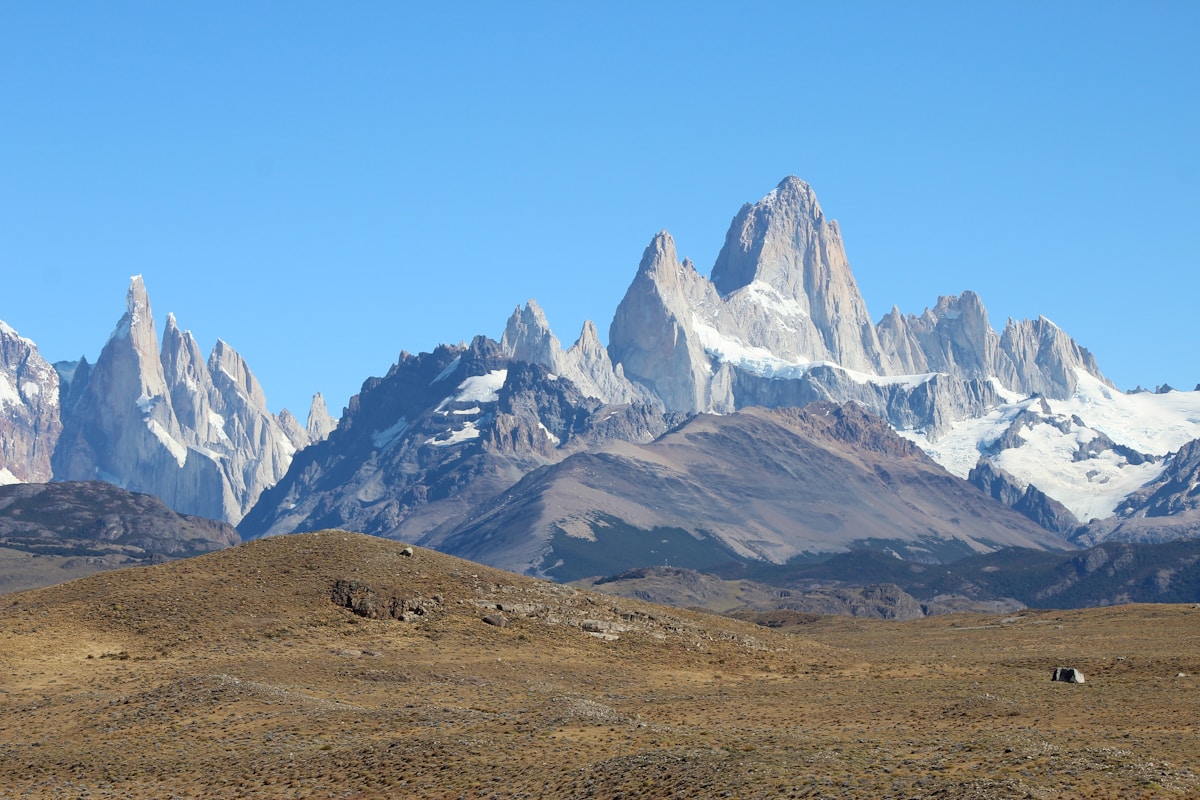
September marks the opening of Argentina’s Patagonia trekking season. Trails that were inaccessible under winter snow are reopening, national park infrastructure is returning to full operation, and the 2026–27 season is now underway — roughly three months ahead of the December-to-February summer peak.
What’s Open in September
El Chaltén — the trekking capital of Argentine Patagonia — is accessible year-round but reaches meaningful trail conditions in September. The classic routes to Laguna de los Tres (below Fitz Roy) and Laguna Torre (at the base of Cerro Torre) are generally passable from early September, though snow on higher sections remains common and gaiters are advisable.
Los Glaciares National Park — the larger park surrounding El Chaltén and El Calafate — reopens its full trail network from September. The Perito Moreno Glacier boardwalk and ice-trekking operations begin their season now, and Lago Viedma and Lago Argentino are accessible by boat.
Bariloche and the Lake District — further north, the Nahuel Huapi circuit trails open in September. The ski fields have closed (Bariloche’s ski season typically runs July–August), and the area transitions to hiking and cycling.
September Conditions
Expect temperatures of 5–15°C in El Chaltén and El Calafate, with wind being the defining variable. Patagonian wind is famously unpredictable — it can be completely calm one morning and gusting above 60 km/h by afternoon. Every trekker in Patagonia needs windproof outer layers regardless of season.
Wildflowers begin appearing in September, particularly in sheltered valley sections. The calafate berry — the regional fruit and namesake of El Calafate — begins to fruit in late September and early October.
Daylight increases significantly through September as southern hemisphere spring takes hold. By late September, days are 12–13 hours long in El Chaltén, which is meaningful for multi-day routes.
Advantages of the September Window
The main argument for September over the December-February peak:
- Significantly fewer people on trails — the classic routes, particularly Laguna de los Tres, are crowded in January. September sees a fraction of that traffic.
- Accommodation availability — in El Chaltén, guesthouses and hostels that are booked out months in advance in December have rooms available with shorter lead times in September.
- Lower prices — peak season pricing applies December–February. September rates are shoulder-season across accommodation and tour operations.
The main tradeoff is trail conditions: some high-elevation sections remain snowed in through September, and weather windows are shorter and less predictable than in January.
Planning the 2026–27 Season
Reservations for the full season opened earlier in 2026. Popular options — particularly ice trekking on Perito Moreno and multi-day guided treks — book out well in advance for January and February. September remains available on shorter notice.
For the marquee routes, see our guide to trekking in the Fitz Roy area and the broader Los Glaciares National Park options. El Chaltén is the practical base for the Fitz Roy and Cerro Torre areas — a small trail town with all the infrastructure trekkers need and nothing more. For guided treks and tours in El Chaltén, browse El Chaltén tours and activities. For glacier excursions and ice trekking at El Calafate, browse El Calafate tours.