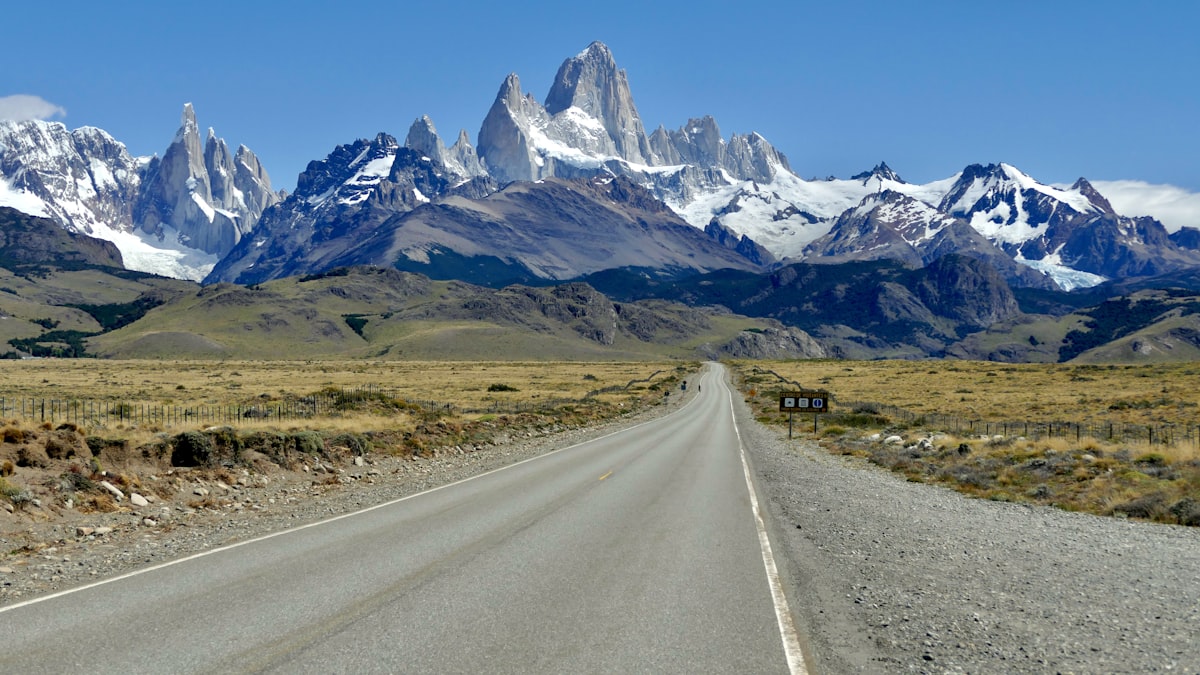
Argentina is one of the best countries in South America to drive through its scale, variety, and the quality of its main routes. The roads from Salta to the Quebrada de Humahuaca, along the Cafayate canyon, across the wine valleys of Mendoza, and through Patagonia toward the Fitz Roy massif are among the most scenic drives anywhere. Renting a car unlocks viewpoints, villages, and timings that buses simply can’t match.
Here’s what you need to know before picking up the keys.
The Main Rental Agencies
Hertz - the most internationally recognisable agency in Argentina, with offices at Ezeiza International Airport, Aeroparque Jorge Newbery (Buenos Aires domestic), Bariloche, Mendoza, Salta, El Calafate, and Ushuaia. Tends to be priced at the higher end but offers the most reliable cross-border authorisation for Chile crossings. Booking via the international website often returns better rates than walking in. Daily rates from approximately $55–90 USD for a compact as of 2026.
Localiza - Brazilian-owned but the most widespread budget agency in Argentina. Good coverage in Patagonia, including El Calafate and Bariloche. Pricing is typically 20–30% below Hertz for equivalent vehicle categories. Daily rates from approximately $35–60 USD for a compact as of 2026. Convenient for one-way rentals between Patagonian towns if you’re doing a linear route.
Al Mundo Rent a Car - a local Argentine agency with locations in Buenos Aires, Bariloche, Mendoza, and a few other cities. Often has the most competitive rates for in-country travel. Worth checking alongside international agencies. Less likely to permit cross-border travel into Chile.
Avis and Budget - present at major airports; pricing in line with Hertz. Worth including in your comparison search, especially if you have existing loyalty rates.
Comparison booking: Using GetRentaCar to compare agencies searches across multiple providers simultaneously and often surfaces deals not visible on individual agency sites - useful for Patagonian locations where availability can be limited.
What’s Included vs What’s Extra
Always included: Third-party liability insurance (seguro obligatorio) - this is legally mandatory in Argentina and will be included in any legitimate rental.
Usually extra:
- CDW (Collision Damage Waiver): Reduces your financial liability if the vehicle is damaged. Strongly recommended. Expect to pay approximately $10–25 USD/day extra depending on the agency and vehicle.
- Theft protection: Often sold separately from CDW.
- Excess reduction: Some agencies offer insurance that eliminates the deductible entirely. Worth considering for Patagonia where gravel roads create windscreen chip risk.
- Extra driver: Usually $5–15 USD/day to add a second driver to the policy.
- One-way fee: Returning the car to a different city can add $50–200 USD depending on the route.
Local insurance note: Some travel insurance policies include car rental collision coverage - check yours before paying for CDW at the rental desk. Credit card rental coverage also exists with some premium cards, but verify whether it applies in Argentina before relying on it.
International Driving Permit (IDP)
Argentina officially requires foreign drivers to hold an International Driving Permit alongside their home licence. The IDP is a translation document issued in your home country (typically by the AA, RAC, AAA, or equivalent) and valid for one year.
Practical reality: Many rental agencies in Buenos Aires don’t ask for the IDP at pickup, and you may drive extensively in Argentina without being asked to show one. However, provincial traffic police checkpoints - common on Patagonian highways and in Mendoza - sometimes request it. Not having one can result in a fine and delays at the checkpoint.
Our recommendation: Get the IDP. It costs approximately $20–25 USD in most countries and takes a few days to issue. The risk of not having it is low but not zero, especially for road trips far from the capital.
Driving in Argentina: What to Know
Speed limits:
- Urban areas: 60 km/h
- Rural two-lane highways: 110 km/h
- Motorways (autopistas): 130 km/h
Toll roads: Buenos Aires has several toll roads (autopistas) charging approximately ARS 2,000–5,000 per toll. Outside the capital, tolls are less common but exist on some major routes including the Buenos Aires–Córdoba motorway. Carry small denomination pesos for toll plazas.
Fuel: Argentina’s dominant fuel retailer is YPF (state-owned), with stations on all major routes. In Patagonia and the northwest, distances between stations can exceed 200 km - fuel up at every opportunity and don’t assume the next town has a working pump. Super (95 RON) and Premium (97 RON+) petrol and diesel are standard at most stations.
Night driving in Patagonia: Avoid it. The unfenced Patagonian steppe means cattle, horses, and guanacos frequently cross the highway after dark. Hitting livestock at speed is a real risk and one of the more common causes of rural road accidents. If you must drive after dark, go slowly.
Police checkpoints (puestos de control): Common on Patagonian and northwestern routes. Have your passport, IDP, home licence, rental paperwork, and vehicle insurance document accessible. Checkpoints are routine - stay calm, hand over what’s requested, and you’ll be through in a few minutes.
Ruta Nacional 40 (RN40)
Route 40 is the legendary longitudinal highway running approximately 5,200 km from La Quiaca on the Bolivian border in Jujuy Province to Cabo Vírgenes at the southern tip of Santa Cruz. It’s one of the longest roads in the world and passes through some of Argentina’s most remote and spectacular landscapes.
Key sections:
Salta to Cafayate (via Quebrada de las Conchas): Largely paved, well-maintained, and one of the most scenic drives in Argentina. The red canyon walls of the Quebrada de las Conchas line the road for 50 km south of Salta. Allow 3.5–4 hours for the 190 km with stops.
Mendoza to Bariloche: The central section of RN40 crosses the high Pampas between the wine regions and the lake district. Long, flat stretches with little traffic. Well-paved for most of this section.
Patagonian section (El Calafate to Chalten to Perito Moreno town to Los Antiguos): A mix of paved highway and gravel. The section between Bajo Caracoles and Gobernador Gregores is notoriously rough gravel - approximately 400 km at low speed in a high-clearance vehicle. This section is being progressively paved, but check current conditions before committing to it in a standard sedan.
Time and distance reality check: The Patagonian sections involve much longer driving times than map distances suggest. Gravel roads typically average 60–80 km/h in good conditions, less in wind or rain. Plan for 400 km days maximum on remote Patagonian routes.
Booking Tips
- Book early for Patagonia in January: El Calafate, El Chaltén, and Bariloche see peak demand from Argentine summer travellers (December–February). Vehicle availability at local offices can be severely limited if you leave it to the last week. Book 4–6 weeks ahead minimum.
- Compare total prices: The headline daily rate often excludes CDW, taxes (21% IVA applies), and additional driver fees. Compare total out-the-door costs.
- Check the vehicle thoroughly at pickup: Photograph all existing damage before signing. Argentina’s roads have potholes and gravel chips - a pre-rental walkthrough prevents disputes on return.
- One-way options: If doing a one-directional Patagonia route (e.g. El Calafate to Bariloche), Localiza typically has the best one-way fee options between Patagonian cities.
Search and compare car hire across agencies in Argentina to find the best available rate for your dates and pickup location.
Suggested Self-Drive Routes
Mendoza wine country (3–4 days): Rent in Mendoza city; drive the Valle de Uco (2 hours south), Luján de Cuyo, and Maipú. Standard sedan adequate. Wine tourism is the focus - allow time at each bodega.
Northwest triangle (5–7 days): Rent in Salta; drive north through the Quebrada de Humahuaca to the Bolivian border, west to Salinas Grandes, south through Cachi and the Calchaquí Valley, then south to Cafayate before returning to Salta. Mix of paved and good-quality unpaved road; a standard sedan handles most of it in dry season.
Patagonia loop (7–10 days): Fly to El Calafate; rent a 4WD; drive to El Chaltén (Fitz Roy area), north along RN40 to Perito Moreno town (the town, not the glacier), west to Los Antiguos, and back. High clearance strongly recommended. Alternatively, add the Chilean side via Torres del Paine with cross-border authorisation.
See also: Getting around Argentina · Argentina travel insurance · Buenos Aires airport transfers
Plan Your Trip
✈️ Book your flights to Argentina 🛡️ Get travel insurance 📱 Stay connected with an eSIM 🚗 Rent a car