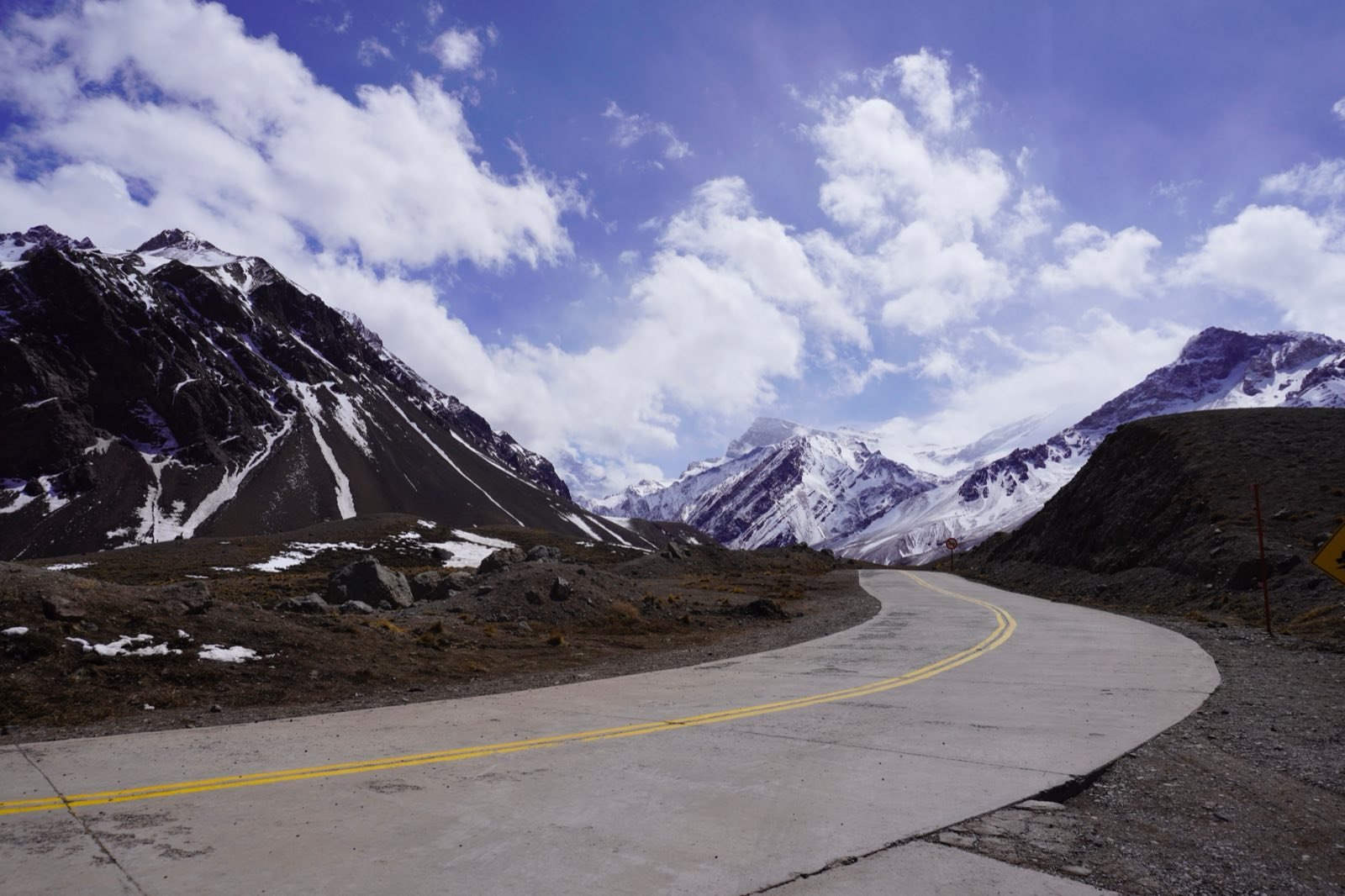
Argentina and Chile share one of the longest land borders on earth, and more than 60 passes cross the Andes. Most visitors only ever use four routes: the lake-and-bus Cruce Andino between Bariloche and Puerto Varas, the Cristo Redentor road between Mendoza and Santiago, the Patagonian steppe crossing between El Calafate and Puerto Natales, and the Tierra del Fuego route from Ushuaia to Punta Arenas. This guide covers each one with durations, approximate costs, hours, documents and the food rules that catch people out. If you are still deciding whether to combine the two countries at all, read Argentina vs Chile first.
The 4 main crossings at a glance
| Route | Mode | Typical time | Approx. cost (as of 2026) | Best for |
|---|---|---|---|---|
| Bariloche to Puerto Varas (Cruce Andino) | Bus and boat, 1 day | About 12 hours | From USD 350 one way | Scenery |
| Mendoza to Santiago (Paso Cristo Redentor) | Bus or car | 7 to 8 hours plus queues | USD 30 to 60 by bus | Wine country to capital |
| El Calafate to Puerto Natales | Bus | 5 to 7 hours | USD 40 to 55 | Torres del Paine |
| Ushuaia to Punta Arenas | Bus and ferry | 10 to 12 hours | USD 55 to 85 | Overland Tierra del Fuego |
Prices move with the peso and with operator promotions, so treat them as a guide and confirm before you book. For comparing intercity buses and booking seats, you can compare bus and train prices on Omio, and our long-distance buses guide explains seat classes and terminals.
1. Bariloche to Puerto Varas: the Cruce Andino
The Cruce Andino (also sold as the Cruce de Lagos or Andean Lakes Crossing) is a one-day trip that links Bariloche with Puerto Varas, Chile, using a mix of buses and catamarans across Lago Nahuel Huapi, Lago Frias, Lago Todos los Santos and a final road leg to Lago Llanquihue. The day starts early with a bus from Bariloche to Puerto Pañuelo, then boats and short bus transfers through the Argentine exit post at Puerto Frias and the Chilean entry post at Peulla, before finishing in Puerto Varas in the evening.
- Cost: operators listed roughly USD 350 per adult one way for April 2026 to March 2028, with children at about half and a lower rate for Argentine and Chilean residents. A return ticket was listed around USD 530. A small boarding tax of about USD 3 at Puerto Pañuelo is typically extra, and so is excess luggage.
- Season: the crossing runs most of the year but weather can disrupt it, and winter schedules are the most likely to change. Book early for December to February.
- Border: formalities happen on the route, so keep your passport in a daypack, not the luggage hold. Food rules apply (see below).
- Overnight option: many travellers split it into two days with a night in Peulla.
Stay in Bariloche the night before so you make the early departure; our Bariloche hotel guide covers neighbourhoods, and you can also browse hotels in Bariloche. To fill days around the crossing, see guided tours in Bariloche and our Bariloche things to do guide.
2. Mendoza to Santiago: Paso Cristo Redentor
This is the busiest crossing and the only one most people drive. The road leaves Mendoza on Ruta 7, passes Uspallata and Puente del Inca, climbs to the Cristo Redentor tunnel at about 3,200 metres and descends into Chile through the Los Libertadores complex and the Los Andes valley toward Santiago.
- Time: approximately 7 to 8 hours by bus in normal conditions. Add 1 to 3 hours at the combined customs complex in January, February, Easter and long weekends.
- Services: several companies run daily buses, including Andesmar and Cata. Fares start at roughly USD 30 to 60 depending on seat class.
- Hours: the Argentine authorities announced winter hours from 1 June 2026 of 9:00 to 21:00 Argentine time (8:00 to 20:00 in Chile), with vehicle traffic cut off earlier at Uspallata, around 19:00. Summer hours are usually longer. Hours change by season and conditions, so check the official Argentine border alerts page the day before.
- Winter closures: snow and wind close the pass several times each winter, typically June to September, sometimes for days at a time. We covered one example in our report on the Cristo Redentor pass closure in July 2026. Some closures also reopen in one direction first, so a bus booked for Argentina to Chile may run while the reverse is held.
- If it closes: the fallback is a flight of about one hour between Mendoza and Santiago. Do not schedule a tight international connection the same day as a winter crossing.
Wine-country visitors often cross at the end of a stay; our Mendoza guide covers the city, and you can book Mendoza tours before you leave.
3. El Calafate to Puerto Natales
This crossing links El Calafate and the Perito Moreno glacier with Puerto Natales, the gateway to Torres del Paine National Park. It uses Paso Rio Don Guillermo (Argentine side) and Cerro Castillo (Chilean side) across open Patagonian steppe.
- Time: sold as about 5 hours, but expect 5 to 7 hours because of two separate border posts. A traveller report from January 2026 put one trip at over 7 hours.
- Cost: roughly USD 40 to 55 one way as of 2026, with some operators discounting for cash in dollars.
- Frequency: daily in peak summer (roughly November to March), with fewer departures in winter. Operators include Bus Sur and Cootra.
- Hours: the pass is generally open through the day in summer. Confirm the closing time with your operator, since late buses can be held overnight if the post closes.
- Torres del Paine: book park entry and refugios well ahead. Our guide to Patagonia car hire covers the self-drive alternative and the cross-border paperwork it needs.
4. Ushuaia to Punta Arenas
Overland, the route runs from Ushuaia through Tolhuin and Rio Grande, crosses into Chile at Paso San Sebastian on the island of Tierra del Fuego, and uses the Primera Angostura ferry across the Strait of Magellan before reaching Punta Arenas. Many buses make the whole trip in about 10 to 12 hours, with fares of roughly USD 55 to 85 depending on the operator (Buses Barria and Marga Taqsa are among those listed).
The route is long and the island roads are good but exposed, so leave early and pack food. Most people fly one of the legs instead; if you are building an Antarctic or Torres del Paine trip, check our Ushuaia guide for the airport and onward options.
Documents you need
- Passport: valid for the whole stay. Argentina and Chile also accept national ID cards from Mercosur and some Latin American citizens, but travellers from outside the region need a passport.
- Entry stamp or card: you receive a short entry record at the Chilean post. Keep it, you hand it back on departure.
- Visas: many nationalities enter Chile as tourists without a visa, but check your own, since rules change. See our Argentina visa guide for the Argentine side.
- Minors: children travelling without both parents need notarised permission papers, and officers do check.
- Vehicles: you need the vehicle title, insurance valid for Chile and a cross-border authorisation from the rental company, typically arranged days in advance.
- Insurance: medical cover that works in both countries is sensible, see travel insurance for Argentina.
Fruit, food and the SAG rules
Chile protects its fruit export industry with strict agricultural controls. The Servicio Agricola y Ganadero (SAG) enforces them at the border, and bags are screened or hand-searched at every crossing above.
- Do not carry fresh fruit, vegetables, meat, dairy, honey, seeds or plant material into Chile.
- Declare all food on the affidavit form handed out on the bus or at the post. Declare anything doubtful: a declared item is confiscated, an undeclared one can mean a fine.
- Packaged and processed snacks, such as biscuits and sealed chocolate, are usually fine but still declared.
- Returning to Argentina, similar controls apply, so do not bring Chilean fruit back.
Read the latest rules on the SAG website before you pack lunch.
Practical tips
- Book the day before in winter. Closures can leave tickets re-sellable, but queues form quickly after reopening.
- Change money carefully. Argentine pesos are hard to exchange in Chile, so spend them before you leave or use a card.
- Wear layers. The Mendoza pass is above 3,000 metres and the steppe is windy in all seasons.
- Keep your passport accessible. Do not pack it in the hold.
- Check flights if you are time-pressed. Mendoza to Santiago and Bariloche to Puerto Montt are short hops; compare flights to Argentina if a connection matters more than scenery.
Planning wider travel? Our Argentina vs Chile comparison and getting around Argentina guides help you decide the order of your route.