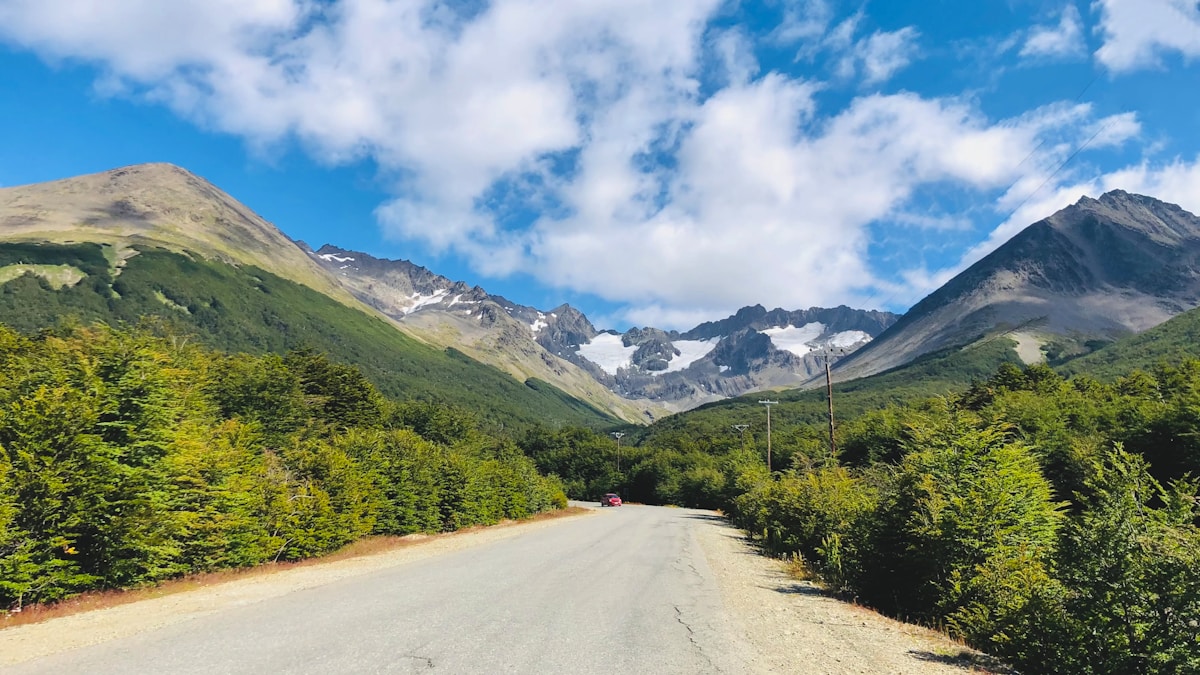
A self-drive road trip is the best way to experience Patagonia at its own pace - pulling over for a guanaco crossing, timing your arrival at Fitz Roy for golden hour, adjusting your schedule when a Patagonian wind front rolls in. But Patagonia is not a forgiving destination for underprepared drivers. Fuel stations disappear for 200 km at a stretch, gravel roads eat tyres, and insurance policies written in Buenos Aires may not cover the roads you actually want to drive.
This guide covers everything specific to renting in Patagonia: which route to take, where the fuel gaps are, what insurance actually covers on ripio, airport pickup logistics, and the border crossing paperwork for Chile.
For the broader picture on licences, IDP requirements, and driving in Argentina generally, see our general Argentina car rental guide.
Ruta 40 vs the Coastal Route
The two main approaches to driving Patagonia from north to south are Ruta Nacional 40 (inland, along the Andean foothills) and the Atlantic coastal corridor (Ruta 3 to Ruta 40’s southern junction near Río Gallegos).
Ruta 40 (inland): The legendary route runs from La Quiaca on the Bolivian border all the way to Río Gallegos - around 5,200 km end to end. For most Patagonia road-trippers, the relevant section is Bariloche south through Esquel, Gobernador Costa, Perito Moreno (the town, not the glacier), and down to El Chaltén and El Calafate. This corridor covers roughly 1,700 km and mixes paved sections with long ripio (gravel) stretches. It passes through the Andean lake district, the Cueva de las Manos UNESCO site, steppe that feels like the edge of the world, and ultimately the Fitz Roy range.
Drive time Bariloche to El Calafate via Ruta 40: approximately 20–24 hours driving, typically split over 4–5 days with stops.
Atlantic coastal route (Ruta 3): Faster and almost entirely paved. Bariloche to Río Gallegos via the coast takes around 23 hours of pure driving - roughly the same distance - but the scenery is steppe and ocean bluff rather than mountains. Most travellers use this route for time-sensitive one-way transfers rather than as a sightseeing road.
Our recommendation: Drive Ruta 40 southbound for the scenery, then return via Ruta 3 or fly out of Ushuaia or El Calafate. Book your vehicle before your trip - inventory at Patagonian airports is thin, especially in high season (November–February).
Gravel Road Conditions
Ripio - unpacked gravel - is the default surface on large sections of Ruta 40 south of Esquel and on access roads into both Los Glaciares and Nahuel Huapi national parks. Conditions vary enormously by season and recent weather.
What to expect on ripio:
- Corrugations (washboard) that worsen as you accelerate. Drive at 40–60 km/h to minimise vibration damage.
- Loose stones that crack windscreens. Keep 100+ m distance from any vehicle ahead.
- Soft shoulders that collapse under tyres in wet weather. Do not pull off the road without probing first.
- River crossings (vados) on backcountry roads - passable in a sedan in dry season, dangerous in spring snowmelt.
Key ripio stretches to know:
- Esquel to Gobernador Costa: ~140 km, mostly ripio, passable in a standard sedan
- Perito Moreno to El Chaltén: ~370 km, mixed paved/ripio; worst section is around Lago Posadas
- El Chaltén access roads (RN 41, RP 23): gravel, but short and maintained for tourist traffic
The good news: Ruta 40 between El Calafate and El Chaltén (230 km, ~3 hours) is now fully paved. This was the last major unpaved gap on the southern section and was completed in stages through 2023–2024.
Fuel Station Gaps
Patagonia’s fuel infrastructure is genuinely sparse. YPF is the dominant brand and operates most stations; Shell and Axion appear in larger towns. Credit cards are accepted at most YPF stations but the card reader is sometimes out of service - carry ARS cash as backup.
Critical fuel gaps to plan around:
| Stretch | Distance | Notes |
|---|---|---|
| El Chaltén to El Calafate | 230 km | No fuel in between - fill completely in El Chaltén before departure |
| Perito Moreno (town) to Gobernador Costa | ~220 km | One station at Los Antiguos (30 km detour to Chile Chico border) |
| Gobernador Costa to Río Mayo | ~190 km | Fill at Gobernador Costa; next reliable station is Río Mayo |
| Ushuaia to Río Grande | 230 km | Ushuaia and Río Grande both have stations; nothing reliable in between |
The El Chaltén to El Calafate gap is the most dangerous for unprepared drivers - the route is now fully paved so it feels fast, but at highway speeds a standard 50-litre tank leaves almost no margin. Fill to the brim in El Chaltén.
Mandatory Winter Kit (May–August)
Patagonian winters are serious. Ruta 40 at high elevation gets black ice and snow from May through August; the Ushuaia–Río Grande corridor regularly closes after snowfall.
Rental agencies at El Calafate and Ushuaia airports provide winter kits as mandatory extras in the colder months (approximately May–September). These typically include:
- Snow chains (cadenas) - learn to fit them before you leave the car park
- Ice scraper and de-icer
- Emergency reflective triangles (legally required year-round in Argentina)
If the agency offers snow tyres as an upgrade, take them. The extra ARS 2,000–4,000 per day is trivial against the cost of a recovery or a tow.
Airport Pickup Locations
Bariloche (BRC) - Teniente Luis Candelaria Airport
Hertz, Europcar, and Localiza all have desks at the terminal. Budget and Avis operate off-airport with shuttle pickup. For the best rates, compare through GetRentacar before booking direct - airport desk prices are generally 15–25% higher than pre-booking online. Bariloche is the gateway for the northern lake-district section of Ruta 40.
El Calafate (FTE) - Comandante Armando Tola Airport
The main hub for Los Glaciares National Park. Hertz, National, and Localiza maintain desks here. Demand dramatically outpaces supply in January–February - if you arrive in peak season without a pre-booked vehicle, expect to pay premium rates or be turned away. Pre-book your Patagonia hire well in advance.
Ushuaia (USH) - Malvinas Argentinas International Airport
The southernmost commercial airport in the world, and the staging point for Tierra del Fuego. Hertz and a handful of local operators run desks or nearby offices. Inventory here is particularly thin - Ushuaia is the one airport where we’d say pre-booking is non-negotiable.
Insurance for Ripio Roads
Standard CDW (Collision Damage Waiver) included in most rental contracts covers collision damage on sealed roads. The critical exclusion to read is whether ripio roads void the policy. A significant number of Buenos Aires-based rental companies specify “approved roads” (caminos habilitados) in their terms - and Ruta 40’s unpaved sections may not qualify.
Before signing:
- Ask explicitly: “Is ripio/gravel road driving covered under this CDW?”
- Request the policy exclusions in writing (agencies are required to provide this)
- Consider buying a supplementary policy through a specialist travel insurer that covers rental car excess - especially useful when CDW leaves a deductible of USD 1,000–3,000
Tyre damage is almost universally excluded from CDW. On ripio roads this matters because punctures are common. Some agencies sell a separate tyre/windscreen waiver for around ARS 3,000–6,000 per day - worth it for any Ruta 40 itinerary south of Esquel.
Border Crossings to Chile
Several Patagonia itineraries cross into Chilean Patagonia - particularly the Torres del Paine–El Calafate circuit and the Carretera Austral from Bariloche. You can take a rental car across, but the process requires paperwork sorted in advance.
What you need:
- Cross-border permit (habilitación de cruce): Issued by the rental agency, names you, the vehicle, and the specific crossing. Must be requested at booking - agencies cannot issue it after pickup.
- Car ownership certificate (cédula verde): The agency provides this; keep it in the car.
- Third-party liability for Chile: Argentine policies typically don’t extend across the border. Chilean border posts require proof of valid insurance for the vehicle. Some agencies bundle Chilean coverage; others require you to buy a temporary SOAP policy at the border post (usually CLP 15,000–20,000).
- Valid passport for all passengers.
Permitted crossings for most rental agreements:
- Paso Integración Austral (El Calafate → Puerto Natales): most common for Torres del Paine circuit
- Paso Cardenal Samoré (Bariloche → Osorno/Puerto Montt): northern lake crossing
- Paso Huemules (Esquel → Futaleufú): Carretera Austral entry point
Not all agencies authorise all crossings - confirm the specific paso when booking.
Practical note: Argentine and Chilean customs both close overnight. Most crossings operate 08:00–22:00 in summer, 09:00–21:00 in winter. Budget extra time - the Paso Integración Austral in peak season can have 1.5–2 hour queues.
Parking at National Parks
Argentina’s national parks do not charge vehicle entry fees separate from the park admission ticket. However, parking logistics differ by park:
Los Glaciares (El Chaltén and El Calafate sectors)
- El Chaltén village has free off-street parking throughout - park anywhere along the main streets before heading to trailheads
- El Calafate sector (Perito Moreno Glacier): large supervised car park at the glacier walkways, free with park entry ticket
Nahuel Huapi (Bariloche)
- Circuito Chico road: roadside pullouts are free, narrow in summer
- Villa Traful and Paso de las Nubes trailheads: small gravel areas, no charge, can fill by 09:00 in January
Tierra del Fuego (Ushuaia)
- Paved car park at park entrance on RN 3, included with admission
- Lapataia Bay: second car park, 12 km inside the park, fills before midday in high season - arrive before 10:00
For Patagonia trekking objectives - Fitz Roy, Torres del Paine, the Cerro Castillo circuit - having your own vehicle means you can time trailhead arrivals before tour buses arrive. See our complete Patagonia trekking guide for trail logistics.
Booking Your Rental
The practical reality in Patagonia is that availability at airport desks is poor and walk-up prices are high. The most cost-effective approach is to compare rates online before you travel, paying attention to ripio road coverage and cross-border terms.
Search and compare Patagonia car hire options across the major operators - GetRentacar aggregates Hertz, Localiza, Europcar, and local operators with filter options for pickup location and vehicle class. A mid-size SUV with good ground clearance is the recommended starting point for any Ruta 40 itinerary.
Travel insurance that includes rental car excess cover is strongly recommended for any ripio driving. Standard comprehensive rental policies leave deductibles of USD 1,000–3,000 - pick up a specialist policy through a recommended travel insurer before you go.
Plan Your Trip
✈️ Book your flights to Argentina 🛡️ Get travel insurance 📱 Stay connected with an eSIM 🚗 Rent a car