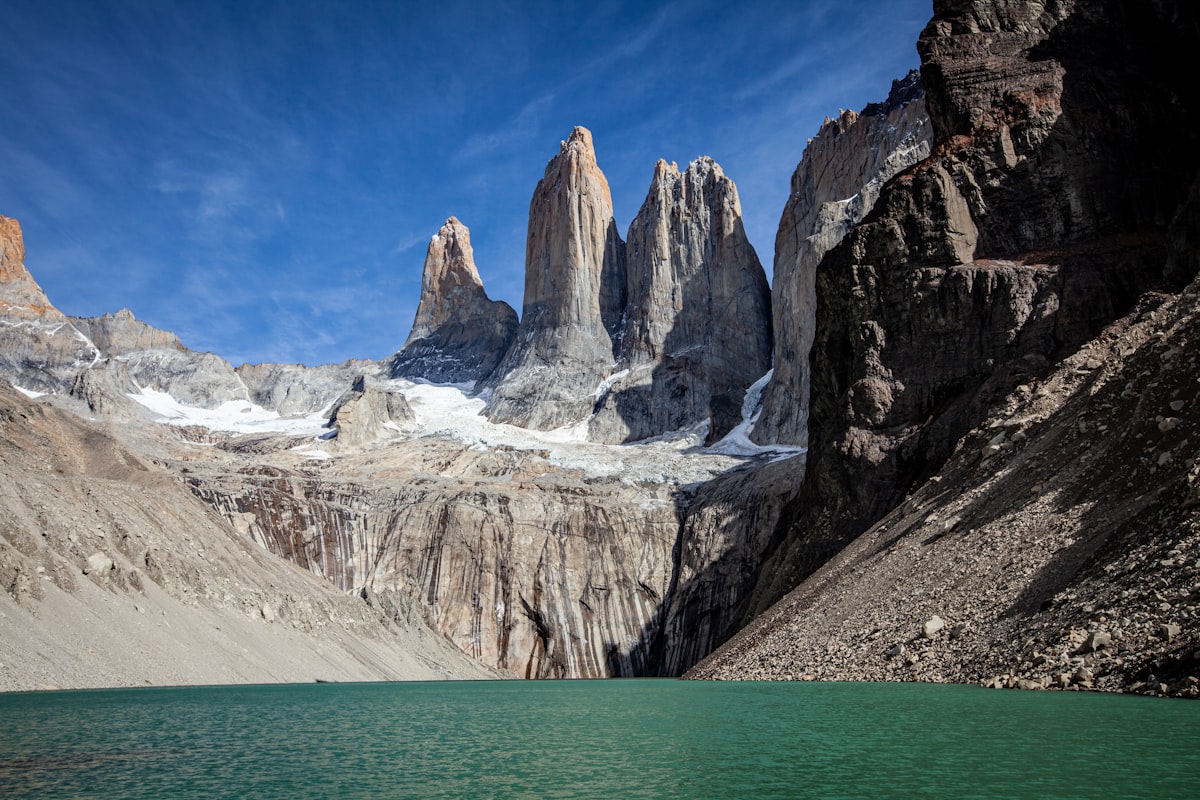
Torres del Paine is one of the world’s great trekking destinations — a national park in Chilean Patagonia where granite spires, turquoise lakes, and moving glaciers sit within walking distance of each other. For Argentine visitors, it sits within a long day’s reach of El Calafate, making it a natural pairing with Los Glaciares National Park.
This guide covers everything you need to plan your trek: which circuit to choose, how to book permits and accommodation, what to pack, and the best time to go.
W Circuit vs O Circuit: Which Should You Choose?
W Circuit (4–5 days)
The W is the most popular route, traversing the three iconic viewpoints from east to west (or west to east). Most trekkers complete it in four to five days, covering approximately 80 km.
Day-by-day structure (east to west):
- Day 1: Las Torres — the park’s signature hike, climbing 4–5 hours to the base of the granite towers above a milky glacial lake
- Day 2: Valle del Francés — a steep ascent into a glacial cirque with hanging glaciers and condors overhead
- Day 3: Rest at Paine Grande or continue to Glacier Grey
- Day 4: Glacier Grey — walk to the edge of the grey glacier for close-up views of blue ice; kayak tours available from approximately USD 95 per person
- Day 5: Return to park exit
The W suits trekkers with limited time or those doing their first multi-day hike in Patagonia. Difficulty is moderate — long days with significant elevation gain on the Torres and Francés sections, but no technical terrain.
O Circuit (9–11 days)
The O Circuit adds the remote northern back side of the massif to the W, looping entirely around the Paine Massif. The addition covers roughly 60 km and includes Paso John Gardner — at approximately 1,241 m the highest point on the trail and often snow-covered even in summer.
The back circuit is genuinely remote: no refugios, fewer bridges, and rivers that require caution after rain. Free campsites (Dickson, Los Perros, Paso) fill quickly; book the moment reservations open, typically in August for the following season.
The O is for experienced hikers comfortable with long mountain days, river crossings, and carrying full gear. The reward is extraordinary solitude on the back side, which most visitors to Patagonia never see.
Permits and Booking
Park Entry Permit
All trekkers require a CONAF entry permit, purchased via the official CONAF online platform. As of 2026, prices are approximately:
- High season (Nov–Mar): CLP 21,000 / USD 24 per person
- Shoulder season (Oct, Apr): CLP 10,500 / USD 12 per person
Book early — the park has daily entry caps, and high-season slots sell out weeks in advance.
Refugio and Campsite Reservations
Accommodation inside the park is managed by two operators:
Vertice Patagonia handles the western sector: Paine Grande, Grey, and Dickson (W and O circuits). Refugios cost approximately USD 55–80 per person per night including breakfast and dinner. Campsites at these locations run approximately USD 10–18 per person with access to shared kitchen and bathrooms.
Las Torres manages the eastern sector: Base Las Torres and Chileno refugios. Pricing is similar — refugio dorms from approximately USD 65 per person, campsites from USD 12.
Free campsites (Seron, Coirón, Los Perros, Paso) exist on the O Circuit back side and require only the park permit. They are basic — no kitchen, no showers — but allow you to complete the full O without paying refugio prices. Reserve your spot on the CONAF platform even for free sites.
Book accommodation and park entry simultaneously as soon as reservations open. Attempting to do this the day before departure will result in finding everything sold out in peak season.
Getting to Torres del Paine
The park is in Chile, not Argentina — but many visitors combine it with an Argentine Patagonia itinerary based in El Calafate.
From El Calafate (Argentina): Cross the Cerro Castillo border crossing into Chile, then continue to Puerto Natales — total journey approximately 5 hours by shuttle or rental car. Shared shuttles between El Calafate and Puerto Natales operate daily in high season, costing approximately USD 30–40 one way; booking required.
From Puerto Natales (Chile): The park entrance is approximately 110 km north. Shuttle buses run daily from Puerto Natales to the park entrance at approximately USD 10–15 each way, continuing to Laguna Amarga (for Las Torres) and Pudeto (for ferry to Paine Grande). Journey time is approximately 2–2.5 hours.
Rental car: Renting a car allows flexibility for day trips but note that the park’s internal roads are unpaved and require a high-clearance vehicle. Parking is available at trailheads.
Refugios vs Camping: What to Expect
Refugios (Mountain Huts)
Refugios provide dorm bunk beds, hot showers, full meals (half-board included in most rates), and gear storage. They are the most comfortable option but book out months in advance.
Dorm rooms typically hold 6–8 people. Bring earplugs. Gear drying facilities are limited — wet boots may still be wet in the morning. Meals are basic but filling: pasta, rice dishes, soup, salad.
Campsite (Camping Cocinado / Campo)
Managed campsites attached to refugios offer tent platforms, shared bathrooms, and access to kitchen facilities. You bring your own tent and food. This cuts costs significantly — approximately USD 10–18 per night versus USD 65+ for a dorm — and is the more popular choice among budget trekkers.
Free campsites on the O Circuit back side (Los Perros, Paso) provide flat ground and a water source but nothing else. Bear canisters are not required but food must be stored carefully — pumas have been known to investigate tents.
Packing Essentials
Patagonia weather changes rapidly — sunshine, wind, and horizontal rain can occur within the same hour. Pack for all conditions regardless of forecast.
Clothing:
- Waterproof jacket and trousers (non-negotiable)
- Insulating mid-layer (fleece or down)
- Moisture-wicking base layers × 2
- Merino wool socks × 4–5 pairs
- Gloves, buff, and warm hat
- Gaiters for stream crossings and snow
Footwear:
- Waterproof hiking boots with ankle support — already broken in before arrival
- Camp sandals or light shoes for refugio evenings
Gear:
- 60–70L backpack with rain cover
- Sleeping bag rated to −5°C (refugios provide blankets but not sleeping bags)
- Trekking poles — compulsory for the O Circuit, strongly recommended for the W
- Headlamp and spare batteries
- Sunscreen SPF 50+ — UV exposure at high altitude is severe even in cloud
Health and safety:
- Water purification (tablets or filter) — glacial streams are generally clean but giardia risk exists
- Blister kit and zinc oxide tape
- Personal first aid including ibuprofen and altitude medication if needed
- Travel insurance covering emergency helicopter evacuation (mandatory in practice)
Electronics:
- Portable battery pack — charging options in refugios are limited
- Offline maps downloaded (Maps.me or Gaia GPS cover the park trails well)
Best Season to Trek
| Month | Weather | Crowds | Notes |
|---|---|---|---|
| Oct | Variable, cool | Low | Wind increases; some snow on passes |
| Nov | Improving | Medium | Wildflowers peak; reliable windows |
| Dec | Warmest | Very high | Long daylight; book months ahead |
| Jan | Stable, warm | Very high | Busiest month |
| Feb | Good | High | Excellent overall |
| Mar | Autumn colours | Medium | Wind drops; highly recommended |
| Apr | Cooler, shorter days | Low | Late season; some facilities close |
| May–Sep | Closed or restricted | — | Park partially closes June–August |
Our recommendation: November and March offer the best combination of reliable weather, longer daylight hours, and manageable crowds. February is excellent but requires the earliest possible bookings.
Day Trip Option
If a multi-day trek is not possible, Torres del Paine can be visited as a long day trip from Puerto Natales. The base of the towers (Mirador Las Torres) is achievable as a return day hike: approximately 19 km round trip with 900 m elevation gain, taking 8–10 hours. Start no later than 7am. Entry permits still apply.
For a shorter day experience, Lago Grey and the glacier viewpoint is accessible with minimal climbing. The ferry between Pudeto and Paine Grande (approximately USD 32 one way) reduces walking time on the western section.
Torres del Paine is a serious trek that rewards thorough preparation. Book permits and accommodation as early as possible — the park’s combination of limited capacity and global demand means last-minute planning rarely works in peak season.
Top Torres del Paine Tours: Prices at a Glance
CONAF park entry (approximately USD 24 in high season) is not included in most tour prices and must be booked separately. Refugio accommodation for the W and O circuits is also booked separately through Vertice Patagonia or Las Torres. Most GYG-listed tours depart from Puerto Natales or El Calafate. Free cancellation available on most options up to 24 hours before departure.
| Tour | Duration | Includes | Price (approx.) |
|---|---|---|---|
| Full-Day Tour to Mirador Las Torres from Puerto Natales | Full day | Transport, guide (park entry not included) | from $50 pp |
| El Calafate to Torres del Paine Day Trip | Full day | Border crossing, transport, guide | from $65 pp |
| Lago Grey Glacier Tour with Ferry | Full day | Ferry Pudeto–Paine Grande, glacier guide | from $70 pp |
| W Circuit Guided Trek | 5 days | Certified guide, refugio bookings (half-board), crampons for Grey glacier | from $800 pp |
| O Circuit Fully Guided Trek | 9–11 days | Guide, all accommodation (refugios + free campsites), meals, permits | from $1,800 pp |
Browse all options via El Calafate tours on GetYourGuide — filtering for Torres del Paine day trips and multi-day packages.
See also: El Calafate travel guide · Los Glaciares National Park guide · Patagonia trekking guide · Argentina Patagonia itinerary