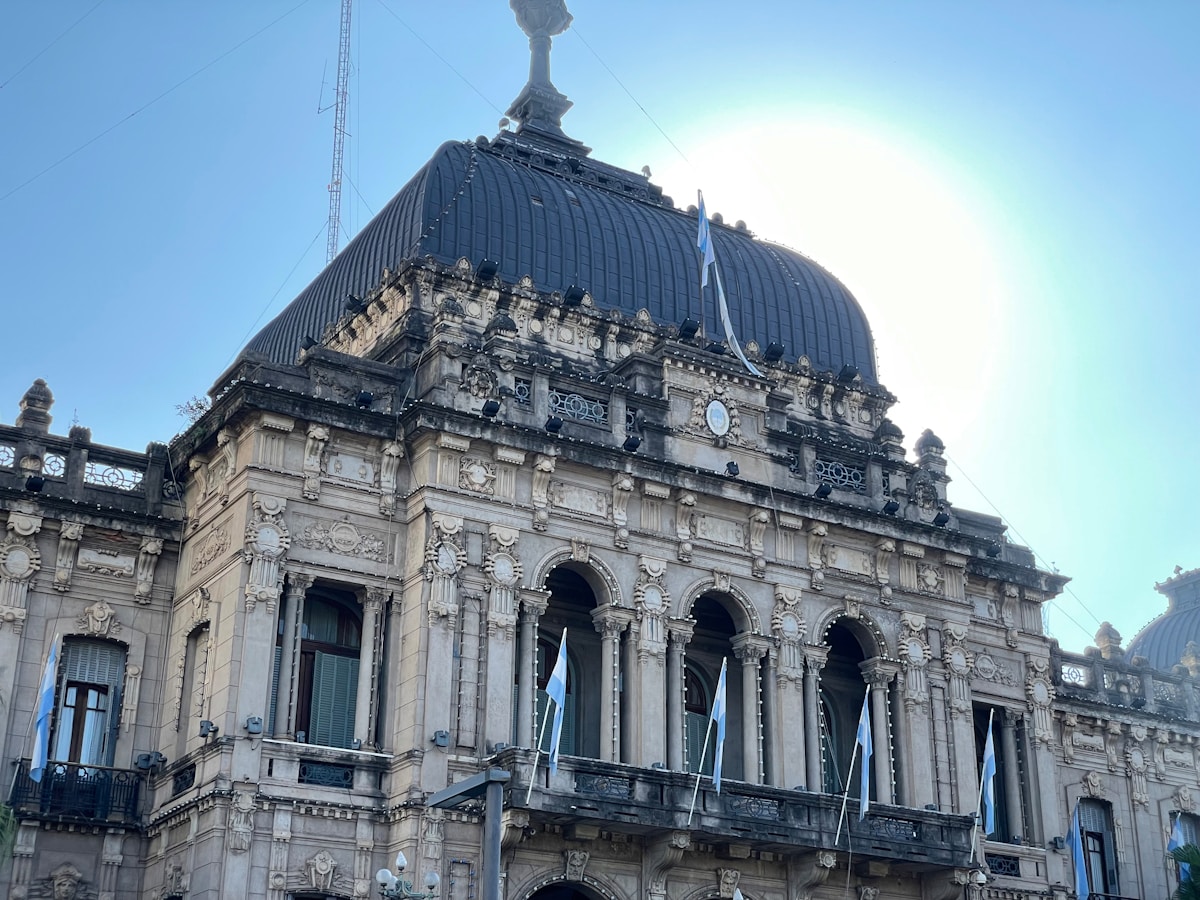
San Miguel de Tucumán - known simply as Tucumán - is Argentina’s fifth-largest city and one of the most historically significant in the country. On 9 July 1816, representatives from across the Río de la Plata provinces gathered here and formally declared independence from Spain, making Tucumán the birthplace of the Argentine nation. The city of around 800,000 people wears this history prominently: the site where independence was proclaimed is preserved as one of Argentina’s most important national monuments, and July 9 is celebrated here with more ceremony than anywhere else in the country.
Beyond the history, Tucumán sits at the edge of the Yungas - the subtropical cloud forest that climbs the eastern slopes of the Andes - and the surrounding landscape is dramatically different from the Patagonian south or the Pampas flatlands. The drive up into the mountains toward Tafí del Valle alone justifies the trip.
Casa Histórica de Independencia
The single most important site in Tucumán is the Casa Histórica de Independencia on Calle Congreso 151. This is the colonial house where, on the night of 9 July 1816, delegates from the United Provinces of the Río de la Plata voted to declare independence. The building was partially demolished in the 19th century and later reconstructed, but the original Congress Hall - the Sala del Congreso - was preserved and is the heart of the complex.
Inside, the museum displays original furniture, flags, period documents, and explanatory exhibits about the independence movement. The collection is well-presented and the space is genuinely evocative. A sound-and-light show runs on most evenings in the interior courtyard, dramatising the events of 1816 (check current schedule at the entrance). Entry is free; donations are welcomed. Opening hours are generally Tuesday to Sunday, 09:00–20:00, though hours change around national holidays.
Plaza Independencia and the City Centre
The historic centre of Tucumán radiates from Plaza Independencia, the main square flanked by the Government House (Casa de Gobierno), the Cathedral, and several colonial-era buildings. The Government House is a particularly ornate late 19th-century structure with a mansard dome - the building visible in photographs of Tucumán’s skyline.
The Cathedral of Tucumán, completed in the late 19th century, has an elegant neoclassical facade and is worth a short visit. Nearby, Calle Laprida and the surrounding pedestrian streets have the city’s main shops, street food, and cafés. The area between the plaza and the Casa Histórica can be walked in under 20 minutes.
Cerro San Javier
The Cerro San Javier is a forested hillside community approximately 25 km west of Tucumán, reached by a road that climbs through the yungas cloud forest. At around 1,400 m, the temperature is noticeably cooler than the city, and the views back over the Tucumán basin are excellent.
The cerro is home to a large statue of Cristo Redentor and several walking trails through the forest. Locals come here at weekends to picnic and escape the city heat. The journey takes approximately 40–50 minutes by car or remis (approximately ARS 4,000–8,000 each way as of 2026). Several buses also run from the Tucumán city terminal.
Tafí del Valle Day Trip
The road from Tucumán to Tafí del Valle - RN307 - is one of the most spectacular drives in northwest Argentina. It climbs from the subtropical lowlands through dense yungas forest draped in mosses, then emerges dramatically onto the altiplano at around 2,000 m above sea level. The valley itself is a wide, green highland bowl surrounded by mountains, with a small town, a reservoir (Embalse La Angostura), and several indigenous menhirs (standing stones) at Parque Los Menhires.
Tafí del Valle is known for its artisan cheeses and the weekend market where local producers sell goat cheese, leather goods, and weavings. A day trip by bus (approximately ARS 3,500–6,000 round trip as of 2026) or guided tour is one of the best activities in the Tucumán region. Allow a full day - the drive is the experience.
Museo de Arte Sacro and Other Museums
Tucumán has a cluster of museums in and around the city centre:
- Museo Casa de Tucumán (part of the Casa Histórica complex) - permanent exhibition on the independence congress and the city’s 19th-century history
- Museo de Arte Sagrado (Sacred Art Museum, on Plaza Independencia) - colonial religious art, including paintings and silverwork from the 17th and 18th centuries
- Museo Folklórico Provincial Manuel Belgrano - folk art, instruments, textiles, and crafts from the northwest Argentine tradition
- Jardín Zoológico - a city zoo in the Parque Centenario, more relevant to families with children
The Sugar Industry Heritage
Tucumán produces approximately 60% of Argentina’s sugarcane and the industry has shaped the city and region profoundly. Several old sugar mills (ingenios) around the city have been converted into cultural centres or museums. The Parque Tezanos Pinto, built on the grounds of a former ingenio, is a pleasant city park. The sugar harvest (zafra) runs roughly May to October, and during this period the mills on the outskirts of the city are operating.
Parque 9 de Julio
The Parque 9 de Julio is the largest green space in Tucumán, named after Independence Day. It contains an artificial lake, a rose garden, the main city stadium, and the Museo de Bellas Artes Timoteo Navarro with a small but respectable collection of Argentine and European art. It’s a good area for an early morning or evening walk, particularly in the cooler months.
Getting Around Tucumán
The city centre is walkable. Taxis and remises handle most longer trips within the city (ARS 2,500–6,000 as of 2026). The bus network is extensive but can be confusing for visitors. For day trips to Cerro San Javier and Tafí del Valle, buses or a hired remis are the most practical options.
For planning your broader trip, read our best time to visit Argentina guide, and see the Argentina currency guide for navigating the peso before you arrive. Argentina tours covering the northwest can be booked to visit Tucumán alongside Salta and Cafayate.
See also: Tucumán travel guide · Where to stay in Tucumán · Food in Tucumán · Salta travel guide · Salta vs Tucumán