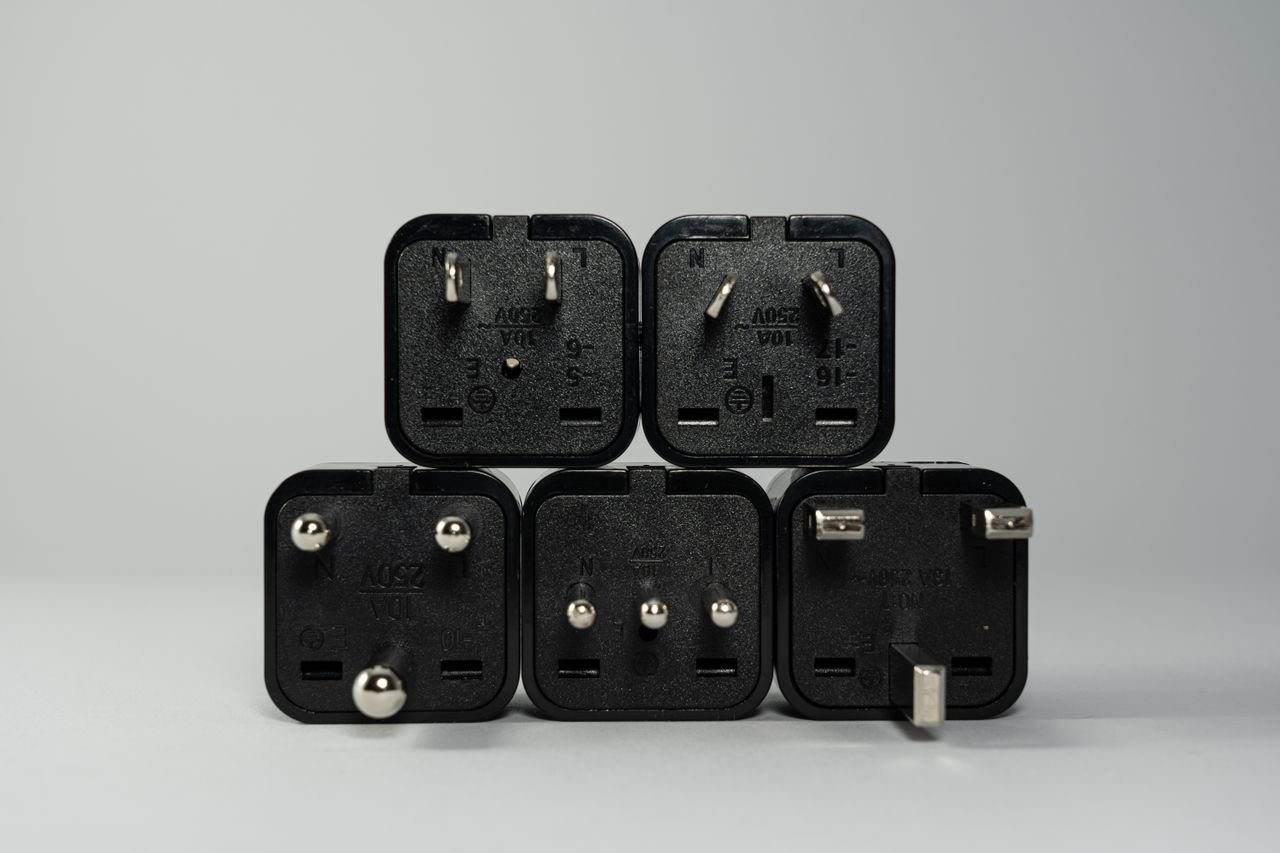
Argentina’s electricity is easy to deal with once you know three things: the plug shape, the voltage and the fact that your charger probably already handles it. This guide covers the two plug types you will meet, what to pack depending on where you are from, and the practical side of keeping devices charged on long bus rides, in Patagonia and in older hotels. We cross-checked the technical details against standard international plug and voltage references in October 2026, but always read the label on your own devices before plugging in.
Argentina Plug Types at a Glance
| Detail | Argentina |
|---|---|
| Plug types | Type I (main), Type C (also accepted) |
| Voltage | 220V |
| Frequency | 50Hz |
Type I is the standard Argentine plug. It has two flat pins set in an inverted V, and the grounded version adds a third flat vertical pin in the centre. It is the same family as plugs used in Australia, New Zealand and China, which is why travellers from those countries often assume their plugs will fit. Argentine sockets follow the national IRAM standard, and the polarity of the live and neutral pins differs from the Australian wiring, so we recommend an adapter rather than forcing a plug in.
Type C is the thin two-round-pin plug used across continental Europe, including the common Europlug. Many Argentine wall sockets, especially in hotels and apartments, accept it. Recessed sockets in older buildings can be too deep for chunky European plugs, so a slim Europlug or a short extension strip helps.
Voltage and Frequency: Do You Need a Converter?
Argentina runs on 220V and 50Hz. That matches Europe, the UK, most of Asia and Africa, so travellers from those regions only need a plug adapter.
If you come from the United States, Canada or Mexico (120V, 60Hz), check the label on each device:
- “Input: 100-240V” means it is dual voltage. Most phone chargers, laptop power bricks, camera battery chargers, tablets and e-readers are. You only need an adapter.
- “Input: 120V only” means plugging it in will probably destroy it. This is common with hair dryers, curling irons, beard trimmers, travel kettles and some older electric toothbrush chargers.
For single-voltage heating appliances, a converter is heavy and unreliable. In our experience it is simpler to leave them at home and use the hair dryer most Buenos Aires hotels and apartments provide, or buy a cheap local one. A 50Hz supply also affects some clocks and turntables, though that rarely matters for tourists.
Which Adapter to Pack
| You are from | What to bring |
|---|---|
| UK, Ireland | Type I adapter (UK plugs do not fit at all) |
| Continental Europe | Often nothing for Type C devices, but pack a Type I adapter for grounded plugs |
| USA, Canada | Type I adapter, plus a converter only for 120V-only devices |
| Australia, New Zealand | A Type I adapter, even though the shape looks familiar |
| China | A Type I adapter, as with Australia |
| Brazil | An adapter (Brazil’s Type N plug is different) |
A universal adapter with a built-in USB-C port is the best single purchase. Choose one that lists Type I explicitly, has a fuse, and ideally two or three USB outputs, so you can charge a phone, earbuds and a power bank from one socket. If you are visiting Chile or Uruguay too, a universal model saves buying a second one. Our packing list for Argentina shows where an adapter fits in the rest of your kit.
Buying an Adapter in Argentina
If you forget one, adapters are easy to find in Buenos Aires. Electronics shops along Avenida Corrientes and in the Microcentro, hardware shops (ferreterías) in most neighbourhoods and the larger supermarket chains such as Carrefour and Coto sell them. Expect to pay noticeably less than airport prices, though exact prices move quickly with inflation, so we do not quote a figure. In smaller towns and in Patagonia, stock is thinner and universal models can be hard to find, so buy before you leave Buenos Aires.
Power Reliability and Charging on the Road
Argentina’s grid is generally dependable in cities, but a few practical notes help:
- Summer heat waves in Buenos Aires (December to February) sometimes cause brief local outages when air conditioning demand spikes. Keep a charged power bank.
- Surge protection matters if you carry a laptop or camera. A small surge-protected extension strip is a smart upgrade over a bare adapter.
- Buses. Long-distance coaches (the 12 to 20 hour routes to Mendoza, Salta or Bariloche) often have USB ports or sockets at seats, but they do not always work. Charge fully before departure, and see our getting around Argentina guide for bus classes.
- Hotels and hostels. Sockets can be few and badly placed in older buildings, particularly in budget hostels. A short extension lead or a multi-port USB charger helps.
- Trekking and Patagonia. Mountain refugios and campsites near Fitz Roy and Torres del Paine often have very limited or paid charging. Carry a 10,000 to 20,000 mAh power bank, and keep batteries warm in cold weather. See our trekking guides for route detail.
- Rural estancias and lodges may run on generators with set hours of power. Ask when you book.
Phones, Data and Staying Connected
Your phone charger will work as long as it is dual voltage, but a charged phone still needs data. Compare options in our Argentina eSIM and SIM card guide so you can land with a working connection and map. An eSIM for Argentina keeps your phone connected from the moment you land, which is one more reason to keep it charged.
Quick Checklist
- One Type I adapter, ideally a universal model with USB ports.
- A power bank (10,000 mAh or more).
- Check each charger for “100-240V”.
- Leave single-voltage hair tools at home.
- A short extension strip for hostels with few sockets.
- Spare charging cables, since good quality cables are costly in Argentina.
- Travel insurance for Argentina, because phones, cameras and laptops are common theft targets.
Once your devices are sorted, the rest of the prep is simple. Start with our first-time Argentina guide and keep our emergency numbers page saved offline. If you plan to join a day trip, browse Buenos Aires tours before you arrive, and compare Buenos Aires hotels with reliable sockets and air conditioning.